




India’s vast renewable energy landscape is entering a stricter phase. Meanwhile, winds sweep across Rajasthan’s solar parks, and turbines turn along coastal plains. However, behind this clean energy surge, a quieter shift is unfolding—one aimed at discipline.
From April 2027, wind and solar generators will face higher penalties if they deviate from committed power supply schedules. The country’s power regulator issued the rules. It delayed them by a year after industry concerns.
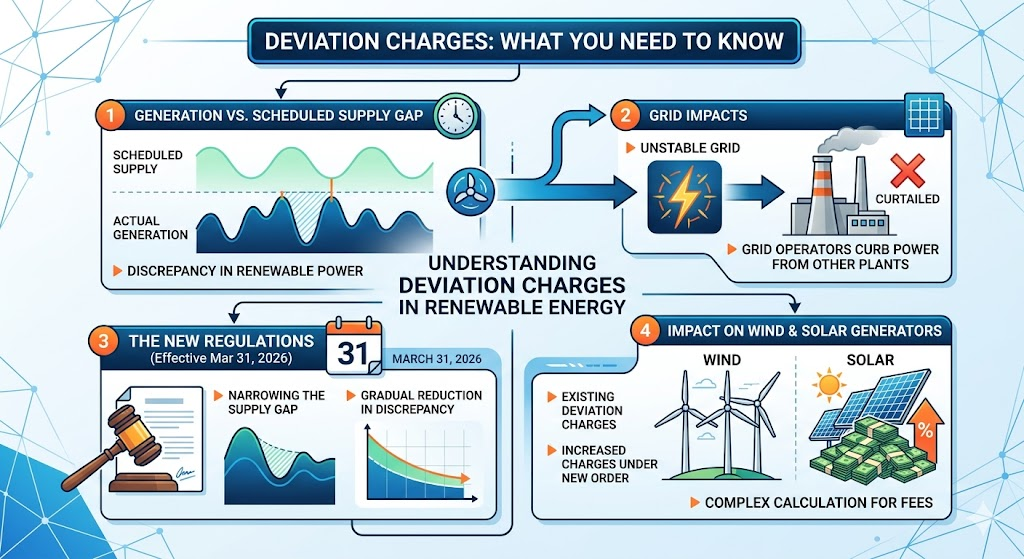
The policy targets both under-supply and over-supply. Electricity must match forecasts more closely. Even excess generation can disrupt the grid. This matters because renewable energy is inherently variable. Clouds move. Winds change. Output fluctuates. Yet grid stability demands precision.
“Deviation charges” are already applied. However, the revised framework increases these penalties through a stricter calculation method.
The goal is clear. Therefore, the gap between promised and actual supply must shrink. Meanwhile, grid operators often adjust other power sources to compensate. As a result, that process raises costs and operational strain.
India’s clean energy ambitions are vast. For instance, the country aims to reach 500 gigawatts of renewable capacity by 2030. In addition, solar power alone has already crossed 143 GW installed capacity.
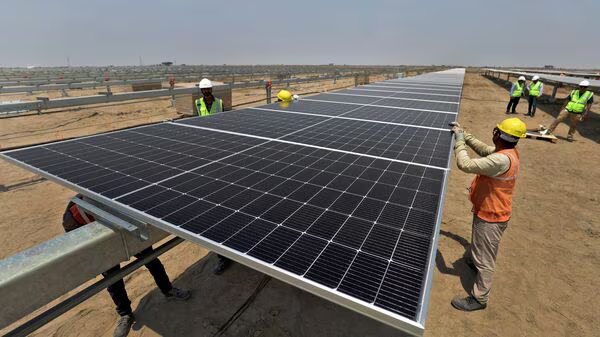
Such scale brings complexity. Renewable power now forms a growing share of the grid. Stability becomes harder to maintain.
Still, the industry has raised concerns. Forecasting renewable output is not exact science. Weather patterns remain unpredictable.
Government discussions reveal the tension. Officials acknowledged that stricter rules could “lead to revenue loss” and affect investor confidence. Some earlier industry feedback warned that earnings could fall sharply under tighter norms.
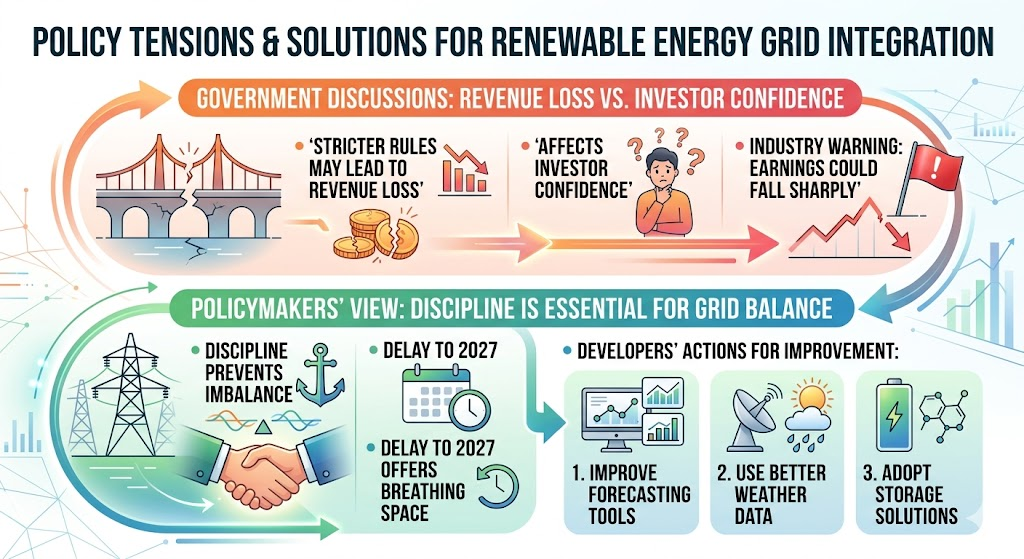
At the same time, policymakers argue that discipline is essential. Without it, the grid risks imbalance. The delay to 2027 offers breathing space. Developers will improve forecasting tools. They will use better weather data and storage solutions.
Yet the fundamental question remains. Can a system driven by nature be forced into rigid schedules?
The answer may shape India’s clean energy future.
Renewables promise cleaner air and lower emissions. But reliability is now the new frontier. The coming years will test whether India can balance ambition with stability.
Reference- The Economic Times, Wikipedia, Reuters