


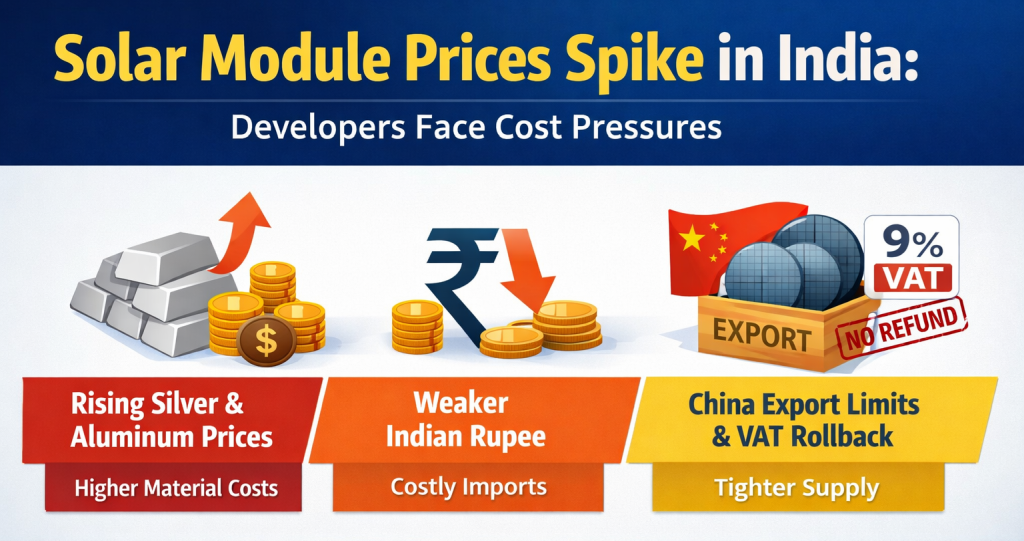
India’s solar power sector is grappling with a sharp rise in solar module costs, a development that threatens project economics and tariff levels. Solar modules have surged by about one-third since late December, driven by rising commodity prices and global supply constraints.
First, silver and aluminum prices jumped sharply. This increased input costs for solar manufacturers. Second, a weaker Indian rupee made imports costlier. Third, China tightened export quotas on wafers and moved to roll back a 9% VAT refund, which pushed buyers to compete for limited supply.

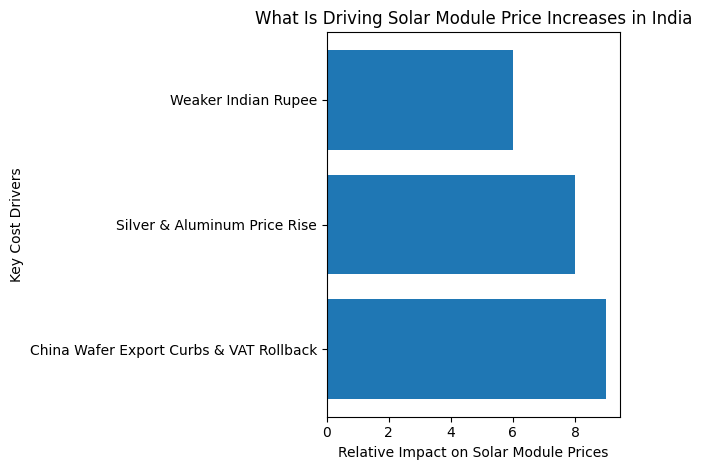
As a result, prices for photovoltaic cells—the core components of solar panels—jumped to 5.5 cents per watt from about 3.5 cents in just weeks. Most solar cells in India are imported, so this trend directly affects local costs.


Prashant Mathur, CEO of Saatvik Green Energy Ltd, says the surge shows the vulnerability of India’s solar supply chain. He adds that higher equipment prices will raise capital costs for developers and likely push power tariffs higher after many years of falling prices.
Meanwhile, India has about 93 GW of solar capacity under construction and 135.8 GW installed. The country aims for 300 GW of solar capacity by 2030 within its broader target of 500 GW of non-fossil fuel power.
Domestic module makers have also increased prices. They raised module prices by up to ₹20 lakh per megawatt (MW), largely because they still depend on imported cells and materials. This reliance remains a key structural challenge for the sector.
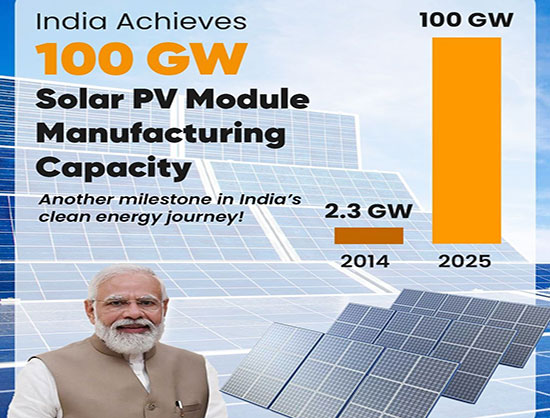
However, India has more than 100 GW of solar module assembly capacity, expected to exceed 125 GW by 2025, according to Wood Mackenzie. Yet cell manufacturing remains limited, forcing continued import dependence.

Policy uncertainty is another factor. Solar developers buying components under government schemes must use products on the Approved List of Models and Manufacturers (ALMM). Proposed new mandates for solar cells and wafers are set to begin in 2026 and beyond.
Analysts say that without mechanisms to adjust power purchase tariffs for rising costs, independent power producers may face profit pressure and project slowdowns.
Reference- mint, MNRE website, PV magazine, Renewables Now