


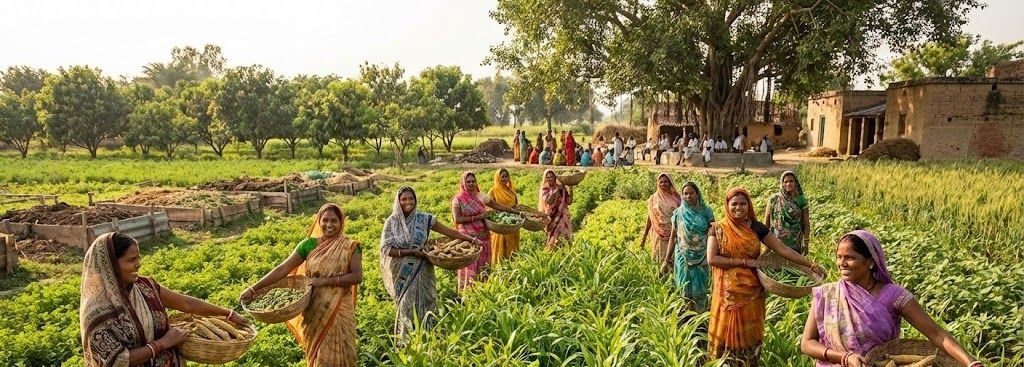

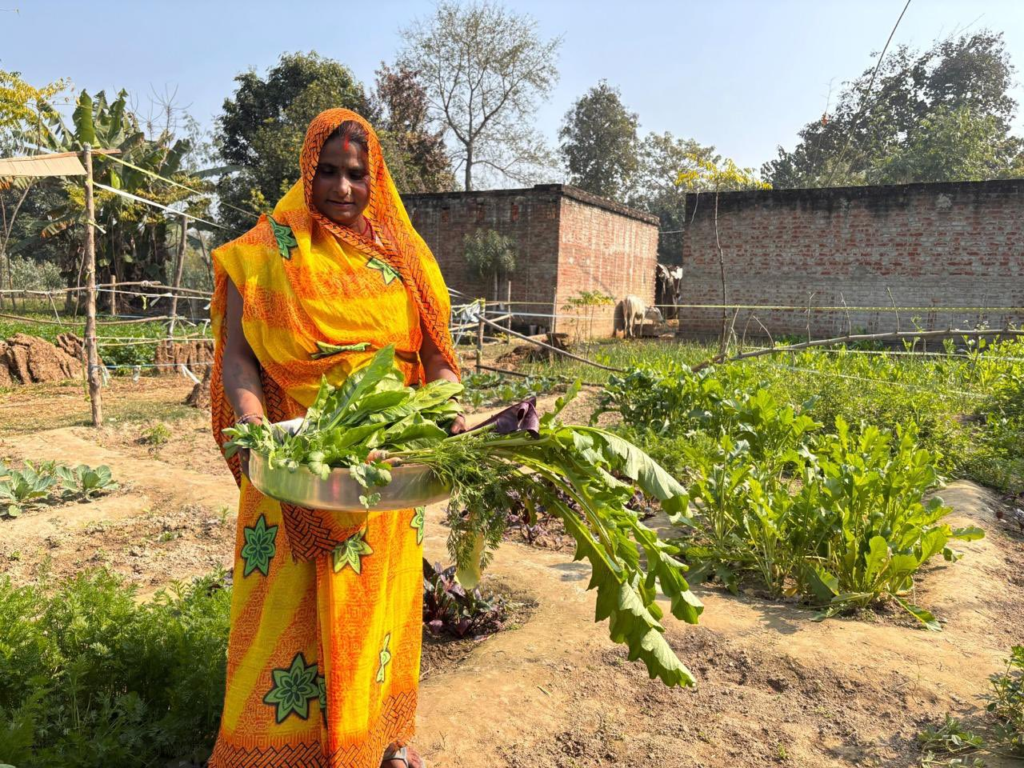
In Shravasti, nearly 30,000 women farmers are reshaping local food systems through regenerative agriculture. They grow diverse, nutritious vegetables that strengthen household diets and local markets.Their work nourishes more than 100,000 people daily.
Food security improved at the village level. According to program data, close to 30,000 women farmers now cultivate diversified crops across the district, supplying fresh produce that feeds over 100,000 people every day.
Shravasti is among the aspirational districts of Uttar Pradesh. Income levels remain modest. Nutrition gaps persist. However, change is visible in the fields.Women farmers are actively adopting regenerative agricultural practices across the district. Soil health is improving. Chemical dependency is falling. Crop diversity is rising.
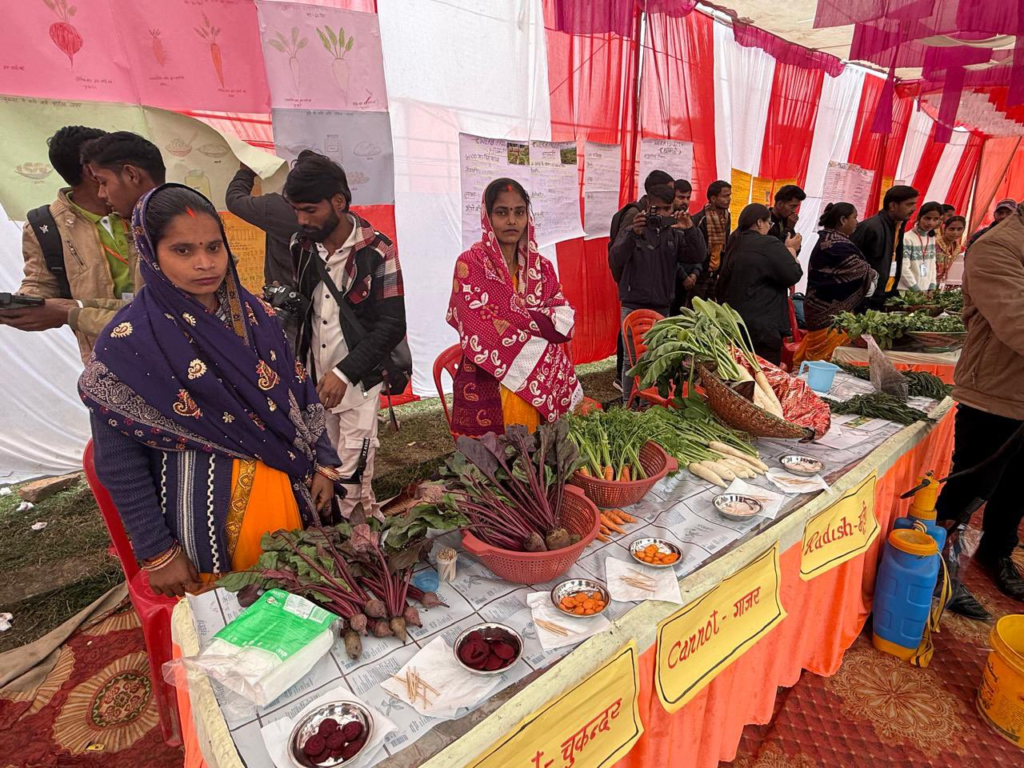
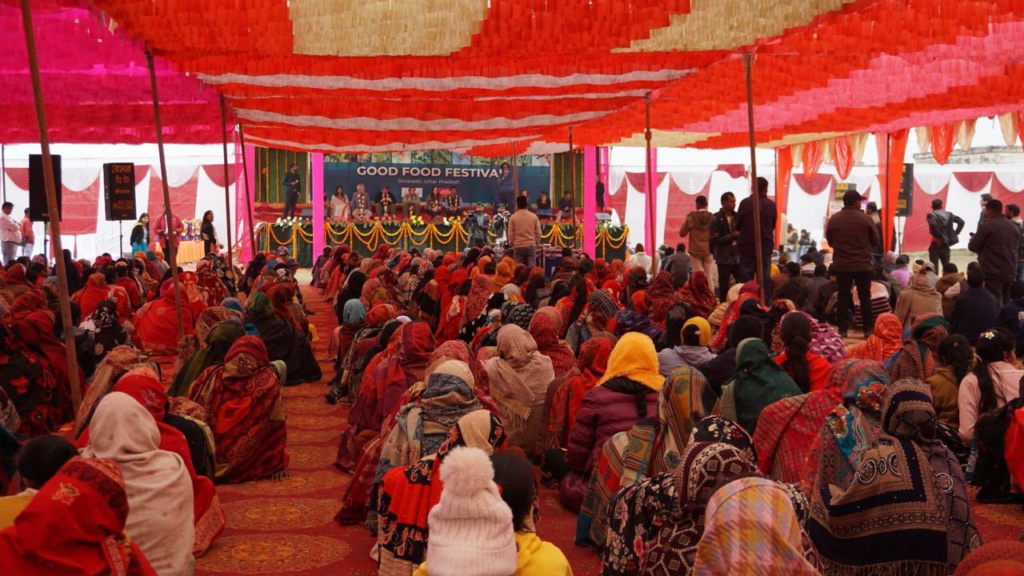
At a recent Food Festival in Hariharpur Rani village, the community marked successful harvest seasons and honored its farmers. However, the tasting tables told the real story—fresh carrots, beets, and mint chutneys bursting with flavor. Local produce. Clear nutrition. Visible impact.
Healthy soil drives higher farm output. When biodiversity increases, diets improve. Women farmers are leading this shift.
The program leadership acknowledged the efforts of Manoj Kumar and his field team, including Anupama and Astha Singh. The team provided consistent training support, strengthened market linkages, and built confidence at the grassroots.

Importantly, incomes are rising alongside improved nutrition. Families now consume much of what they grow, while farmers sell surplus produce locally. As a result, household resilience is strengthening, and rural women are gaining financial agency.
India’s food security debate often focuses on scale. However, transformation is unfolding at the village level. In fact, regenerative agriculture is proving viable for smallholders. Meanwhile, women are driving adoption. As a result, communities are benefiting directly.
Shravasti offers a working model. Here, communities localise food production, improve nutrition, and strengthen livelihoods. This is no longer a pilot project. Instead, it marks a sustained shift. Women farmers no longer operate at the margins. Today, they lead India’s clean and inclusive food future.
Reference- anand mahindra’s X handle, Naandi Foundation