



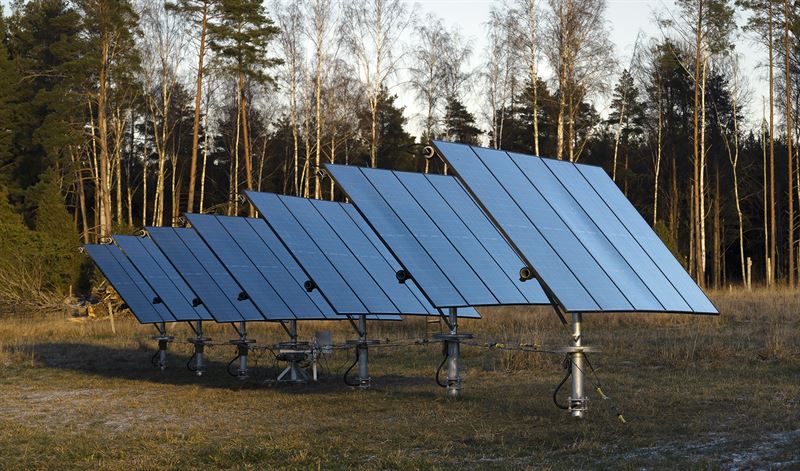
Solar power generation struggles in high-latitude regions because the sun stays low in the sky. Traditional horizontal or static solar panels miss much of this low-angle light, especially in winter. Vertical solar panels have long offered a theoretical solution. However, they were too fragile and costly to withstand strong winds and perform reliably.
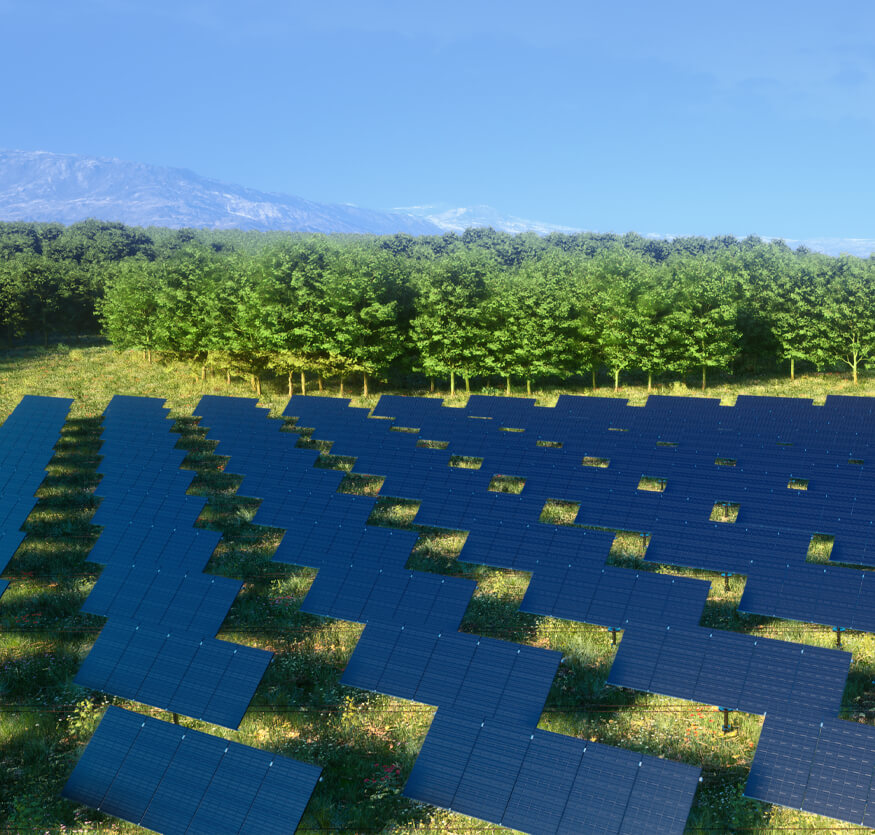
To address this challenge, two Swedish innovators launched Vaja, a start-up developing wind-resistant vertical solar trackers. The technology allows solar panels to pivot against wind forces in a way similar to how trees sway in strong gusts. Early prototypes failed repeatedly, breaking under stress during testing. Yet the founders, Anders Olsson and Henrik Eskilsson, persisted with their concept.
Today, Vaja’s design reduces wind load by more than 80 percent compared with traditional vertical panels, thanks to passive feathering mechanics that let the wind lift and stabilize the panel without extra motors. These innovations also cut torque and avoid dangerous oscillations that once destroyed panels.
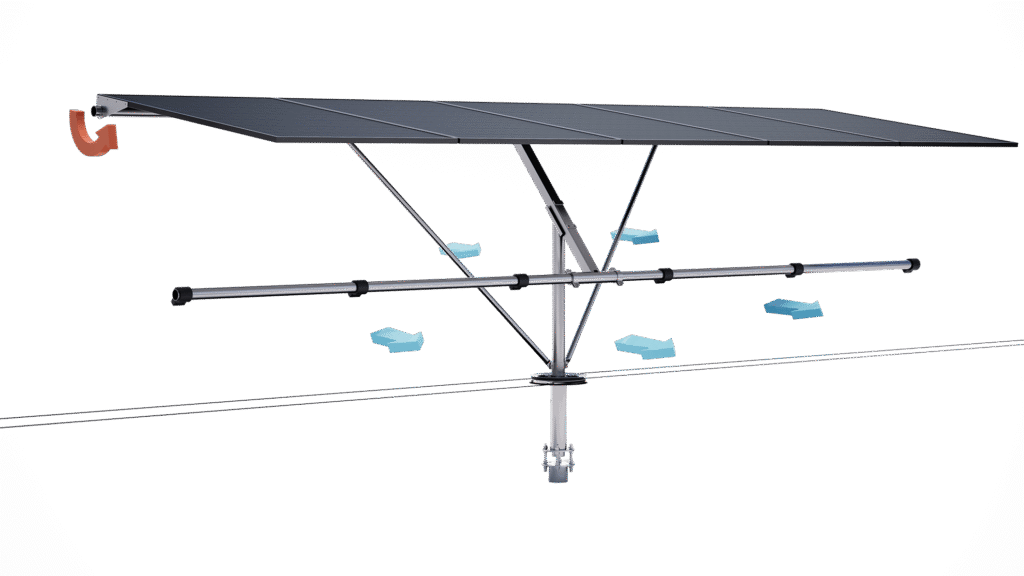
Furthermore, the system needs no concrete foundations. Panels can be mounted with simple ground screws. A single motor and cable system can adjust many units — similar to how blinds open and close. This lowers both initial cost and ongoing maintenance compared with earlier vertical tracking designs.
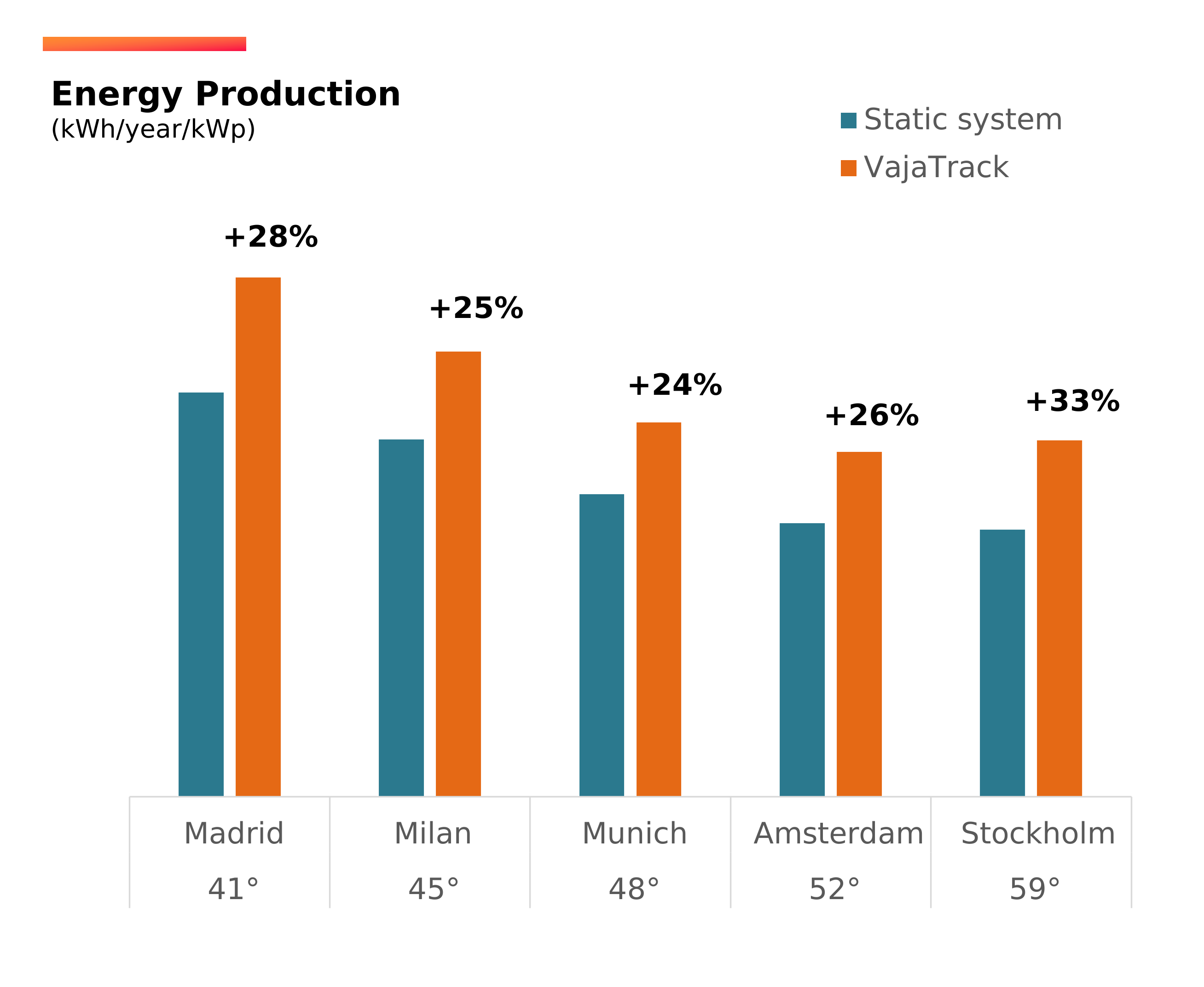
According to Vaja’s own data, these vertical trackers produce 25 – 30 percent more energy annually than static systems at many northern latitudes. This increase stems from capturing sunlight in early morning, late evening, and winter — periods when traditional solar installations under-perform.
The technology is now being piloted at multiple sites. Renewable energy producers in Sweden are testing it alongside conventional panels. If the system proves cost-effective and resilient at scale, vertical trackers could expand solar viability to regions once considered marginal for PV generation.
Reference- Scientific American; Vaja technology summary and press releases