



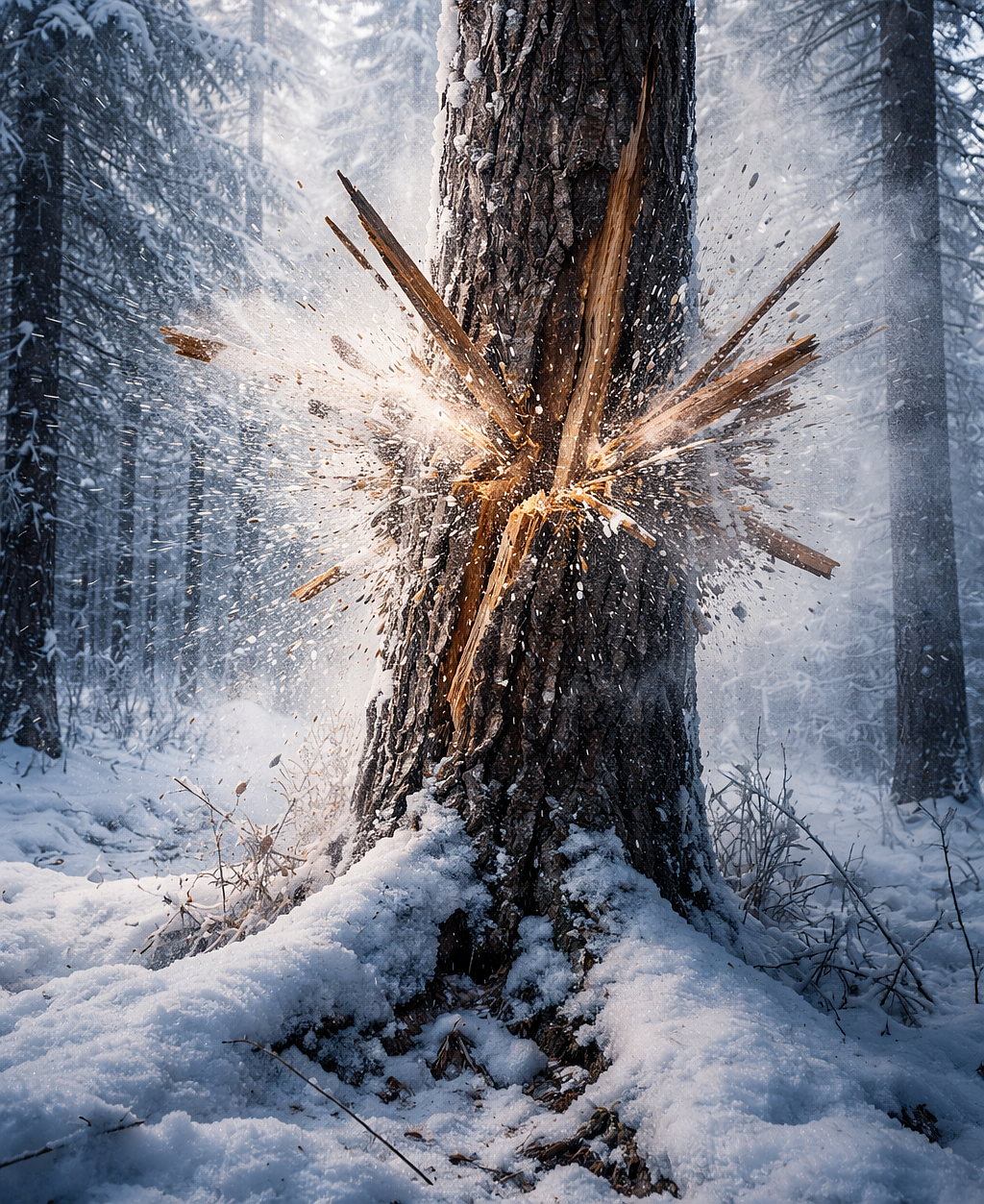
Winter brought strange headlines about “exploding trees.” Some online posts warned that extreme cold could make forests pop like fireworks. These claims spread quickly on social media. However, experts say this is misleading and exaggerated.
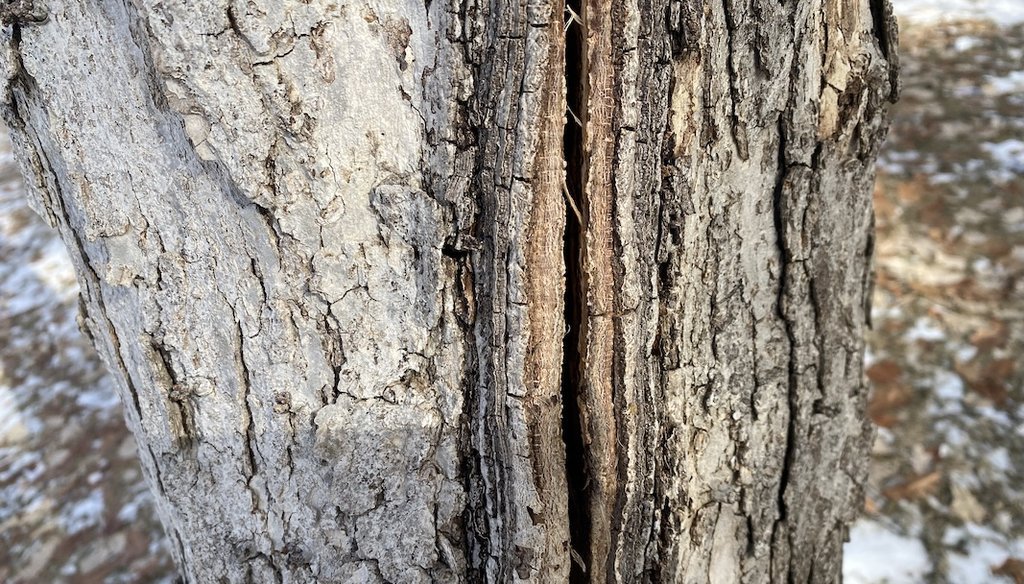
Trees are not bombs. What happens is a physical reaction to freezing water inside wood cells. Trees contain sap, which is mostly water. When the temperature drops fast, sap can freeze and expand. The expansion builds pressure inside the trunk and branches. At the same time, the outer bark contracts quicker than the inner wood. The trapped pressure can cause the bark to split. When it does, it makes a sudden noise like a crack or gunshot.
Forest specialist Bill McNee told reporters that this loud crack is familiar in very cold weather. It happens when the water inside trees freezes rapidly and expands against the wood. He said, “It’s going to get cold enough that this sap may actually finally freeze … like ice cubes in your freezer.”
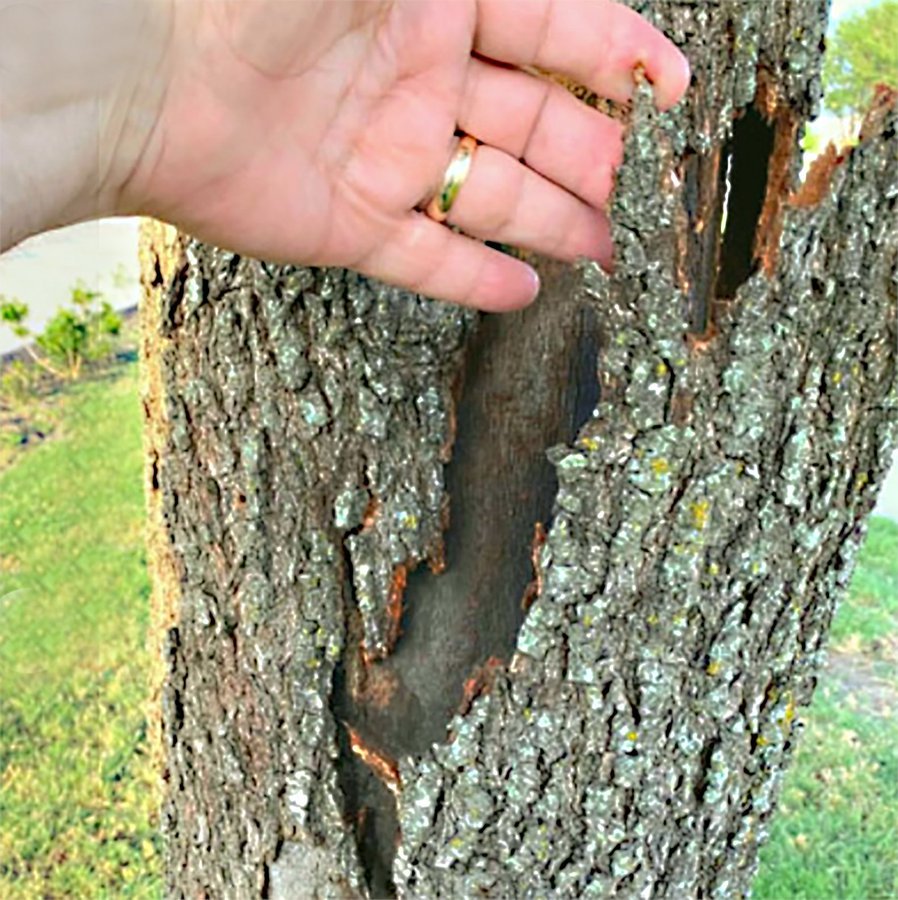
Scientists call these events frost cracks, not explosions. Frost cracks do not send wood flying. They do not threaten people around the tree. However, they can weaken a tree’s structure and leave it open to disease or pests.
Trees adapted to cold climates are better at coping with deep freezes. Their bark and cellular processes protect them. But sudden temperature drops can still cause cracking. Younger trees and species with thinner bark are more vulnerable.
Although the phrase “exploding trees” made headlines, experts urge caution. They want the focus to stay on facts, not dramatics. As one ecologist noted, the sound may be startling, but the tree itself rarely “explodes” in the dramatic sense.
Reference- Futurism, Scientific American, CNN, POLITIFACT, National Geographic, Britannica