



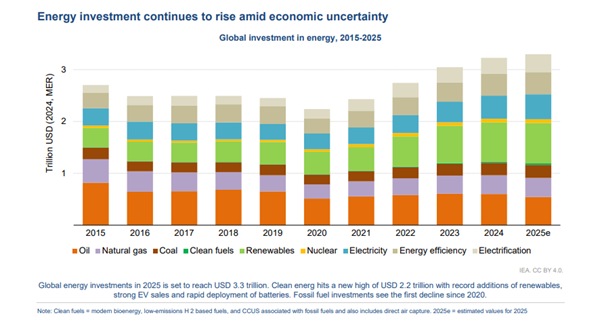
Solar energy is growing fast as an investment option. Global capital flowing into solar is expected to hit record levels in 2025, with clean energy investments dominating overall energy spending, according to the International Energy Agency (IEA).
Solar power costs have dropped sharply in recent years. Panels now cost a fraction of what they did a decade ago, while efficiency has improved. Residential and commercial systems often pay back within 3–7 years.
In India, the climate strongly supports rooftop solar adoption. With abundant sunlight throughout the year, generation remains reliable. As a result, lower electricity bills become a key benefit. In many cases, Indian systems report payback within 3–5 years for commercial and rooftop installations in 2025. Solar panels have minimal maintenance. They typically last 20 years or more. Owners see cost savings that continue long after payback ends.
Investors also see growth opportunities. Solar farms of 1 MW or more report returns around 15–20% per year with payback in 4–6 years in typical Indian conditions. The economics are influenced by local electricity prices. In areas where power costs are high, savings tend to be bigger. In addition, net-metering or feed-in tariffs help by allowing households or firms to sell excess generation back to the grid.
There are risks and challenges too. For instance, silver prices have surged, increasing panel production costs in early 2026. As a result, supply dynamics and manufacturing economics could be affected. Policy incentives also matter. Subsidies and tax credits cut upfront costs in many countries. However, without them, payback times tend to lengthen. In some markets, subsidies are winding down, which could slow adoption.
Beyond dollars, solar has wider value.
- It cuts greenhouse gas emissions.
- It reduces dependence on fossil fuels.
- It shields consumers from volatile utility prices.
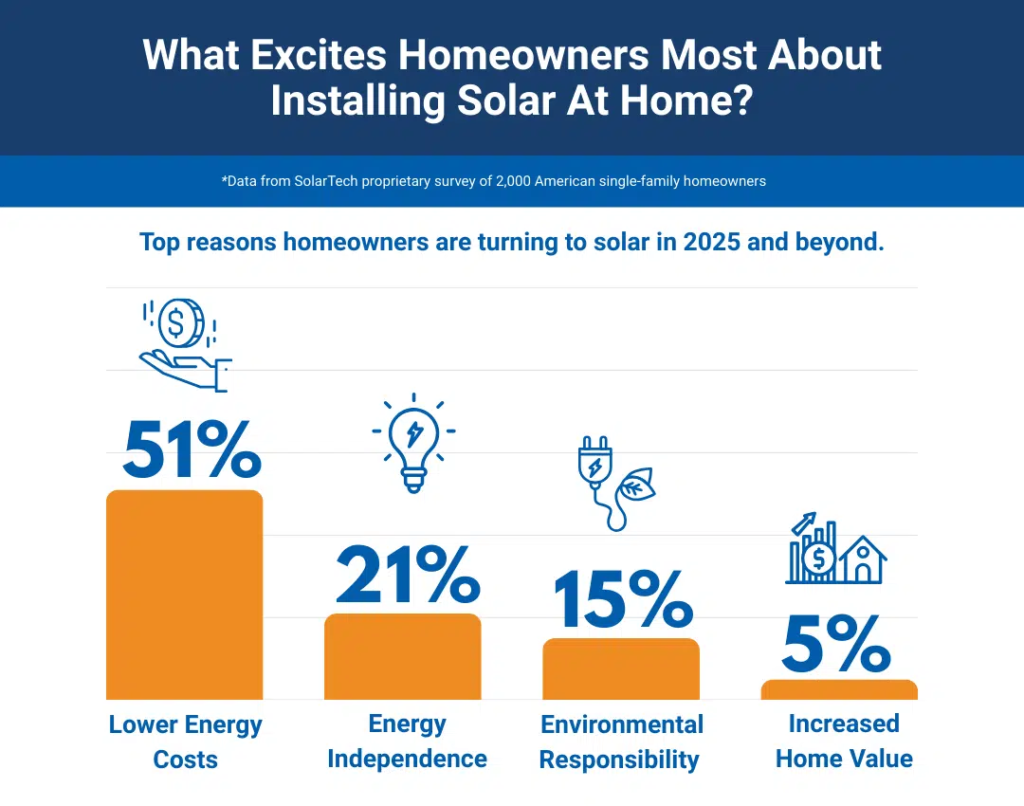
For households, solar often increases energy independence. A majority of homeowners say they expect bill reductions and long-term value from investing in solar.
Solar is not risk-free. Installation quality, roof orientation, and local policies affect outcomes. But the long horizon matters. Once the system pays for itself, most of its output delivers savings.
In 2025, solar remains one of the most cost-competitive ways to generate power. Overall, the data show solid returns, meaningful cost reductions, and expanding investment flows. For many homeowners, businesses, and developers, therefore, solar is proving to be a sound investment both now and into the future.
Reference- Mercom India, Freyr Energy website, Reuters, The Washington Post, Solar Facts