




The world’s climate system continued to break records in 2025, raising fresh concerns over accelerating global warming and its economic impact, according to the World Meteorological Organization (WMO).
Key indicators, including greenhouse gas concentrations, ocean heat content and sea levels, reached new highs. The report describes a climate system under “increasing stress.” Furthermore, multiple signals point in the same direction.
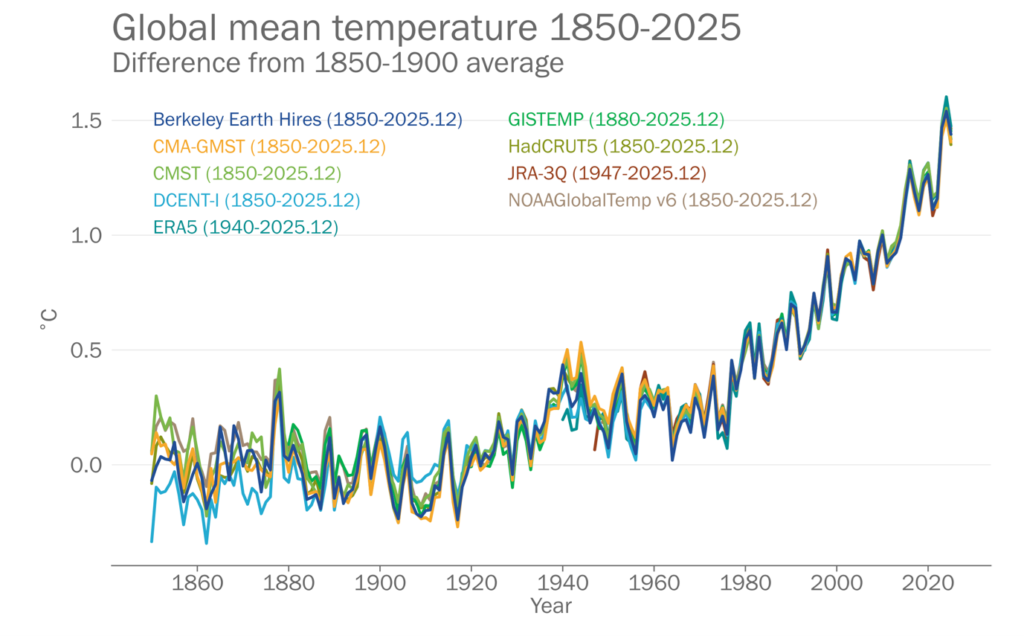
Global temperatures remained elevated. Moreover, the average temperature in 2025 was about 1.42°C above pre-industrial levels, thereby keeping the year among the three warmest ever recorded.
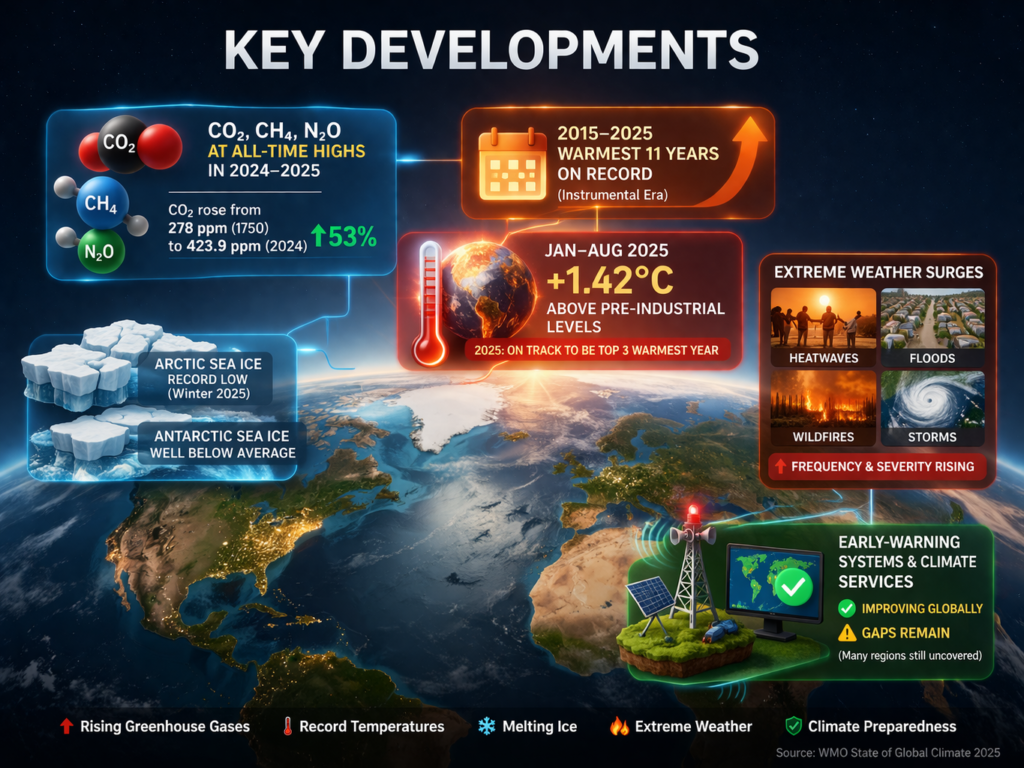
The warming trend is persistent. The period from 2015 to 2025 is now the warmest decade on record, reflecting long-term climate change rather than short-term variability.
Greenhouse gas levels continued to rise. In addition, carbon dioxide concentrations reached around 423.9 parts per million in 2024, up 53% from pre-industrial levels. The WMO said fossil fuel use and land-use changes largely drove this increase.
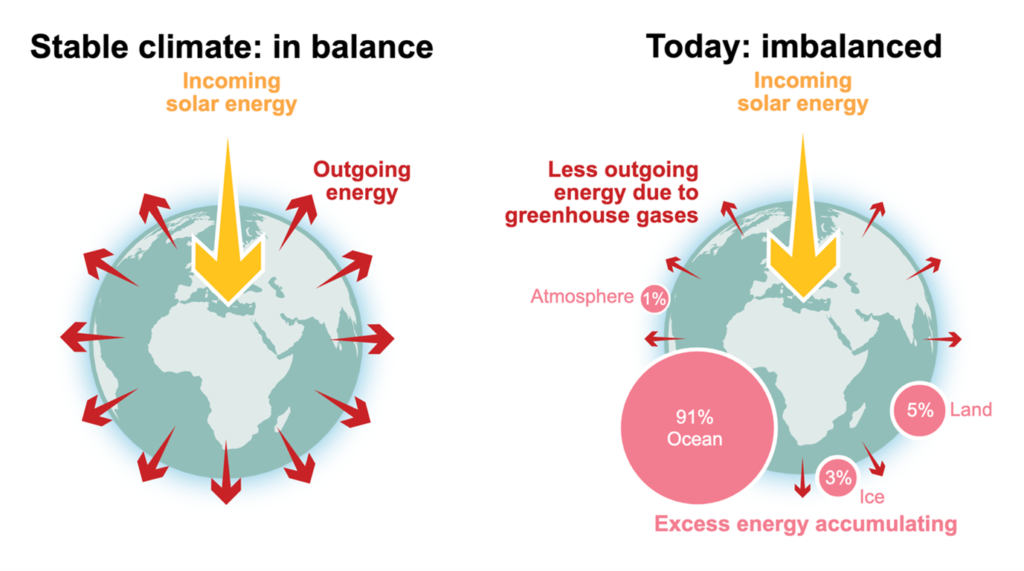
Oceans absorbed most of the excess heat. More than 90% of trapped energy is stored in oceans, contributing to rising sea levels and stronger storms.
Sea levels are rising faster. Between 2016 and 2025, the rate doubled to about 4.1 mm per year, increasing risks for coastal regions and small island nations.
Polar regions showed sharp changes. Arctic sea ice reached record lows, while Antarctic ice remained well below average. These trends are seen as early warning signals of irreversible shifts.
Extreme weather events intensified. Heatwaves, floods and wildfires increased in frequency and severity. These events caused widespread socio-economic damage across continents, the report said.
“Record greenhouse gas concentrations drive record heat,” the WMO stated, underlining the human influence on climate change.
However, scientists stress that mitigation and adaptation efforts can still limit future damage. Early warning systems and climate services are improving resilience in vulnerable regions.
The findings highlight a narrowing window for action. Consequently, without rapid emissions cuts, the likelihood of breaching the 1.5°C threshold in the coming years remains high. For policymakers, therefore, the message is clear. Meanwhile, climate risks are rising. Ultimately, the cost of inaction will grow.
Reference- WMO report, UN climate data, Down To Earth, YOUROPE