



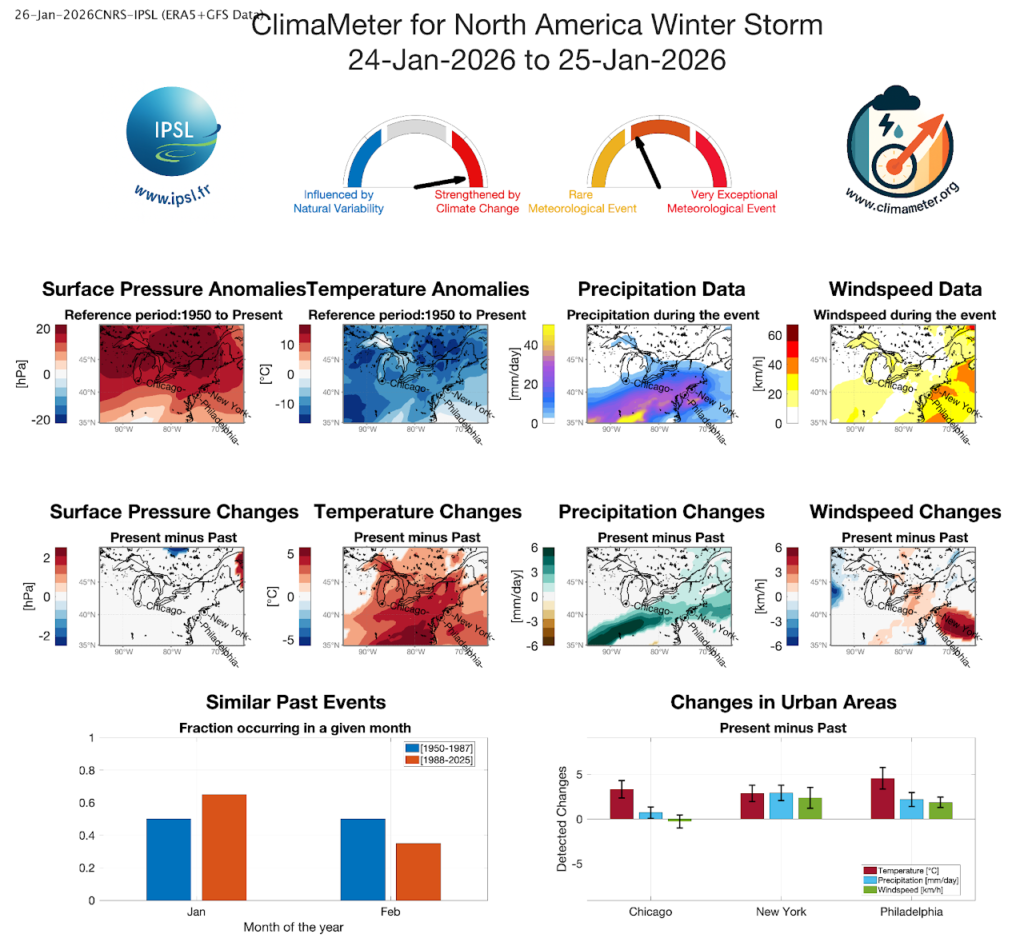
A winter storm buried parts of the eastern United States with snow, sleet and freezing rain in January. At first glance, it looked like a classic cold-weather event. In reality, it was not. Instead, it carried a clear climate signal.
Scientists say warming made the storm wetter and more intense. A warmer atmosphere holds more moisture. For every 1°C rise in temperature, air can hold about 7% more water vapor. That moisture later falls as heavier rain or snow.
ClimaMeter estimates the storm formed in air up to 5°C warmer than past decades. That added up to roughly 20% more precipitation.
This is not an anomaly. It is physics. The Clausius-Clapeyron relationship links rising temperatures with heavier precipitation. Peer-reviewed studies confirm extreme rainfall intensity rises roughly 7% per degree Celsius of warming.
India is already seeing this pattern. The country recorded its eighth warmest year in 2025, with rising night-time temperatures driving floods and extreme rainfall. Research shows anthropogenic warming is increasing the frequency and intensity of heavy precipitation across India, especially in central and southern regions.
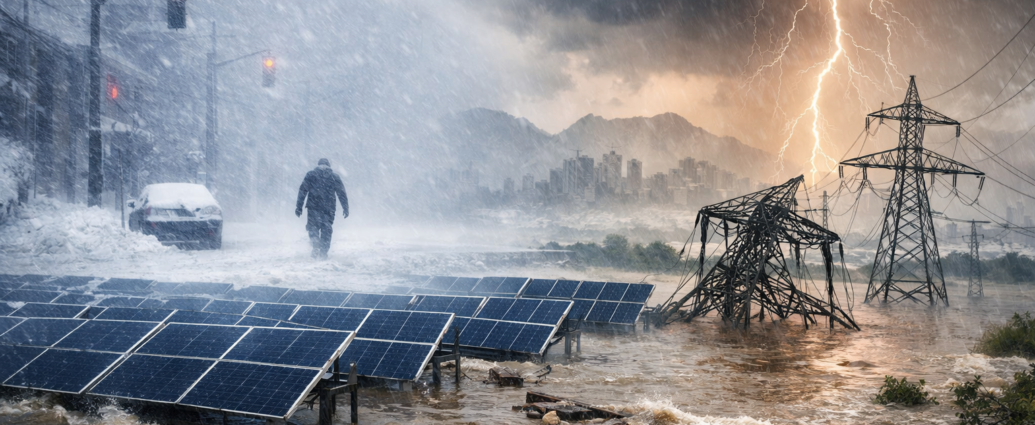
The paradox matters for clean energy. Extreme storms, for example, strain power grids, disrupt supply chains, and increase the need for resilient infrastructure. Heavy snowfall, meanwhile, can collapse transmission lines, while flash floods can submerge solar plants. Heatwaves, in contrast, push electricity demand to record highs and stress generation capacity.
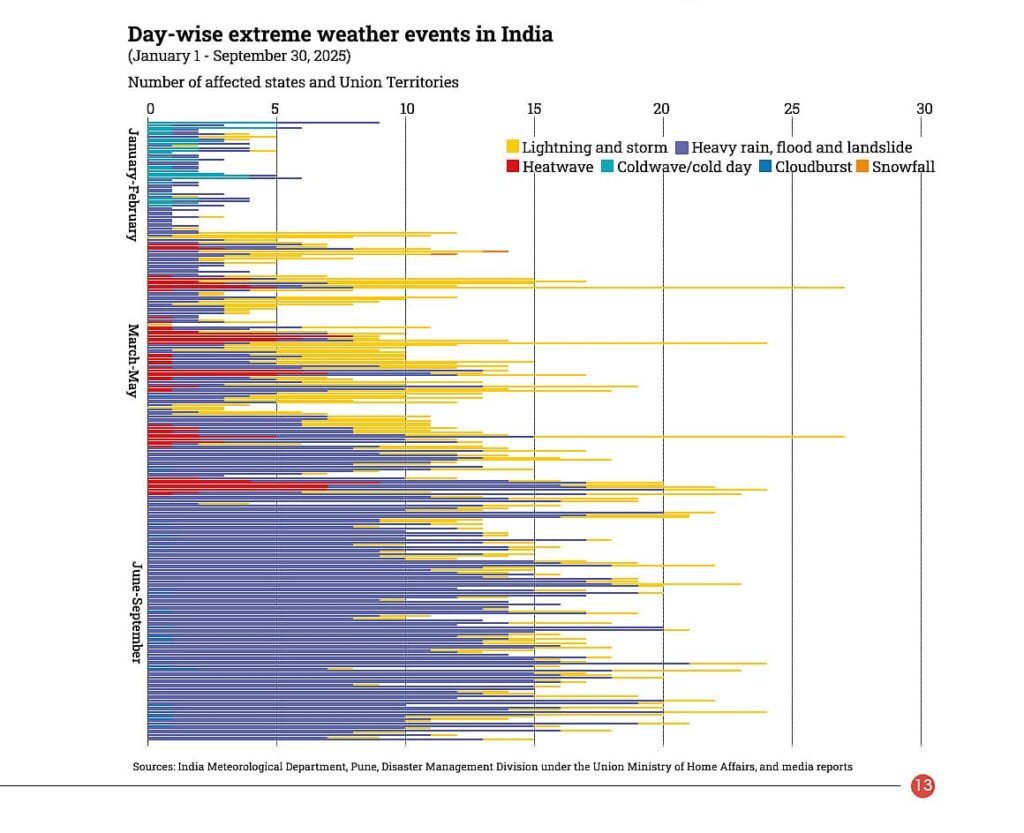
Climate risks now intersect with energy transition risks. As a result, grids designed for yesterday’s weather will fail under tomorrow’s extremes. Likewise, emergency planning based on historical averages will no longer hold in a warming climate.
India faces a double challenge. It must expand clean energy while hardening infrastructure against climate shocks. That means climate-resilient grids, distributed storage, and decentralized renewables. It also means faster emissions cuts to slow the warming feedback loop.
Storms are no longer just weather stories. They are energy stories. And they are policy stories. The science is clear. The costs of delay are rising.
Reference- Scientific American, The Guardian, National Geographic, ClimaMeter, Down To Earth
Comments are closed, but trackbacks and pingbacks are open.