



Cochin International Airport Ltd (CIAL), which became the world’s first solar-powered airport in 2015, has made yet another move in self-sustainability of power, by commissioning a ‘floating’ solar power plant which will have a capacity of 452 Kilowatt-hours (KWh) on Sunday.
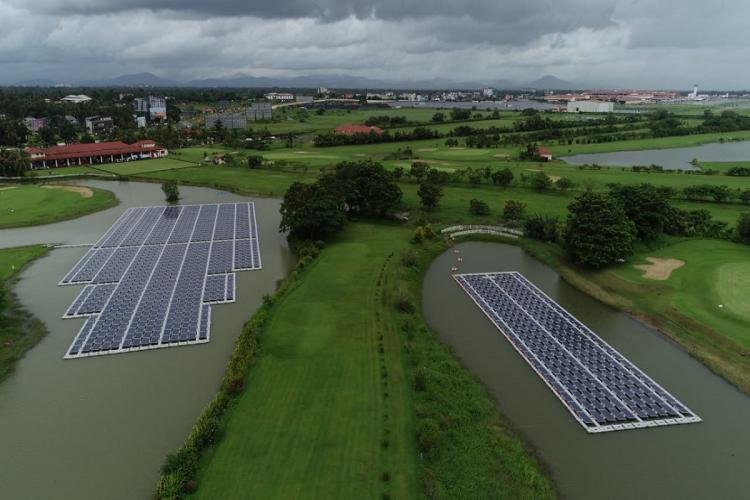
With the installation of the plants with a capacity of 452 KWh over two artificial lakes, the cochin airport’s total installed capacity has risen to 40 MWp helping it to produce around 1.60 lakh units of power a day against per day consumption of around at 1.30 lakh units, the CIAL said.
According to CIAL, this is one of the biggest floating solar power plants in the state.
The total installed capacity of the airport has become 40 Megawatt (MWP) with this. CIAL, in a press statement, termed it as an effort to sustain the airport power positive by using green energy.

The newly installed plants are cost-effective high-density polyethylene floats using French technology, upon which 1,300 photovoltaic panels were mounted and laid over two artificial lakes located in the 130-acre CIAL golf course.
The plants have come at a cost of Rs 2 crore.

“The plants covering a total area of one acre are connected to the KSEB (Kerala State Electricity Board) power grid. The pre-commissioning trials showed that the panels which are producing power with maximum output efficiency among the eight solar power plants installed at various locations in the airport premises,” the statement said.
This is an Agency News Feed; edited by Clean-Future Team