



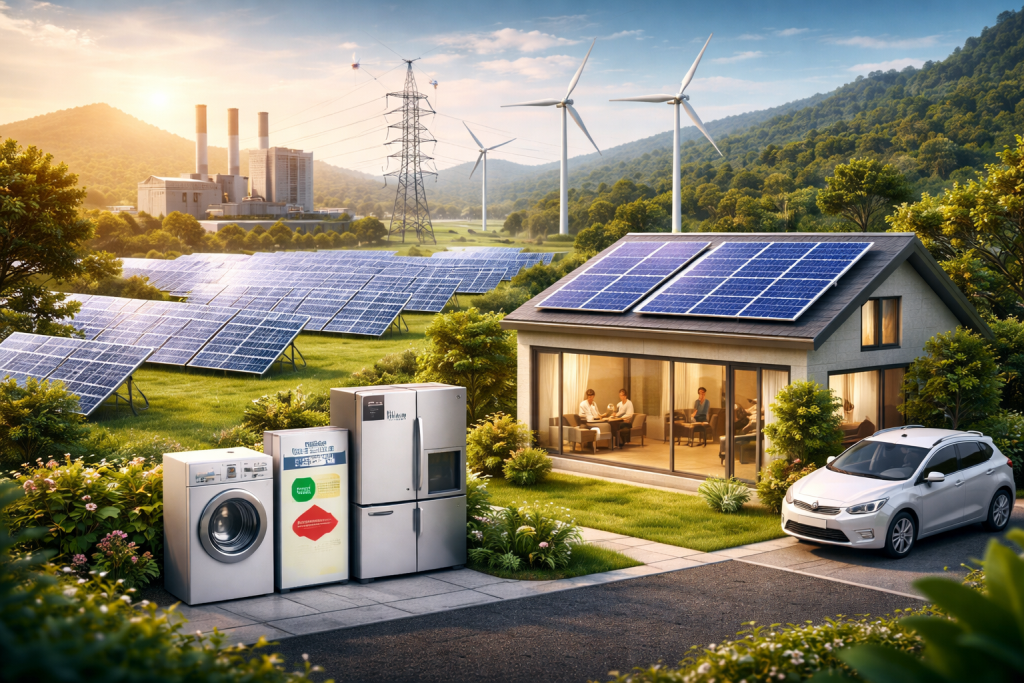
India’s clean energy ambitions are accelerating. Yet a critical gap remains. Energy efficiency is still underutilised, analysts say, even as renewable capacity expands.
The government has set a target for 60% of installed electricity capacity from non-fossil sources by 2035. This builds on an earlier milestone. India already crossed 50% clean capacity in 2025, ahead of schedule.
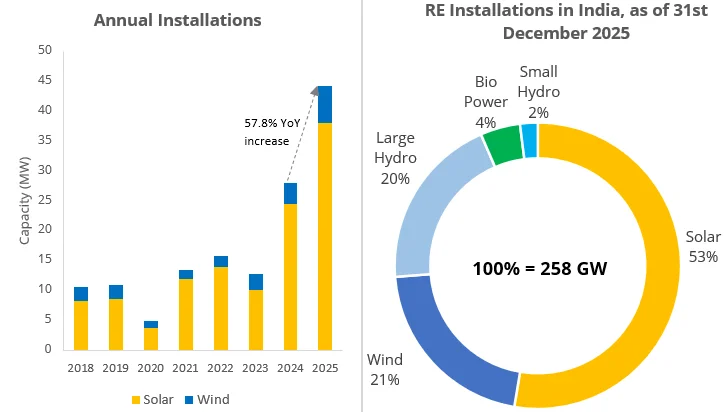
However, the numbers reveal a structural imbalance. While non-fossil sources account for over half of installed capacity, they generate only 22–26% of actual electricity. This gap highlights inefficiencies in utilization, storage, and demand management.
Energy efficiency remains the missing piece. Without it, clean capacity is being underused. Power demand is rising fast. India’s per capita electricity consumption will more than double by 2047.
Experts warn that supply-side expansion alone will not be enough. “There is a significant gap,” the analysis notes, pointing to weak integration between capacity and consumption.
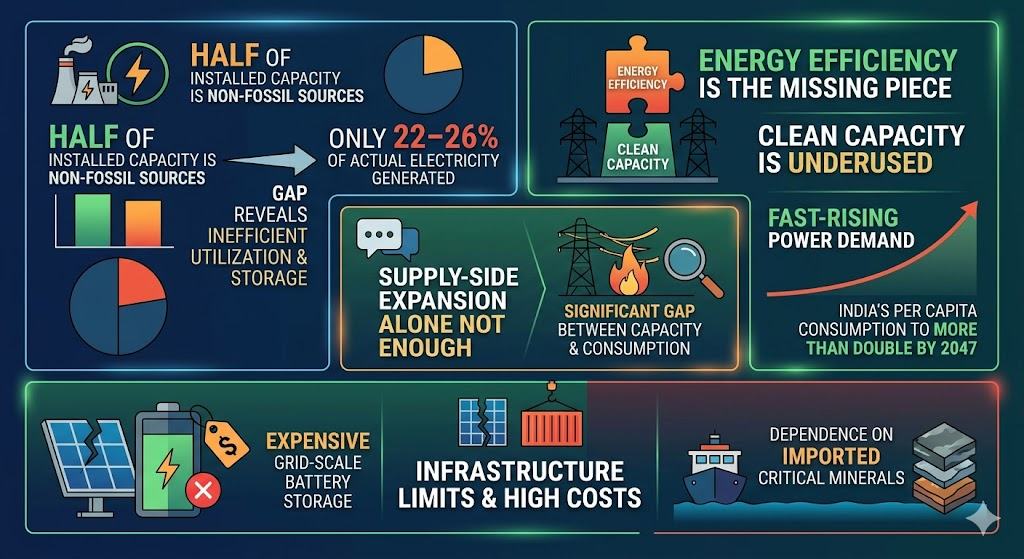
The challenge is compounded by infrastructure limits. Grid-scale battery storage remains expensive. India also depends on imported critical minerals, raising costs and slowing deployment.
At the same time, inefficiencies persist at the consumption level. Transmission and distribution losses remain high in parts of the system. Consumers and developers still resist efficient appliances and building standards. The role of institutions is expanding like the Bureau of Energy Efficiency is promoting efficient energy use through standards and labeling programs.These efforts aim to reduce demand without compromising growth.
Policy experts argue that demand-side reforms must now match supply-side ambition. Efficient cooling, appliances, and industrial processes can significantly lower peak demand. This would reduce pressure on grids and cut emissions.
The stakes are high. India has pledged to cut emissions intensity by 47% from 2005 levels by 2035. Achieving this goal will require more than adding renewable capacity.
Energy efficiency offers a low-cost solution. It can reduce both emissions and energy bills. Yet it has received less policy focus compared to solar and wind expansion. The transition is being shaped by global uncertainty. Supply chains, geopolitical risks, and financing constraints continue to affect clean energy deployment.
India’s path forward is clear. Pair renewable energy growth with aggressive efficiency measures. Without this balance, the clean power push will fall short of its full potential.
Reference-The Indian Express, Carbon Brief, Bureau of Energy Efficiency, Wikipedia, Amundi Research Center