



India recorded one of the largest emissions declines among major economies in 2025. The drop came even as electricity demand and economic activity increased. The change signals early progress in the country’s energy transition.
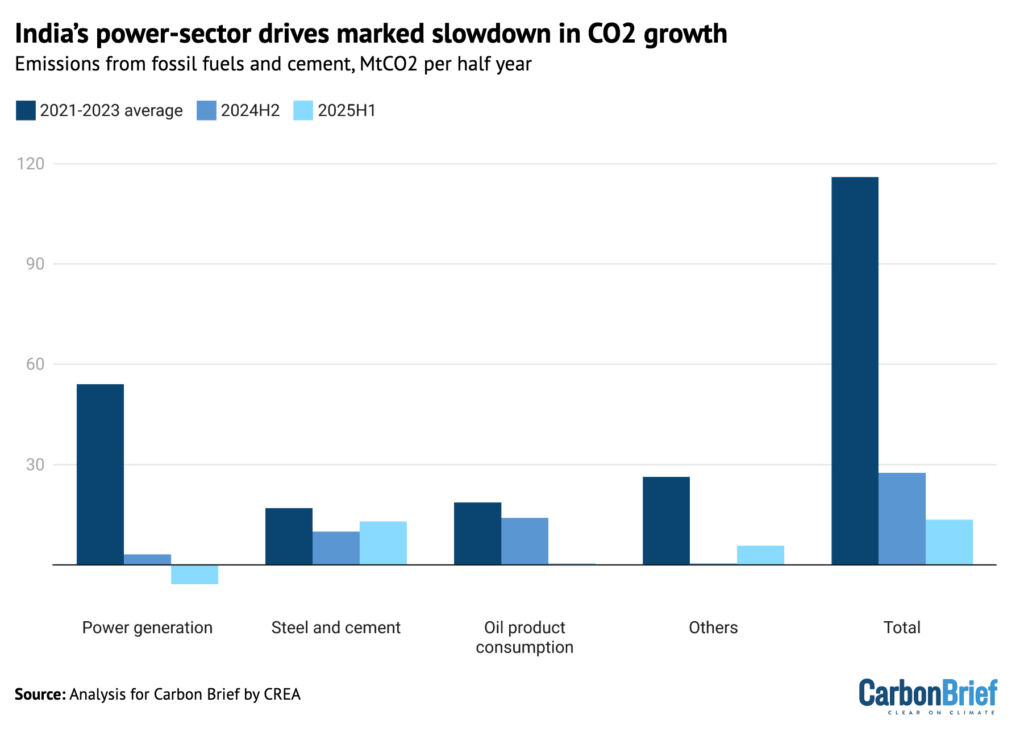
New data from Climate TRACE shows India’s power sector emissions fell 2.6% in 2025, the first decline since 2020. The reduction was driven by expanding renewable energy and shifting power generation patterns.
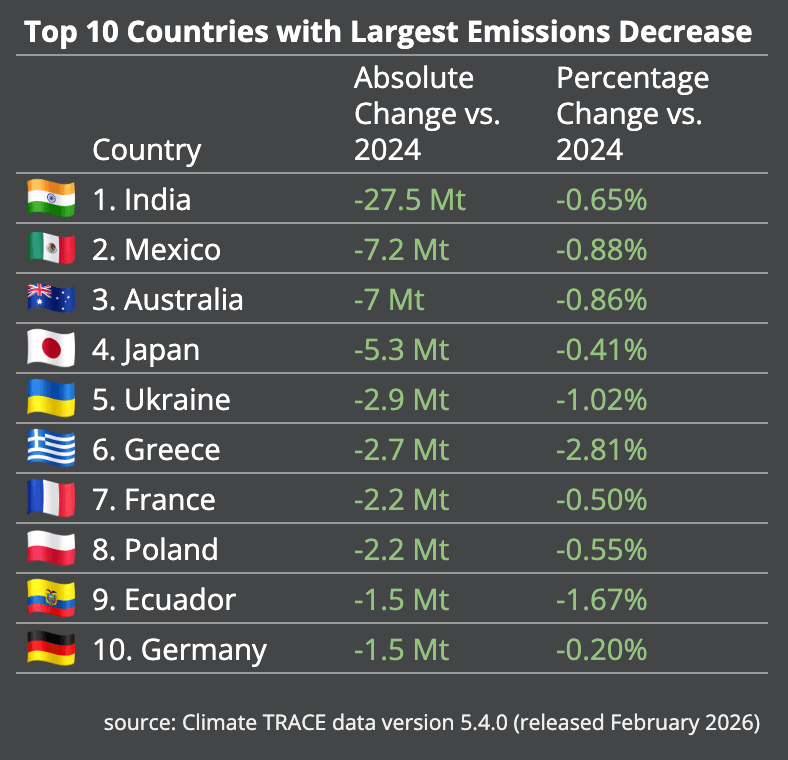
India remains the world’s third-largest emitter, producing roughly 3.2 billion tonnes of CO₂ annually. Yet its per-capita emissions are about 2.2 tonnes per year, far below many developed economies.
The power sector is central to India’s climate challenge. Electricity generation accounts for a major share of national emissions. Fossil fuels, particularly coal, still dominate the system. However, renewable energy growth is beginning to change the trend.
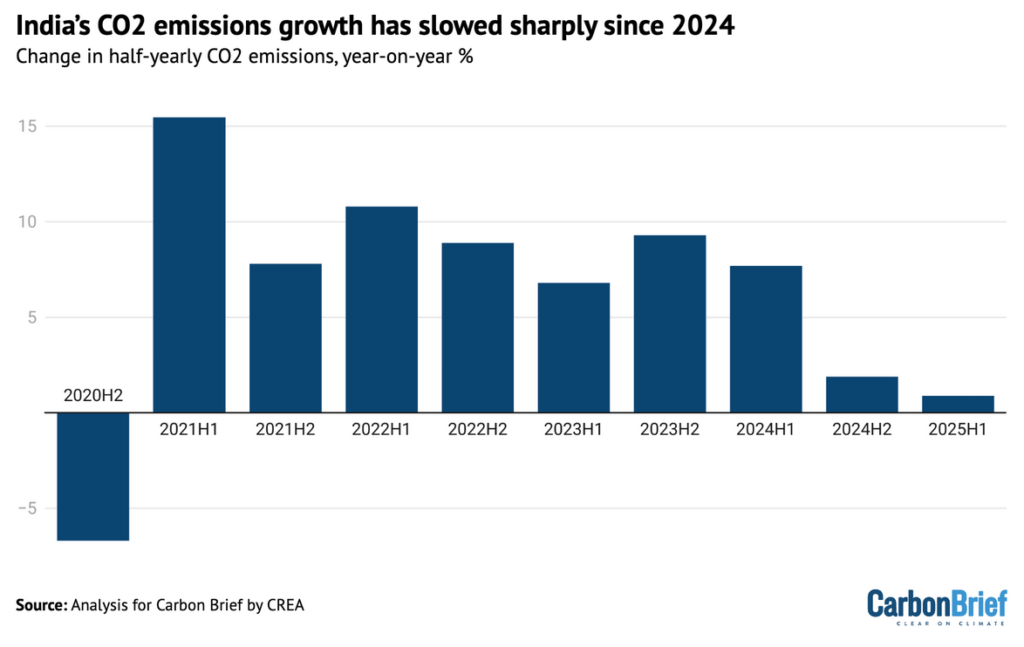
A separate analysis by the Centre for Research on Energy and Clean Air (CREA) found that power-sector emissions fell about 1% in the first half of 2025. It was only the second decline in nearly five decades.
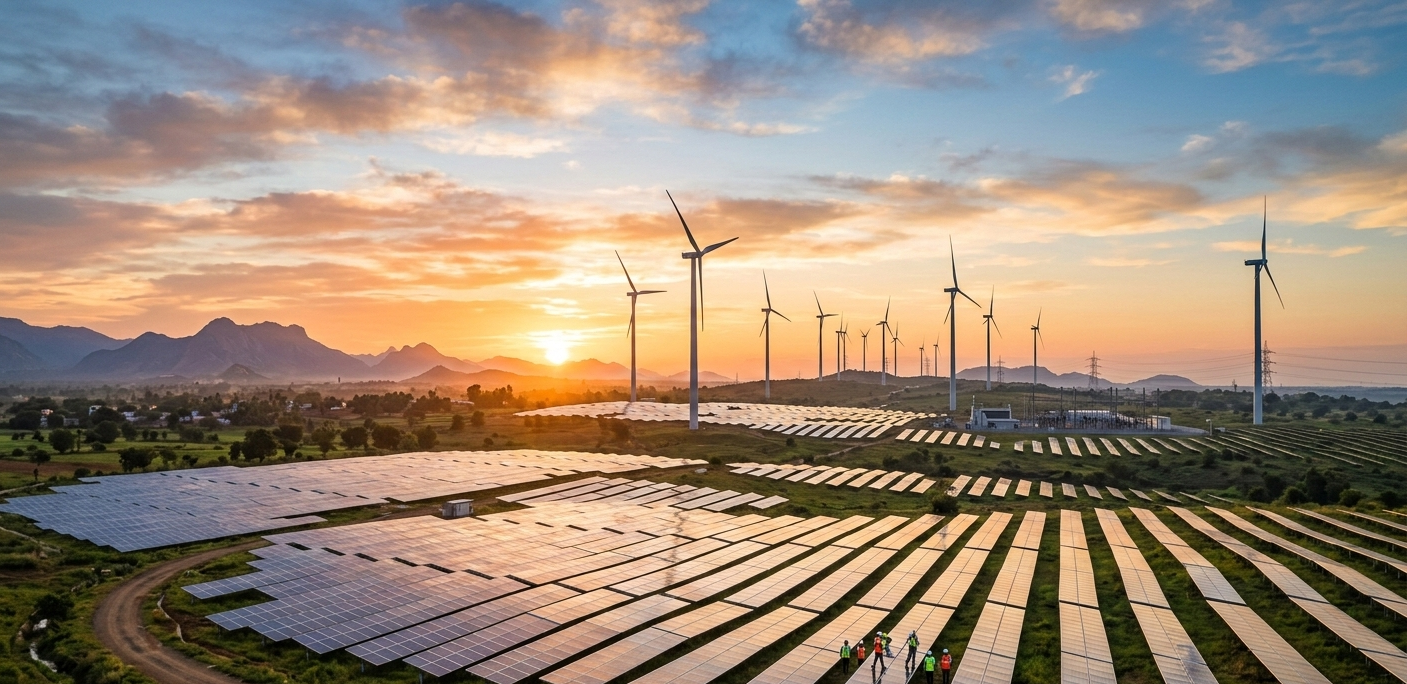
The shift reflects strong clean energy expansion. India added significant solar and wind capacity in recent years. Clean energy capacity growth reached 25.1 gigawatts in 2025, supporting nearly 50 terawatt-hours of electricity generation.
At the same time, fossil power output declined. Coal-based electricity generation in India dropped by about 3% in 2025. This trend coincided with rising renewable deployment and improvements in grid flexibility.
Demand still rose. India’s growing economy requires large amounts of power. Yet renewable energy absorbed part of the demand increase. This helped prevent a proportional rise in emissions.
India has set ambitious climate targets. The government aims to install 500 gigawatts of non-fossil electricity capacity by 2030. The country also plans to reach net-zero emissions by 2070.
Meanwhile, policy measures are expanding as well. In addition, emission-intensity targets for heavy industries and carbon-credit mechanisms are being introduced. As a result, these policies aim to accelerate decarbonisation across the economy.
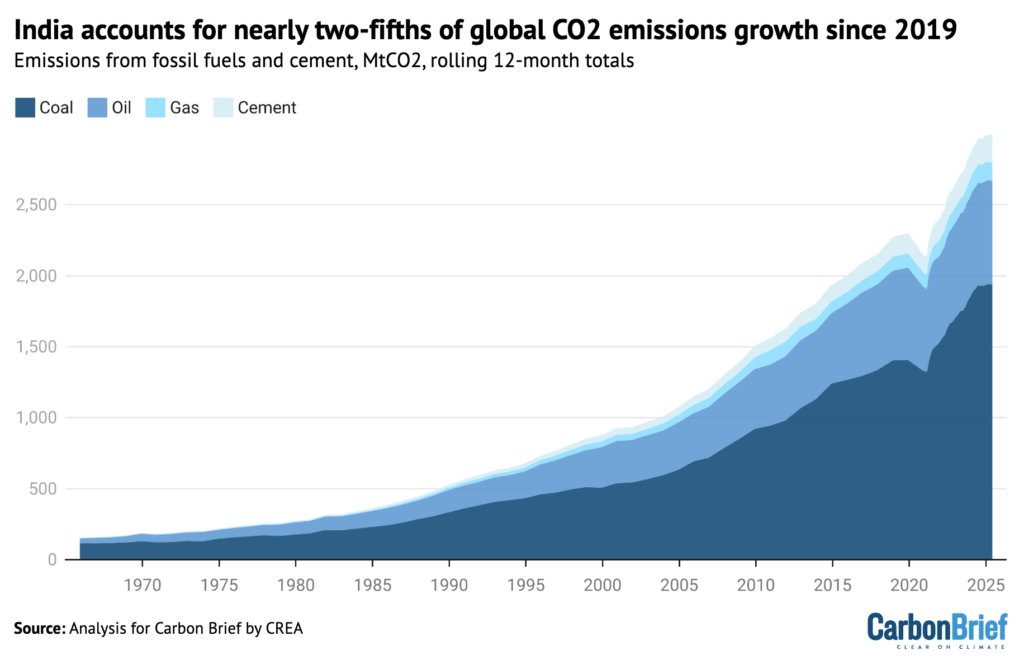
However, challenges remain. Coal still generates more than half of India’s electricity. Energy demand is expected to rise sharply in the coming decade.
Still, the latest data suggests a shift is underway. If renewable growth continues, experts say India’s power-sector emissions could peak before 2030.
Reference- Down To Earth, Reuters, World Economic Forum, Ministry of Power, CarbonBrief