



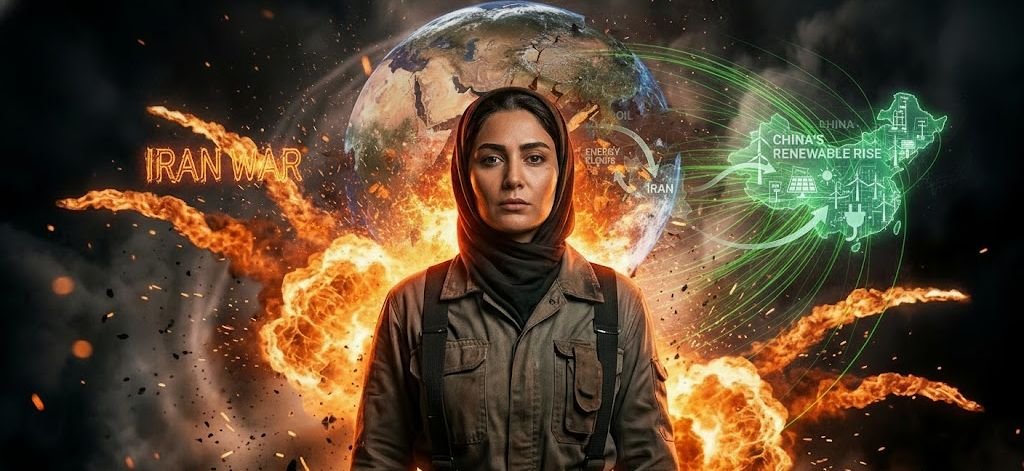
Global markets rarely reward instability. However, the ongoing 2026 Iran war is doing exactly that—for China’s clean energy sector. As oil supply risks intensify, investors are pivoting fast. Consequently, the result is a sharp, strategic bet on renewables, led by Beijing.
The numbers are telling. Chinese green stocks have surged in March. GCL Energy Technology jumped 48%, while battery giant CATL gained about 15%. The shift is not ideological. It is pragmatic. Energy security, not climate ambition, is now driving capital flows.
Oil markets remain volatile. Currently, prices have crossed $100 per barrel amid supply disruptions linked to the Strait of Hormuz. As a result, this has triggered what analysts call the biggest energy security shock in decades. Consequently, renewable energy is being re-positioned as a hedge against geopolitical risk.
Executives at CERAWeek say the crisis could “accelerate renewable development” as nations try to reduce fossil fuel dependence. This shift is already visible in Asia. China dominates solar, wind, batteries, and electric vehicles. Investors see long-term export gains.
However, the transition is uneven. Europe faces a “renewables paradox.” Higher energy prices help existing producers but rising capital costs slow new projects. Meanwhile, China benefits from scale, state support, and lower production costs.
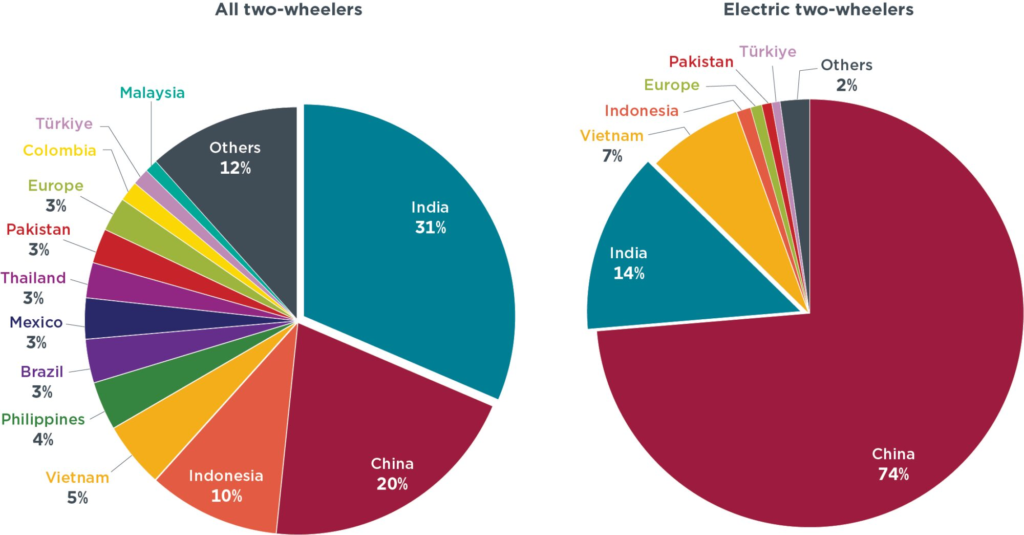
India stands at a critical junction. The country imports over 80% of its crude oil. Any prolonged disruption raises inflation risks. At the same time, India’s EV adoption is accelerating. Electric two-wheeler sales grew by over 10% in 2025. This mirrors early signals seen in China years ago.
Policy clarity will be key. Notably, India has pledged to cut emissions intensity by 47% by 2035. However, execution gaps remain. Specifically, grid upgrades, financing, and domestic manufacturing need urgent scale-up. Otherwise, China will keep capturing a larger share of the global green supply chain.
There is also a strategic warning. China is not only doubling down on renewables but also reinforcing coal-based alternatives to secure energy independence. This dual strategy strengthens resilience.
The bigger picture is clear. Wars reshape energy systems. The Iran conflict is no exception. It is accelerating a structural shift toward renewables. But the winners will be those who move fastest—and build deepest. For India, the message is blunt. This is not just a climate story. It is an economic and geopolitical race.
Reference- Reuters, The Economic Times, CNBC, The International Council on Clean Transportation, LONGBRIDGE