



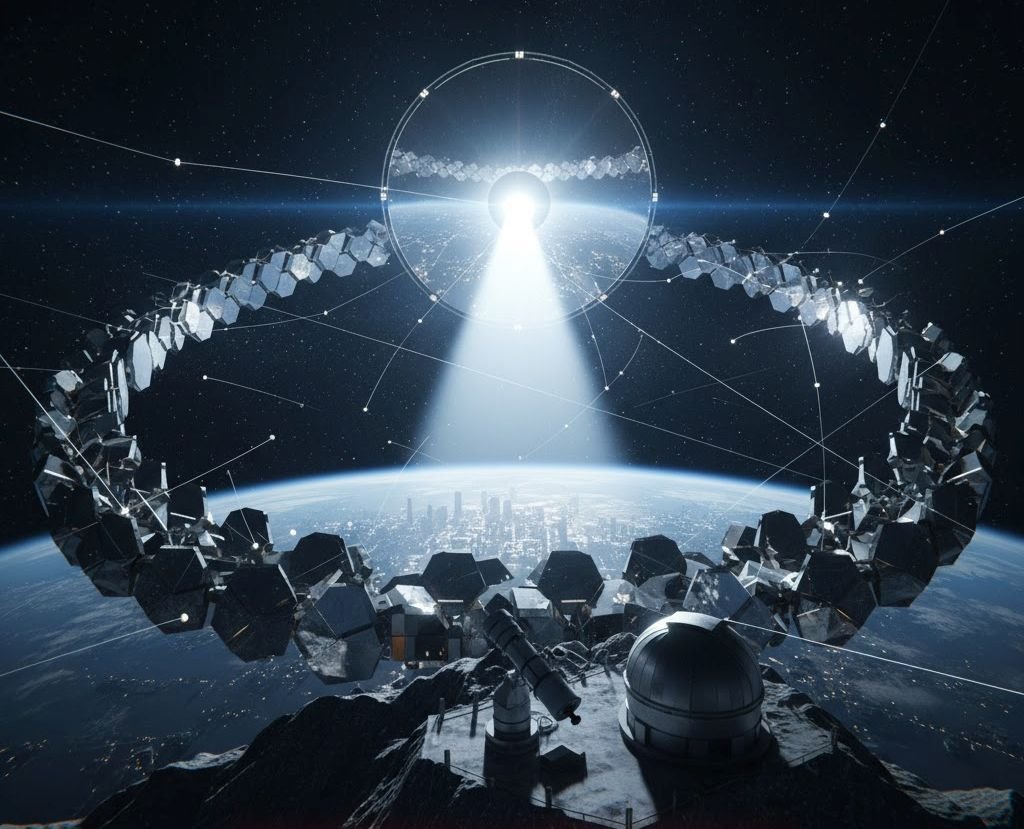
A US startup wants to brighten the night sky from space. The proposal is ambitious. It is also controversial.
California-based company Reflect Orbital is seeking approval from the Federal Communications Commission (FCC) to launch a satellite equipped with a giant mirror that can reflect sunlight onto Earth after dark. The idea is simple. Satellites would redirect sunlight from orbit to specific locations on Earth.
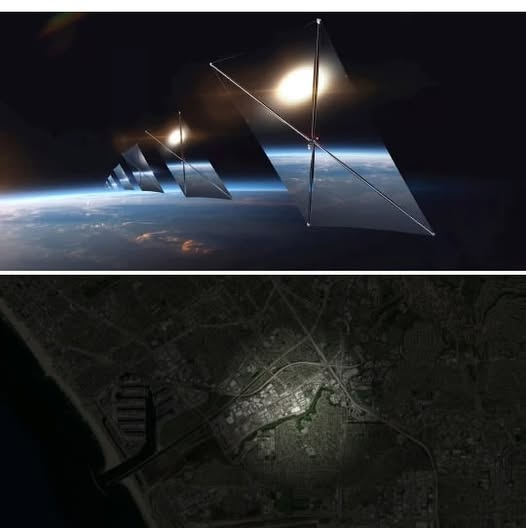
The first demonstration satellite, called Eärendil-1, is expected to carry an 18-by-18-metre reflective mirror made of lightweight mylar. It could illuminate a 5-kilometre patch of Earth with light up to four times brighter than the full moon, according to project details.
The company hopes to deploy thousands of similar satellites in low-Earth orbit over the next decade. Early plans suggest as many as 4,000 mirror satellites by 2030, while some long-term concepts imagine tens of thousands.

The concept is marketed as “sunlight on demand.” Solar farms could generate power after sunset. Emergency zones could be illuminated. Cities might even receive temporary night lighting.
However, scientists are skeptical.

Astronomers say mirror satellites could worsen light pollution. They could disrupt deep-space observations. Large satellite constellations already affect astronomical research. Reflective mirrors may intensify the problem.
Ecologists also warn about environmental impacts. Artificial night lighting could confuse migrating birds, insects, and other wildlife that rely on natural light cycles. They could also disrupt circadian rhythms.
Some experts question the engineering feasibility. Calculations suggest that more than 3,000 satellites would need to deliver just 20% of midday sunlight to a single location.
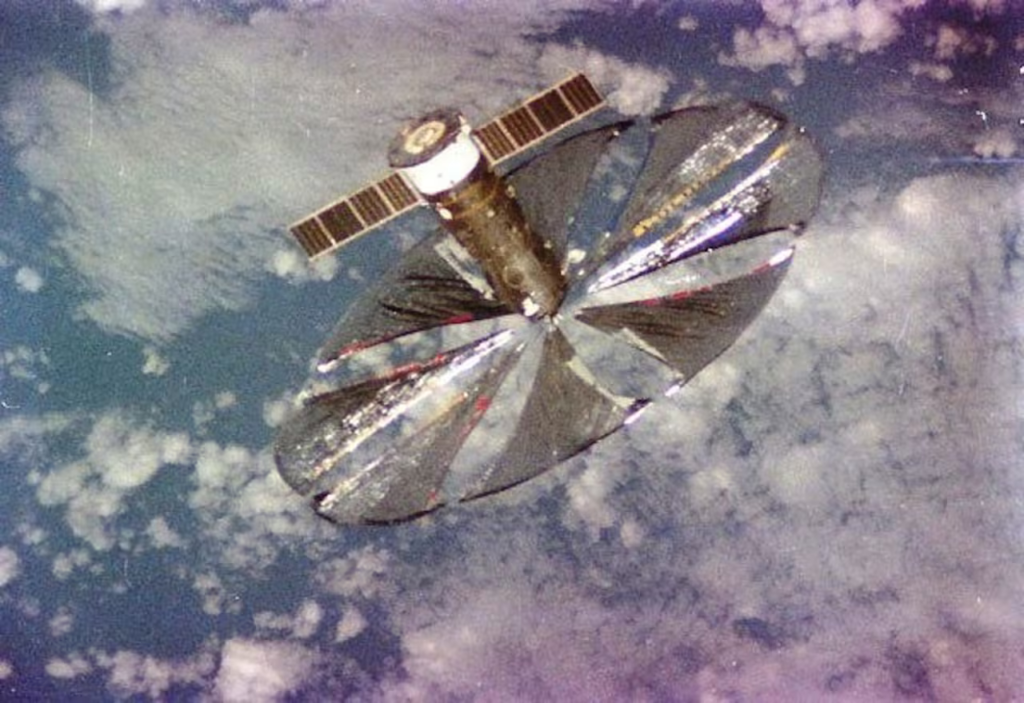
The idea itself is not new. In 1993, Russia tested a mirror satellite called Znamya. It briefly reflected sunlight toward Earth before engineers abandoned the project because of high costs and technical limits.
For countries like India, the concept raises mixed possibilities. India is expanding solar power rapidly. The country installed more than 73 GW of solar capacity by 2024, according to government data. Extending solar generation into evening hours could improve energy reliability. Yet the environmental cost of orbital lighting would need global regulation.
The night sky may soon become a testing ground for new energy ideas. But experts say scientists must understand the consequences before anyone switches on the lights.
Reference- Futurism, The New York Times, Smithsonian Magazine, US Federal Communication Commission