




Coral reefs around the world are facing an unprecedented crisis. In the summer of 2023, Florida experienced record-breaking ocean temperatures. Water in some bays rose above 38 °C, killing many corals before scientists could act. This event marked part of the fourth global coral bleaching event—now the most widespread ever recorded. Coral bleaching has affected 84 % of reefs across at least 83 countries and territories.

Scientists and conservationists now ask a hard question: should we actively alter coral reefs so they survive rising heat? Some researchers believe radical interventions may be necessary. For example, teams from the University of Miami and other institutions have worked to crossbreed corals with heat-tolerant traits. They even moved coral fragments from warmer Caribbean reefs to Florida to help boost resilience.
However, legal and regulatory barriers often slow or block these efforts. In many cases, scientists must wait months for permits to collect or transplant corals. By the time approval arrives, heatwaves have already damaged ecosystems. Practitioners argue that laws meant to protect ecosystems can also hinder emergency actions.
Meanwhile, coral researchers stress that innovative technology is essential. Assisted fertilization and genetic methods are already being tested in places like the Dominican Republic to enhance coral survival.
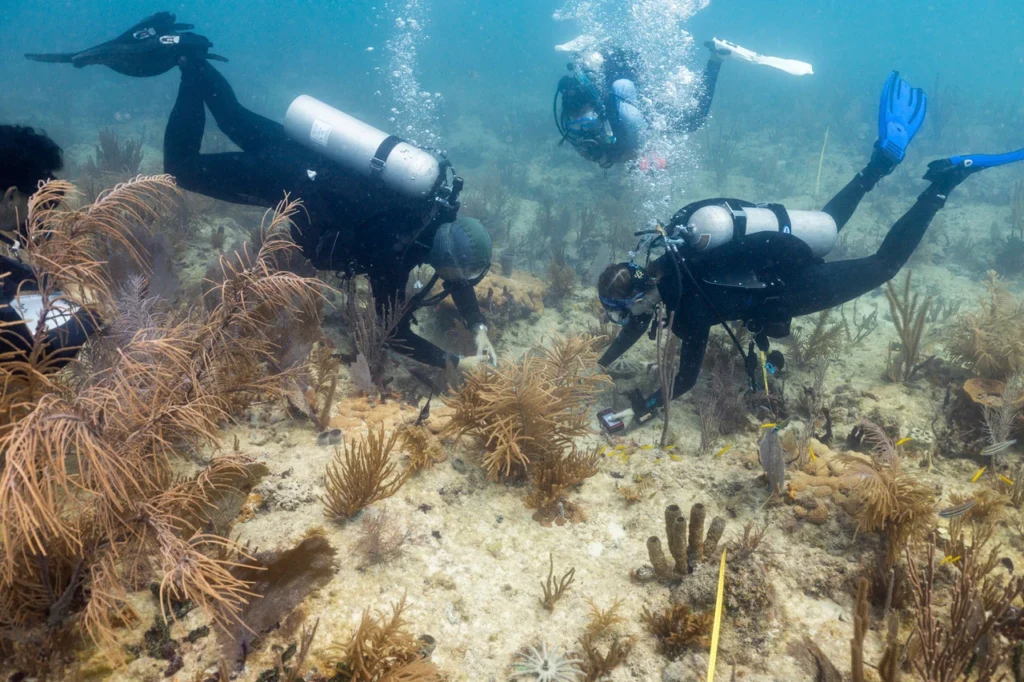
Still, experts warn that interventions alone aren’t enough. Many reefs may never fully recover without aggressive global efforts to reduce greenhouse gas emissions. Coral restoration must be paired with broader climate action, stronger governance, and regulations that allow rapid response during climate emergencies.
The debate continues. Some see legal reform and scientific innovation as crucial. Others worry about unforeseen ecological risks. Ultimately, saving coral reefs will require cooperation between scientists, regulators, and communities who depend on healthy oceans.
Reference- Aeon Essay, AP News, Nature Magazine, Australian Institute of Marine Science