



Artificial intelligence (AI) has become part of daily life. Tools like ChatGPT feel immediate and light. Yet the environmental cost is growing fast. Behind each text exchange is a network of massive data centers. These facilities draw electricity and water, and they emit carbon every time a prompt runs. Earthday.org reports that this hidden cost is no longer negligible.

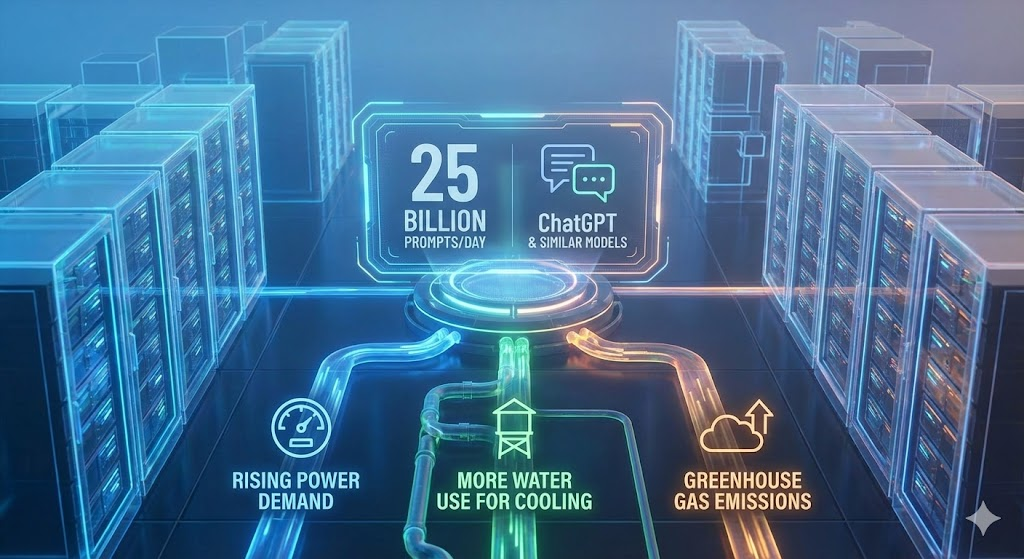
Users now send about 25 billion prompts per day to ChatGPT and similar models, according to OpenAI figures. Each prompt triggers complex computation inside energy-intensive servers. The result is rising power demand, more water use for cooling, and more greenhouse gas emissions.

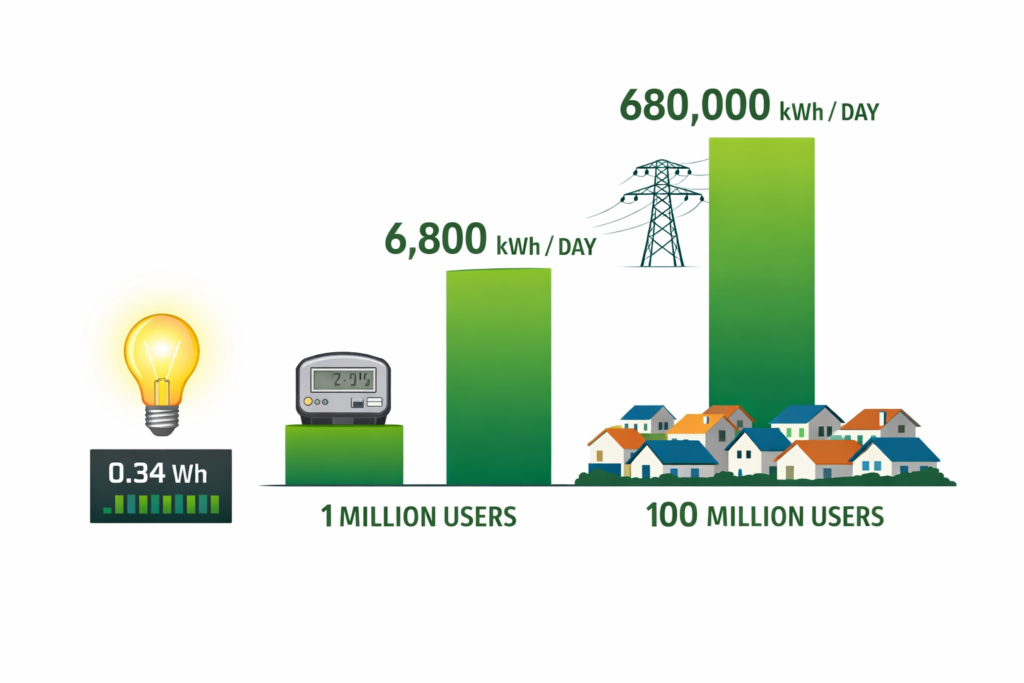
A single prompt may use about 0.34 watt-hours of electricity, roughly the energy a light bulb uses in two minutes. When that is multiplied by millions of daily users, the consumption becomes substantial. At one million users, prompt energy could equal 6,800 kilowatt-hours per day. However, at 100 million users, that figure rises sharply to 680,000 kilowatt-hours daily — a level that is comparable to the power needs of 22,000 households.
Data centers now draw more than 4% of total U.S. electricity — roughly the same as all residential lighting. Projections suggest that share could rise above 6.7% to 12% by 2028 if AI workloads continue to expand.
Water is another factor. Servers produce heat as they operate. As a result, cooling systems rely heavily on water to manage rising temperatures. In the United States alone, data centers consumed an estimated 17 billion gallons of water in a single year. In comparison, that volume could meet the annual needs of roughly half a million people.

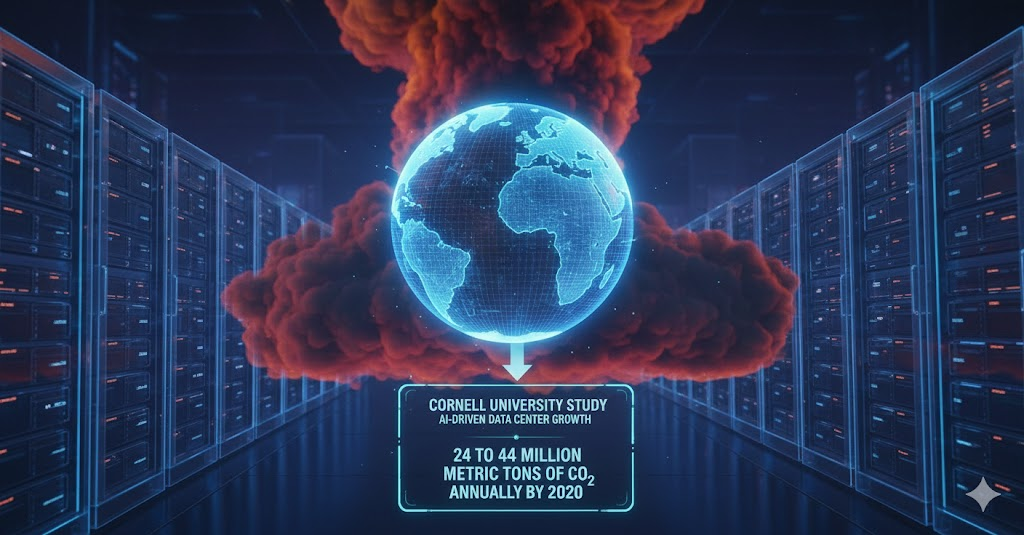
The climate impact of AI infrastructure is now measurable. A Cornell University study estimates that AI-driven data center growth could generate 24 to 44 million metric tons of CO₂ annually by 2030.
Efforts to measure and reduce AI’s environmental footprint are already underway. For instance, companies are investing in renewable energy, advanced cooling systems, and smarter data center locations. However, without broader action, the rapid growth of generative AI could place greater stress on energy grids and water resources. In turn, innovation may advance at the expense of long-term climate goals.
Reference- EARTHDAY.ORG, Forbes, The Business Insider, The Verge, Axios, MIT News