



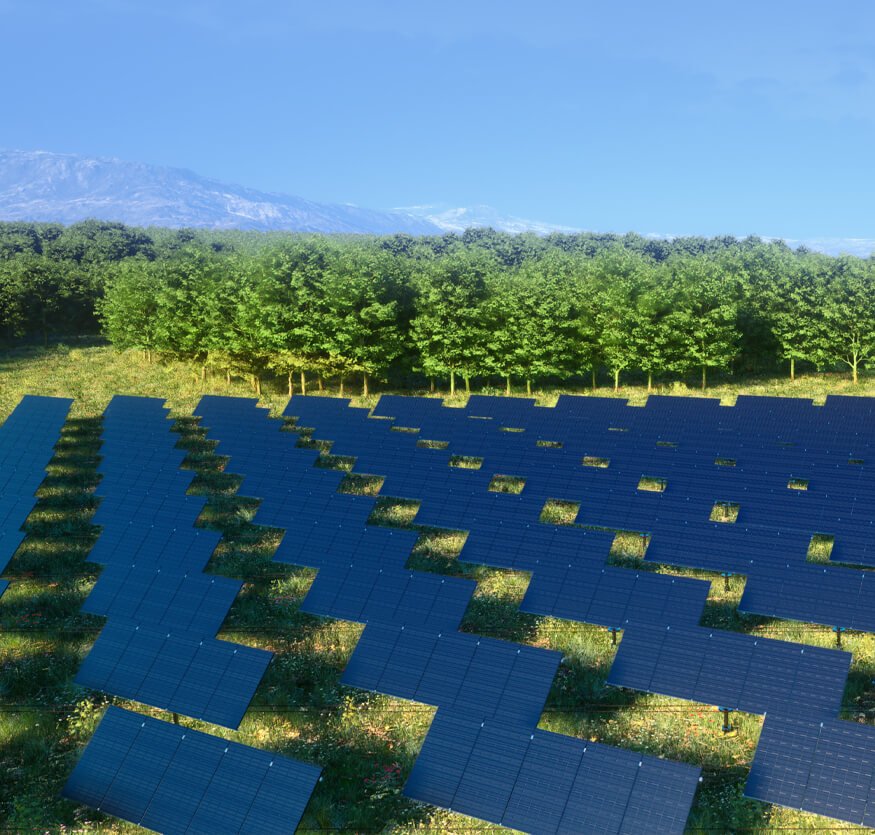
Solar power has expanded rapidly worldwide. Yet geography still limits how much electricity it can produce. In northern regions, sunlight often arrives at shallow angles. Traditional horizontal solar arrays struggle in these conditions.
A new generation of vertical solar trackers is now trying to solve that problem.
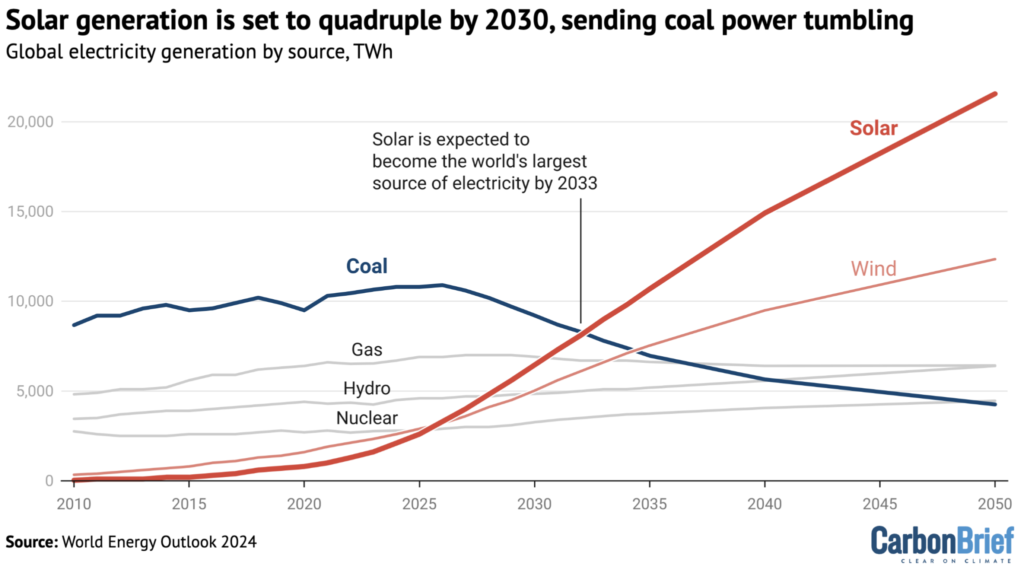
Solar is currently the fastest-growing electricity source globally. It produced about 7% of the world’s electricity in 2024, up from roughly 1% a decade earlier.
However, most solar farms still rely on fixed-tilt panels that face the equator. These systems generate the most electricity at midday. Electricity prices often fall during that period because supply is abundant. Demand peaks in the evening instead. At that time, conventional solar panels stop producing power.
Solar trackers partially address the issue. These systems rotate panels throughout the day. Horizontal trackers can produce up to 35% more energy than fixed-tilt installations, according to industry data.
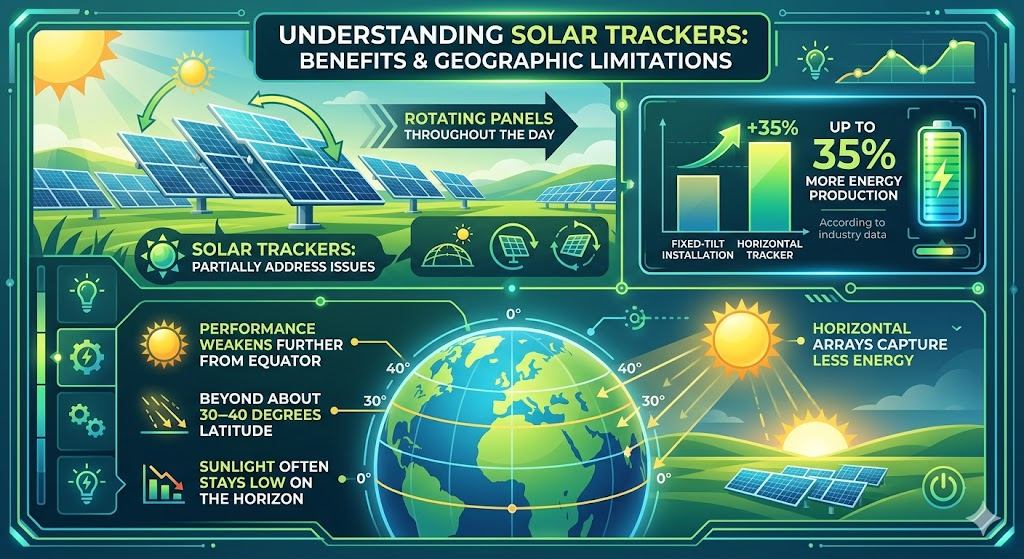
Yet their performance weakens further from the equator. Beyond about 30–40 degrees latitude, sunlight often stays low on the horizon. Horizontal arrays capture less energy there.
Vertical solar trackers attempt to capture this low-angle light. Panels rotate around an upright axis and follow the sun across the sky. They can produce electricity earlier in the morning and later in the evening. Those hours often coincide with higher electricity prices.
The technology has struggled with a major engineering challenge: wind.
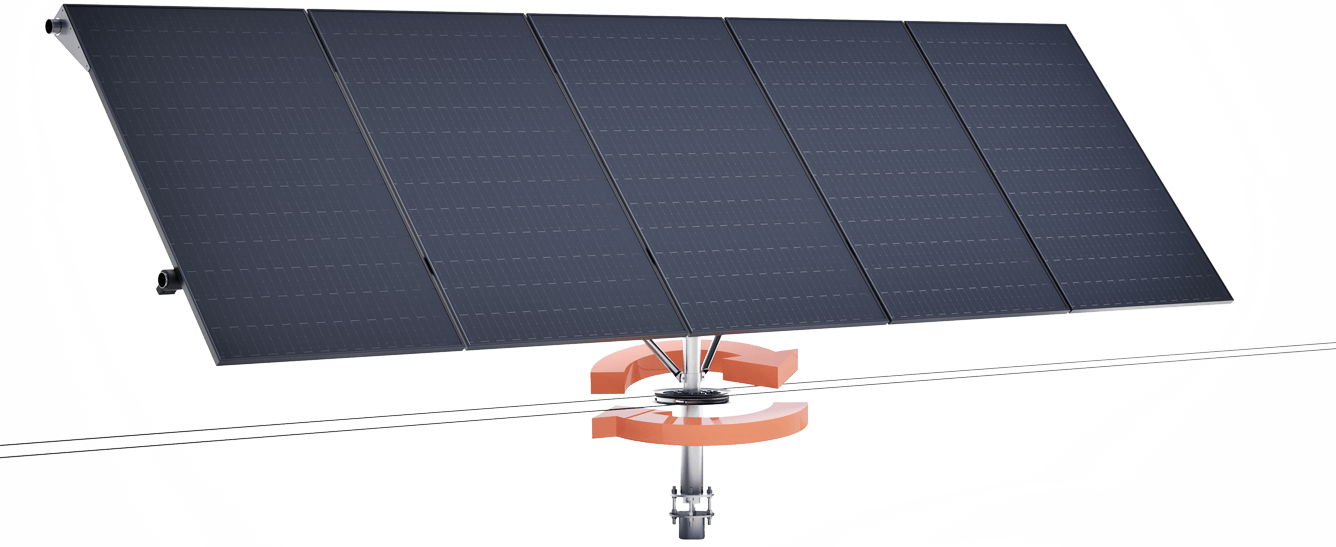
Vertical panels behave like sails. Gusts create torsion on the central pole that supports the system. This stress has historically made trackers fragile and expensive. Developers often avoided them as a result.
A Swedish start-up, Vaja, has developed a new wind-responsive design. The panels “feather” in strong winds, similar to how leaves or weather vanes move with airflow. This passive mechanism reduces wind load by more than 80%, according to company technology data.
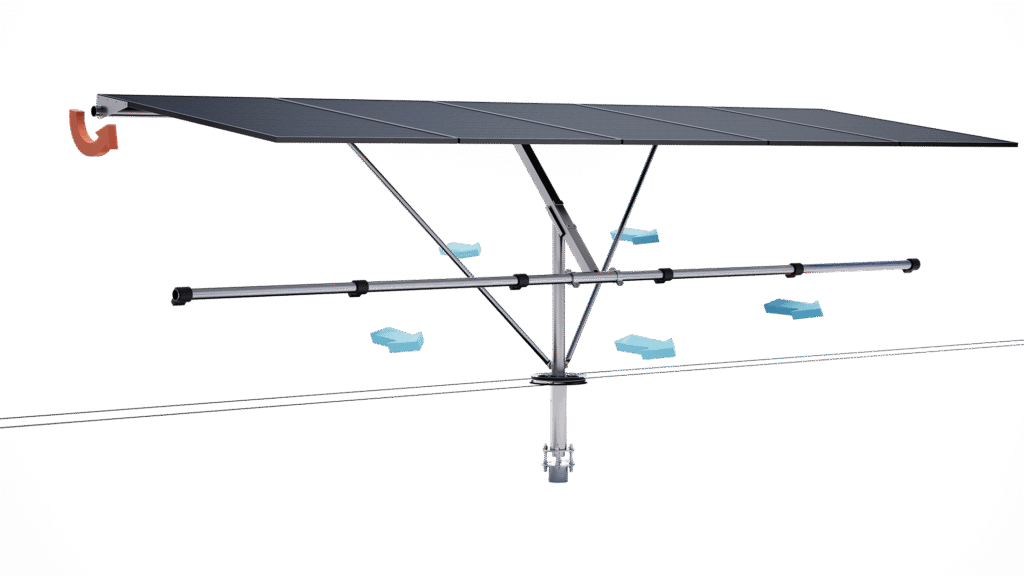
The prototype trackers have survived test speeds of around 140 km/h, which exceed typical storm conditions faced by most solar farms.
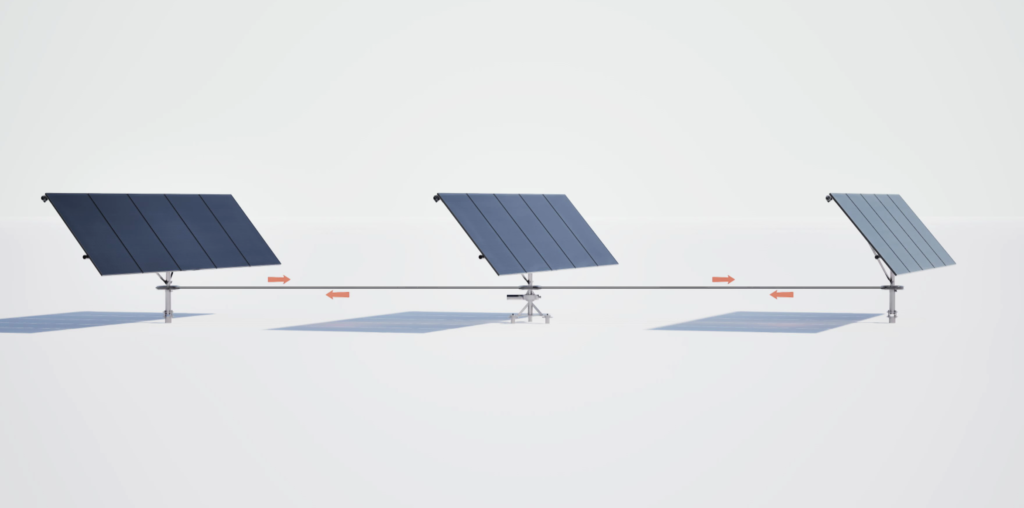
The system also simplifies installation. Rows of more than 100 panels can be rotated using a single motor and cable system, reducing hardware complexity and maintenance needs.
Researchers believe solar could provide up to 40% of global electricity by 2050 if deployment continues to accelerate. However, engineers warn that static solar installations alone may struggle to support such growth.
Vertical trackers may therefore fill an important gap. They capture low-angle sunlight and extend daily production hours. For solar power in northern climates, that difference could be decisive.
Reference- Scientific American, Vaja website, BBC, National Geographic