



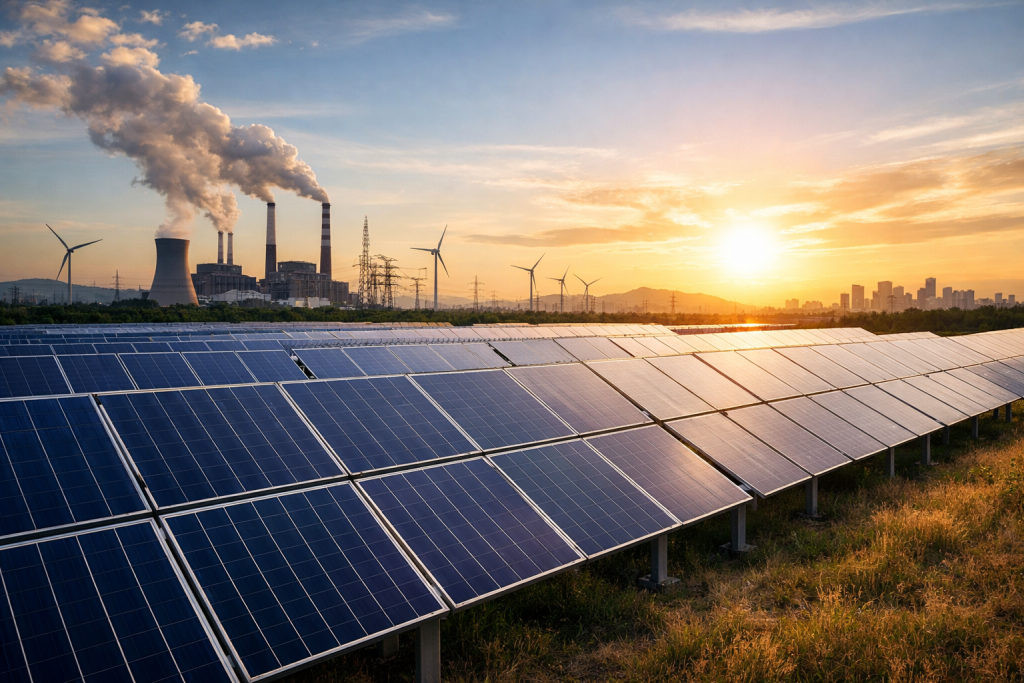
Solar energy is no longer a niche technology. It is becoming a mainstream power source worldwide. But is it truly economically viable?
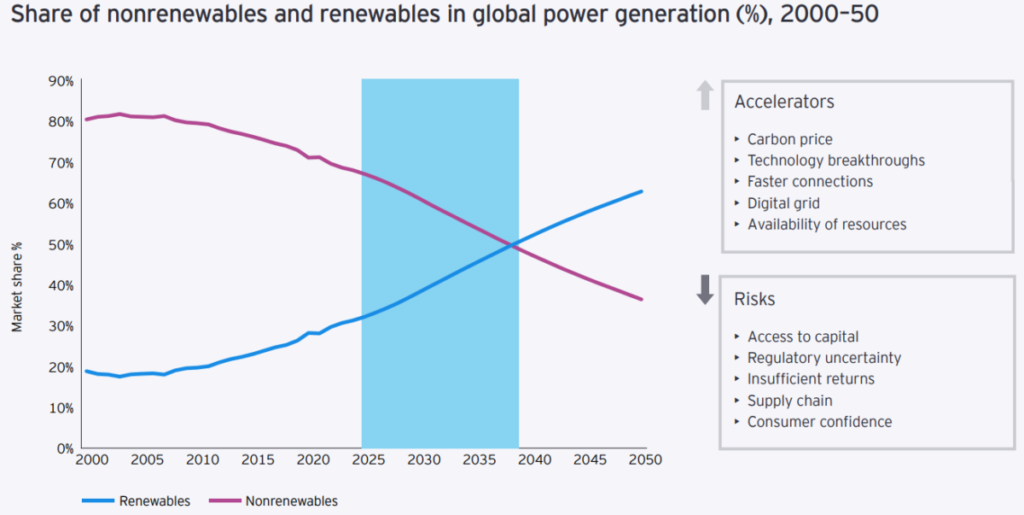
Global studies show strong evidence. The International Renewable Energy Agency reported an average solar power cost of about $0.043 per kWh in 2024, among the cheapest electricity sources globally. Ernst & Young (EY) also found solar power costs are 29% lower than the cheapest fossil fuel option.
In India, the economics look even stronger. Recent utility-scale solar tariffs range around ₹2.4 to ₹3 per kWh, among the lowest globally. Industry estimates show open-access solar power purchase agreements commonly priced between ₹2.3 and ₹4 per kWh. These numbers matter. Coal power often exceeds ₹4–₹6 per kWh when fuel, transport, and pollution costs are included. Solar has no fuel cost, which stabilizes long-term electricity prices.
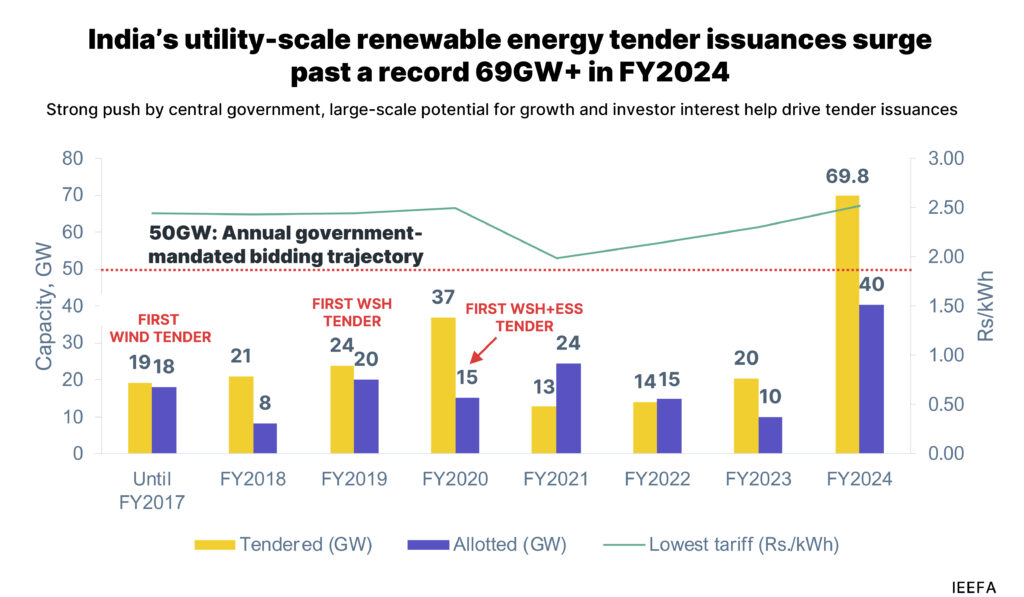
However, solar is not perfect. High upfront capital costs remain a barrier. Grid integration and storage also add expenses. Financing costs and policy uncertainty can impact project returns. India’s policy support is improving economics. Falling module prices and government incentives are driving rapid adoption. Experts say solar module costs have dropped sharply since 2010, enabling cheaper electricity today.
So, is solar economically viable?
Yes, for most new power projects today. The real question is not viability, but how fast storage and grid upgrades can scale.
Reference- JMK Research, IEEFA, PV-Magazine India, E&Y, IREA