




Economic confrontation has replaced armed conflict as the top global risk in 2026, according to the World Economic Forum’s (WEF) Global Risks Survey. Experts warn that rising trade disputes, sanctions, and geopolitical economic rivalries could disrupt global growth and clean energy investment.
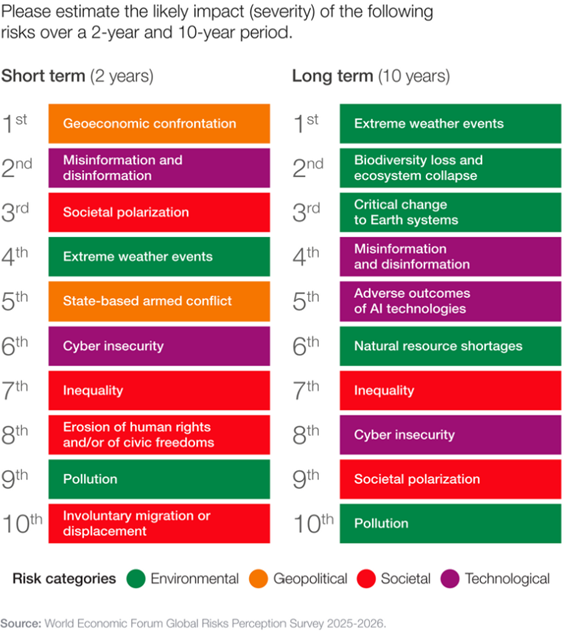
The survey highlights that countries increasingly use tariffs, export controls, and financial restrictions as strategic tools. These actions can fragment supply chains and slow energy transition projects. Clean energy technologies depend on global cooperation, critical minerals, and cross-border financing. Economic rivalry could increase costs and delay deployment.
WEF respondents also flagged climate change as a major long-term risk. Extreme weather, biodiversity loss, and resource shortages could worsen economic instability. The report warns that these risks are interconnected. Economic tensions can reduce climate cooperation and investment.
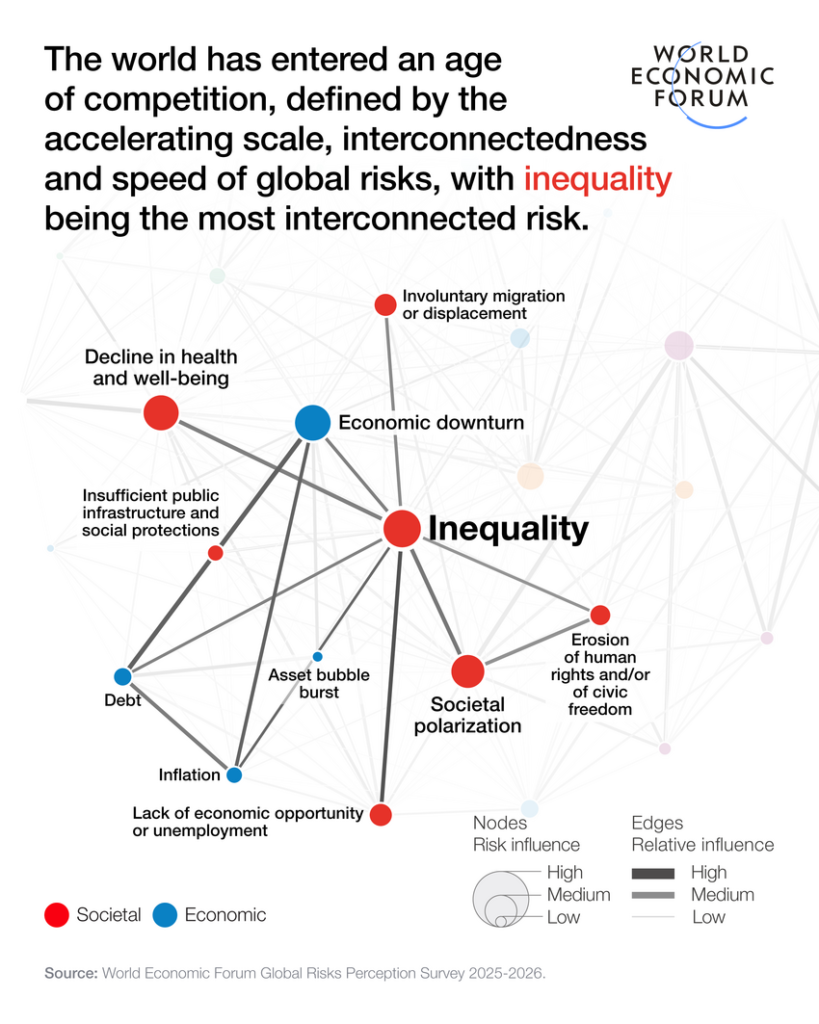
The survey draws insights from global experts in business, government, and academia. Analysts stress that global collaboration remains essential for climate action and sustainable growth. Reuters reported that experts see economic confrontation as a rising systemic threat that could reshape global markets and clean energy strategies. The WEF’s Global Risks framework also shows climate change and misinformation among top global risks.
Reference- TIME, Reuters, Investopedia