



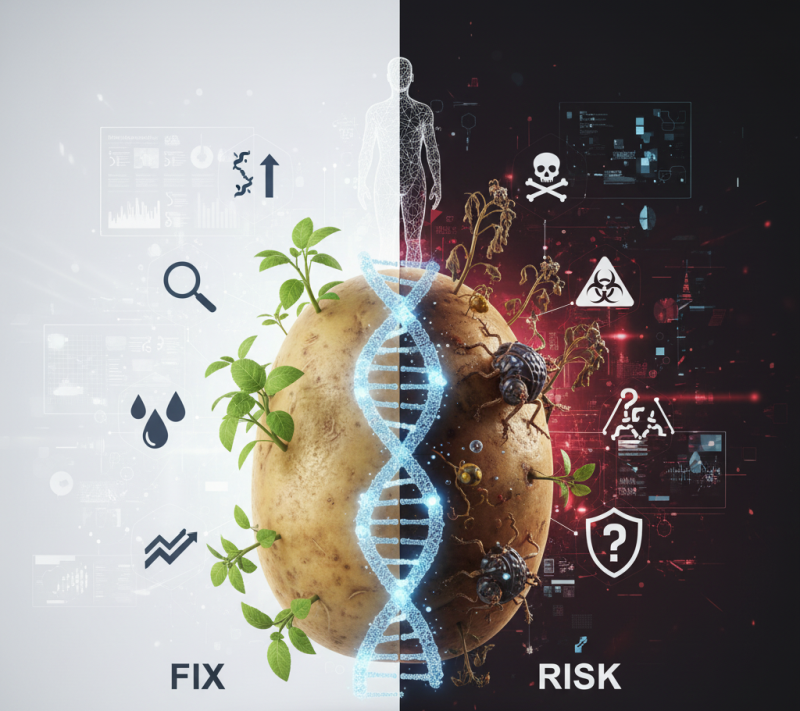
The idea sounds unsettling. However, it is real. Indeed, scientists have inserted a human gene into potato plants. As a result, the outcome is striking. Consequently, crop yields rose by nearly 50% in controlled experiments.
The gene in question is called FTO. It regulates fat mass in humans. In plants, it appears to accelerate growth. Researchers described the outcome as “bigger potatoes” rather than failure.
This is not science fiction. It is a glimpse of agriculture’s future.
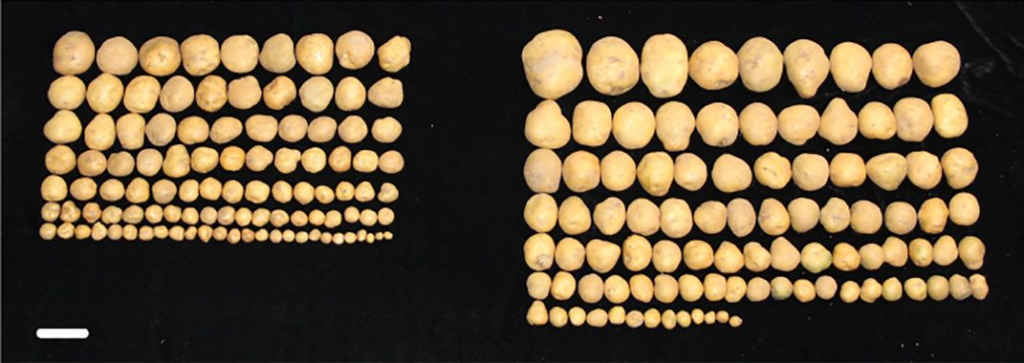
The promise is clear. The world faces rising food demand. Potato is already a critical crop. It feeds more than a billion people globally. Increasing yields without expanding farmland could ease pressure on land and climate. That matters for countries like India.
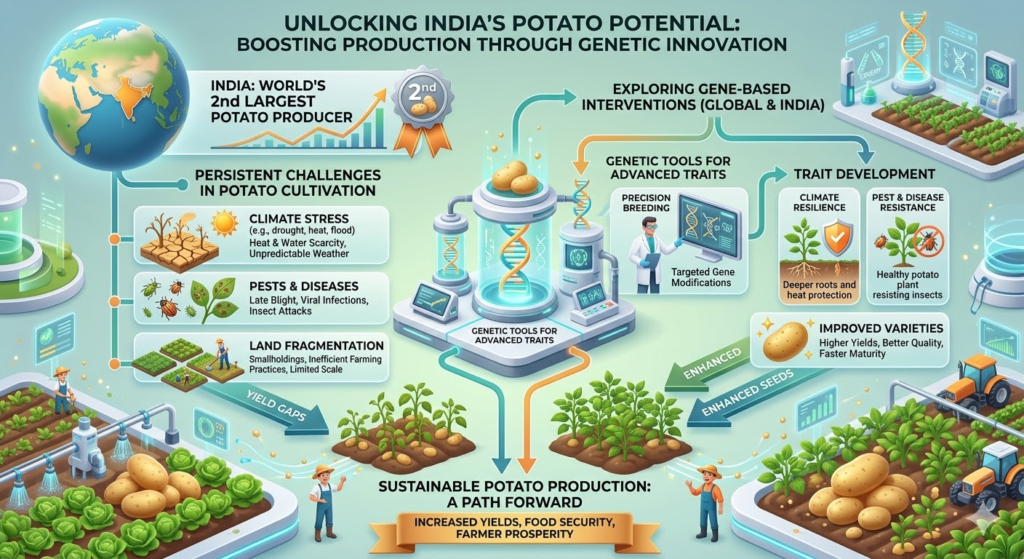
India is the world’s second-largest potato producer. However, productivity gaps persist. Moreover, climate stress, pests and land fragmentation hold yields back. Therefore, researchers worldwide are now exploring gene-based interventions to address these challenges.
However, the method raises hard questions.
Unlike traditional breeding, this approach crosses species boundaries in a radical way. The human gene has no natural equivalent in plants. Scientists themselves admitted they expected “catastrophic effects”.
Those effects did not appear—at least not yet. That does not settle the debate.
In India, genetically modified crops remain controversial. Bt cotton was adopted. GM food crops, however, face regulatory and public resistance. A potato carrying a human gene would trigger even deeper ethical concerns. Food is cultural. It is not just calories.
There are also ecological risks. Gene expression in plants is complex. Therefore, long-term impacts on soil, biodiversity and human health remain uncertain. Meanwhile, regulatory systems in India are already stretched. Consequently, oversight would need to be far stronger.
Still, dismissing the technology outright would be short-sighted. India must balance caution with ambition. Climate change is tightening its grip. Food demand is rising. Innovation will be needed.
A middle path exists:-
- Focus on gene editing within plant genomes.
- Invest in public research.
- Strengthen bio-safety frameworks.
- Build public trust through transparency.
The science is advancing quickly. The policy is lagging behind. India cannot afford to ignore either.
Reference- Futurism, Nature Biotechnology, Smithsonian, BBC