



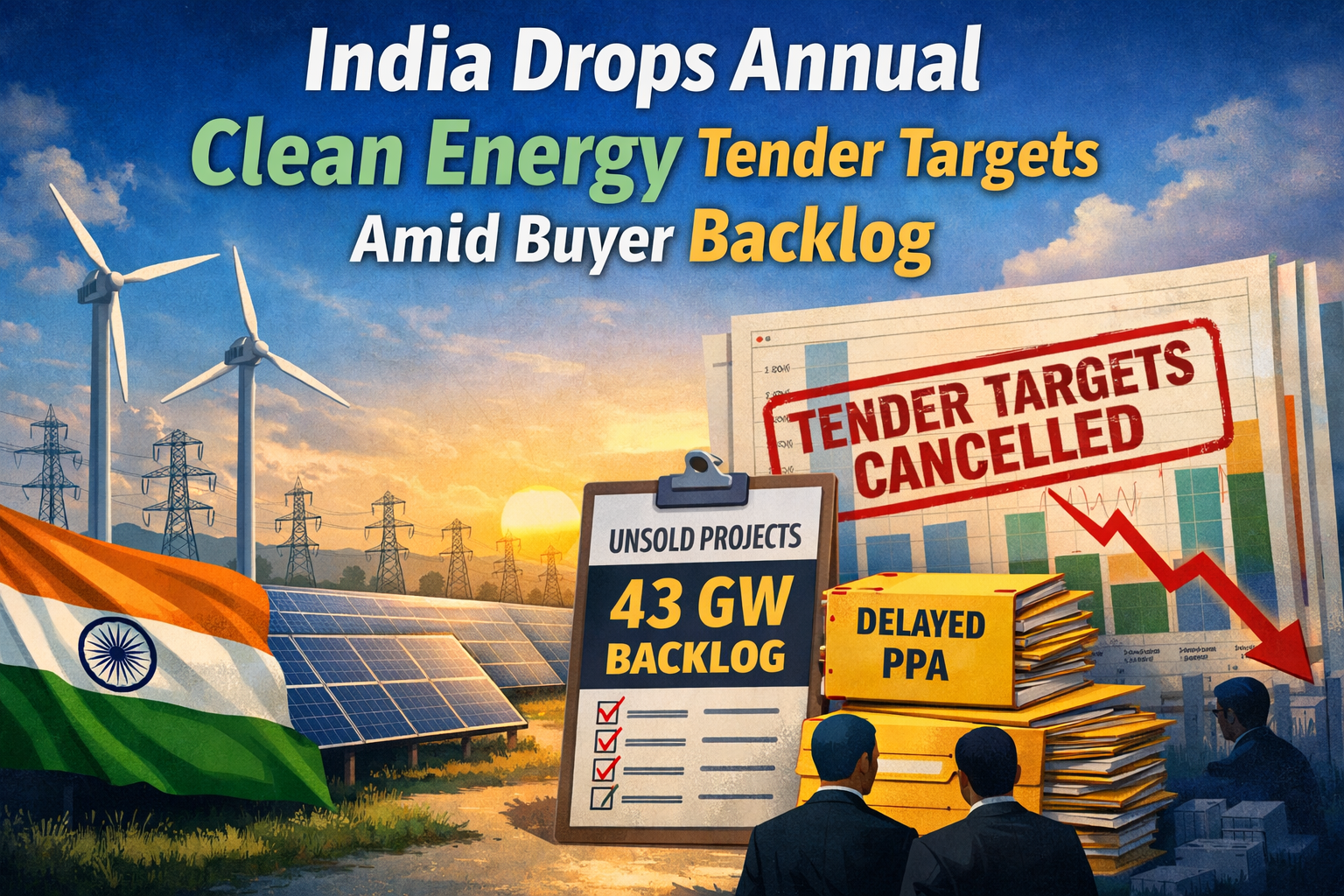
India will stop setting annual clean energy tender targets. The move marks a shift in how the country plans its renewable power rollout. Officials say the policy change reflects market realities and transmission bottlenecks.
Developers currently hold rights to build about 43 gigawatts of renewable capacity without buyers, according to government data. State utilities delayed signing power purchase agreements. They expected lower prices and cited grid delays. A senior renewable energy ministry official said tenders will now be issued based on demand from states rather than fixed targets.
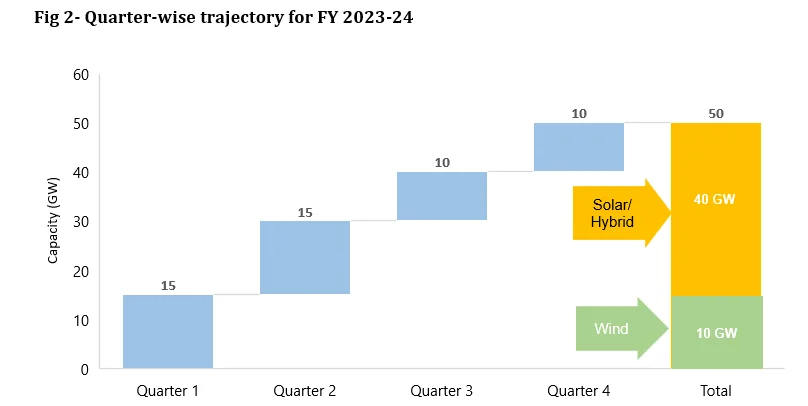
India planned to auction 50 GW of clean energy annually but tendered only 15 GW in 2025. It auctioned around 50 GW in both 2023 and 2024. Despite the slowdown, the country added 38 GW of clean energy capacity in 2025 and still targets 500 GW of non-fossil capacity by 2030.
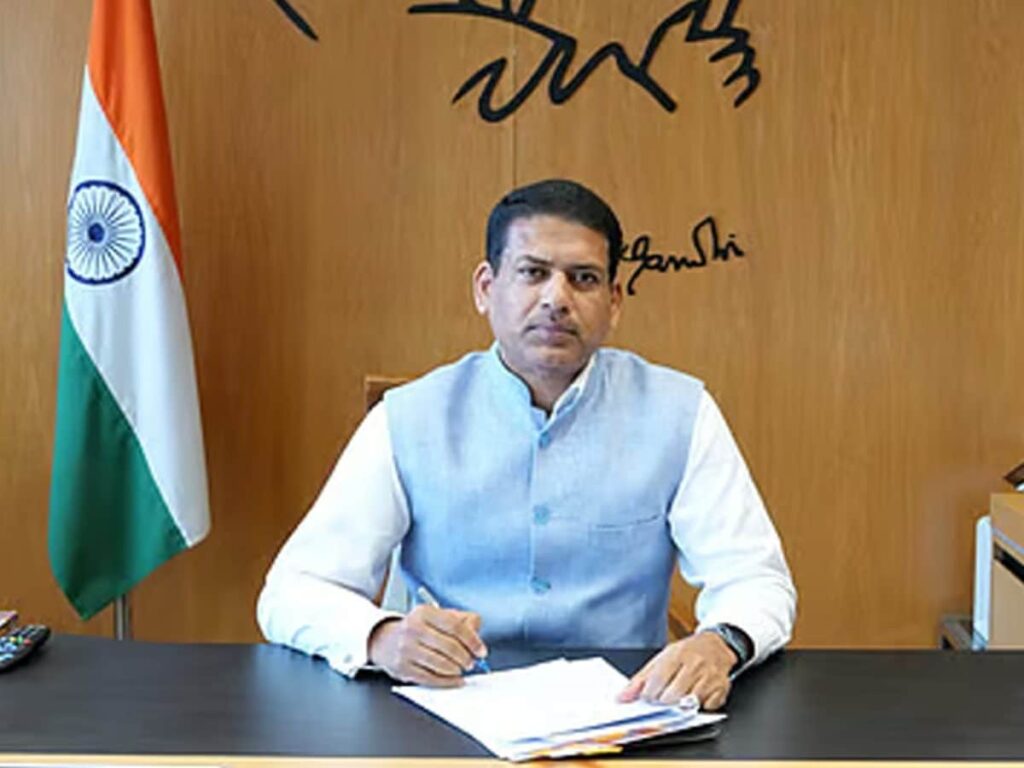
Santosh Kumar Sarangi of the Ministry of New and Renewable Energy said less than half of the unsold capacity may be cancelled. He said agencies are confident they can sell much of the backlog. India may also restructure tendering agencies, with the Solar Energy Corporation of India (SECI) likely to play a larger role.
Experts say demand risk is becoming a key barrier. “State utilities are cautious because they anticipate falling tariffs and face transmission constraints,” said a power sector analyst. Reuters reported that delays in signing contracts have left about 45 GW of clean power unsold, underscoring financing risks for developers.
The shift signals a move toward a demand-driven renewable market. Investors will track whether state utilities accelerate procurement. Analysts say the policy could stabilize tariffs but slow capacity additions in the near term.
India remains one of the world’s fastest-growing renewable markets. The country aims to reach net-zero emissions by 2070. Yet the tender policy change shows that grid, finance, and off-take remain critical challenges in the clean energy transition.
Reference- Economic Times, Reuters, MNRE