



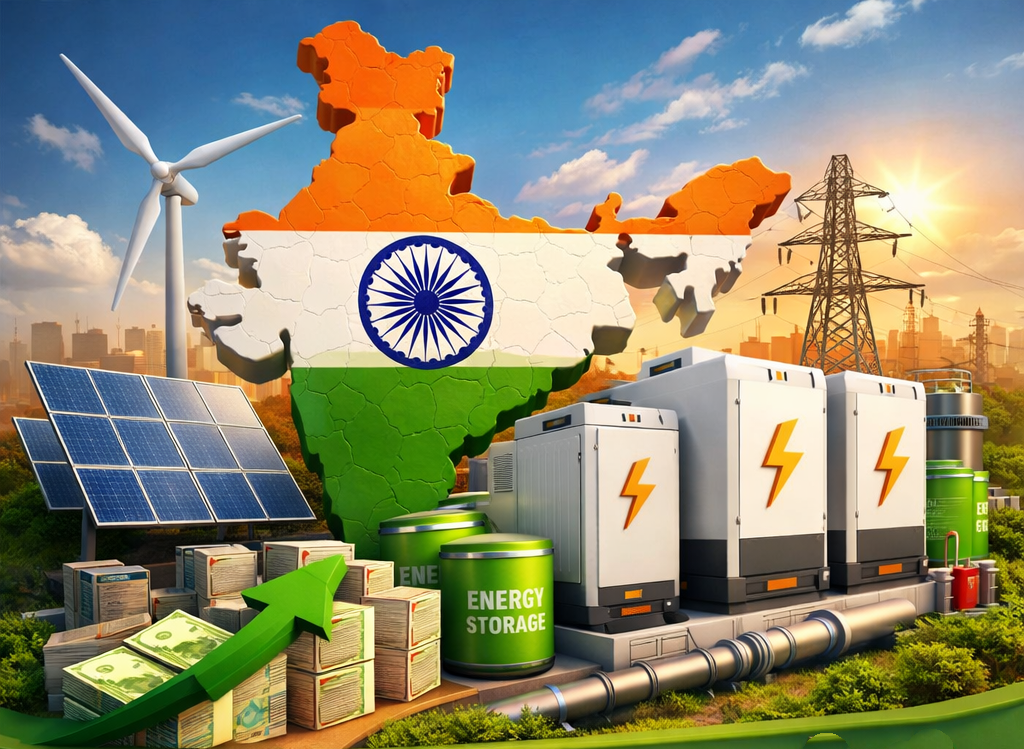
India has extended a key support measure for energy storage projects. The federal government announced a 100 % waiver of interstate transmission charges until June 2028. The move applies to both pumped storage and battery systems attached to renewable power.
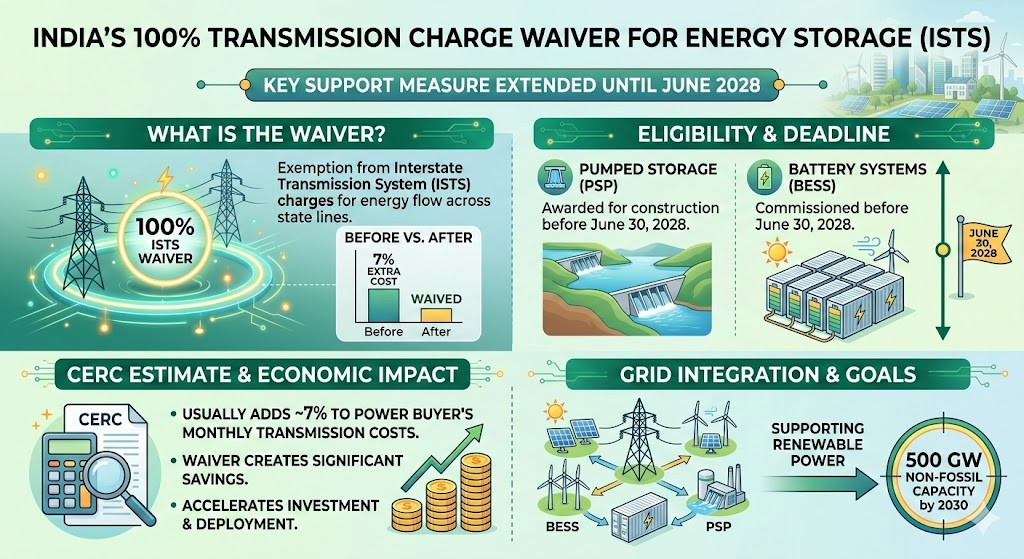
The Central Electricity Regulatory Commission (CERC) estimated that the waiver usually adds about 7 % to monthly transmission costs paid by power buyers. It will now stay in place for projects commissioned before June 30, 2028.
The measure is part of broader efforts to balance intermittent clean power from solar and wind. Without storage, surplus generation at midday can go unused. Storage systems store power and release it when demand is high.
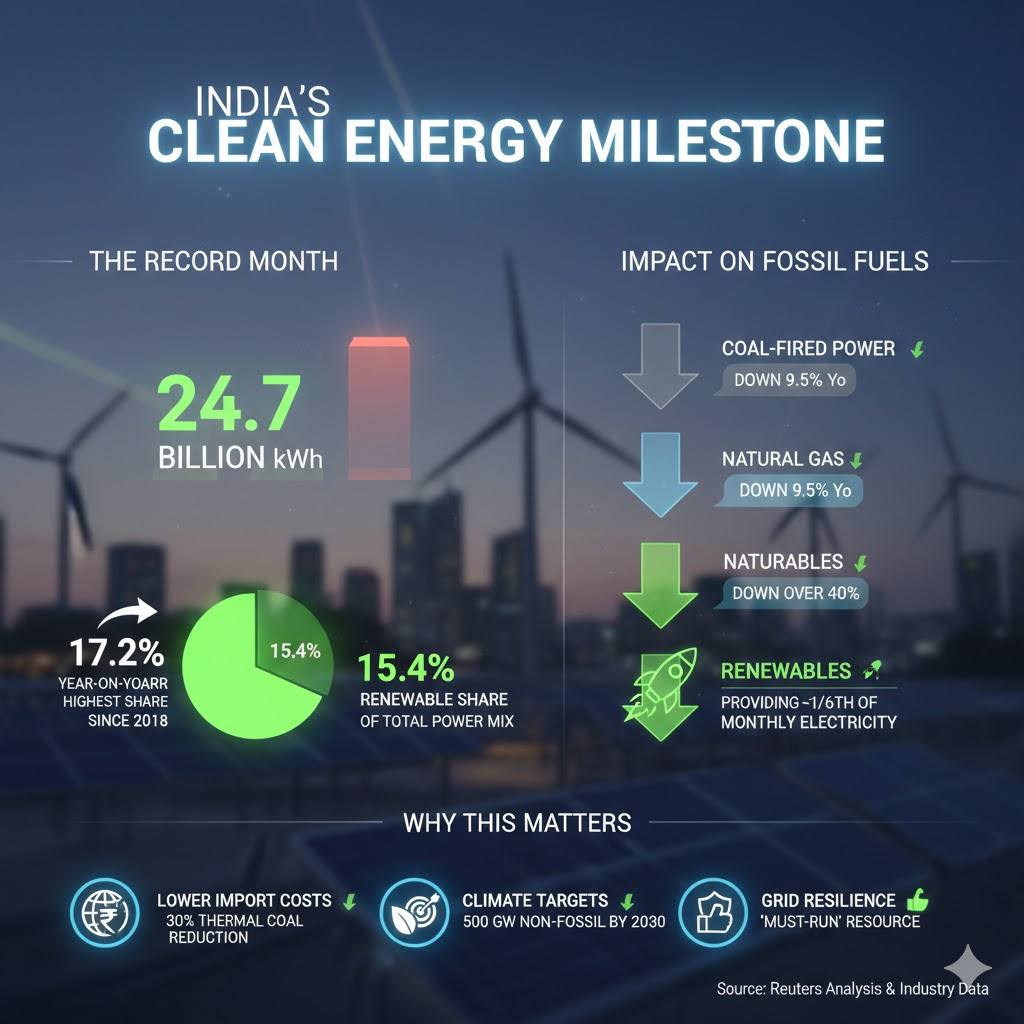
India needs storage to make the most of renewables as it targets 500 GW of clean energy capacity by 2030. Reuters has noted that clean energy output recently hit record levels, with 24.7 billion kWh produced in a month and renewables reaching a 15.4 % share of the power mix.
Policy support goes beyond waivers. The power ministry has approved a ₹54 billion plan to back 30 GWh of battery storage capacity. The government designed this funding to accelerate projects that link storage with clean energy plants.
Analysts say storage is vital because renewable generation can vary widely over a 24-hour cycle. Without it, grid operators must rely on fossil fuels when there is no wind or sun. Storage systems reduce reliance on coal and diesel backup plants.
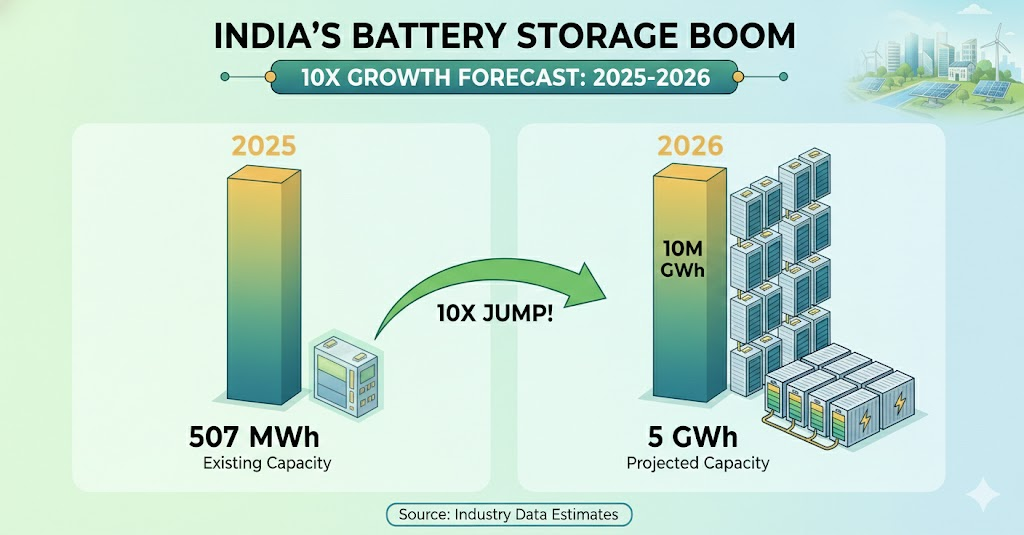
Moreover, industry data suggests India’s storage capacity is poised to grow rapidly. In fact, estimates indicate battery energy storage capacity could rise from around 507 MWh in 2025 to over 5 GWh in 2026 — a nearly ten-fold jump. As a result, deployment momentum is expected to accelerate across multiple states.
Yet challenges remain. Battery costs, supply chains and grid interconnection rules can delay deployment. Even so, recent policy steps show clear intent. The transmission waiver cut helps investors and developers lower costs today.
If storage scales as planned, India could improve grid reliability and cut fossil fuel use. Homes, factories and data centers would see steadier supply. Ultimately, energy storage could be a linchpin in India’s clean future.
Reference- Reuters, Moneycontrol.com, The Economic Times, Business Standard