



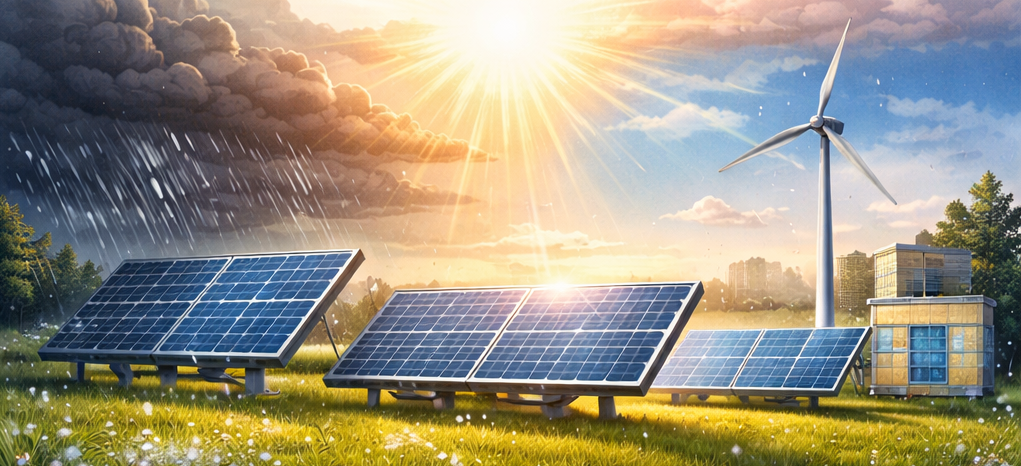
Solar energy often faces a basic question. Is solar energy reliable in cloudy, rainy, or variable weather? The short answer is yes, but with limits.
Solar panels do not stop working when clouds arrive. They use photons, not heat, and can still produce electricity from diffuse light. Studies and industry data show panels can generate roughly 10% to 60% of clear-sky output on overcast days, depending on cloud density and system design.
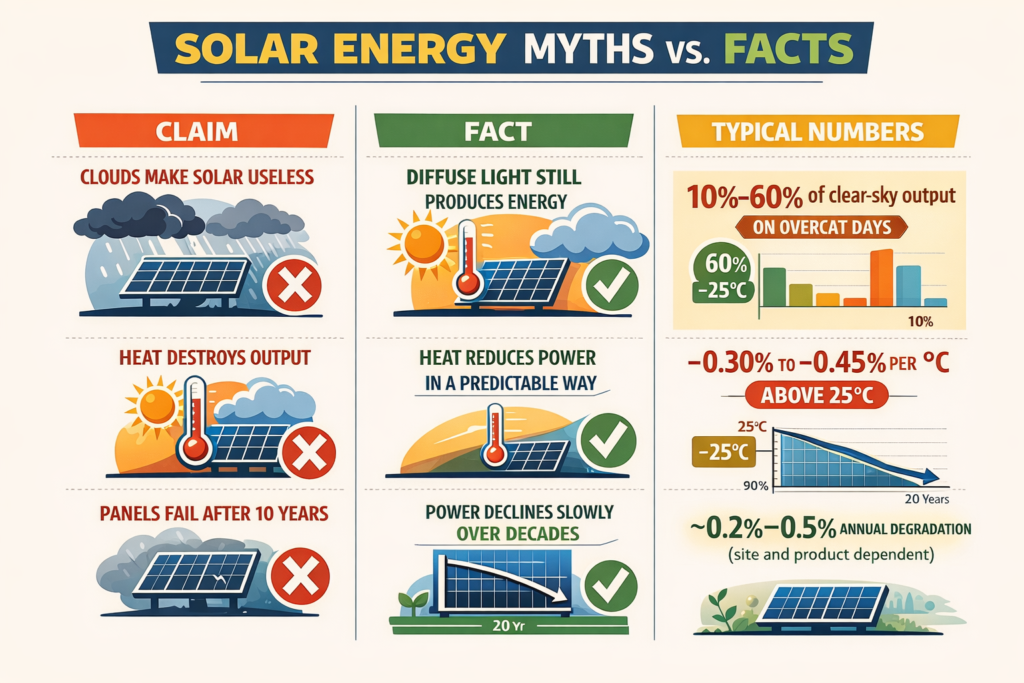
The challenge lies in variability. Solar power output changes daily and seasonally. Capacity factors for utility-scale solar typically range 15% to 30% depending on latitude and weather patterns. This means a solar plant does not run at full power all the time.
India illustrates both the promise and the limits. Renewables account for about 37% of installed generation capacity but only around 18% of actual electricity generation, partly due to weather variability and rising demand. Yet India has crossed 50% non-fossil installed capacity in 2025, driven largely by solar and wind expansion.
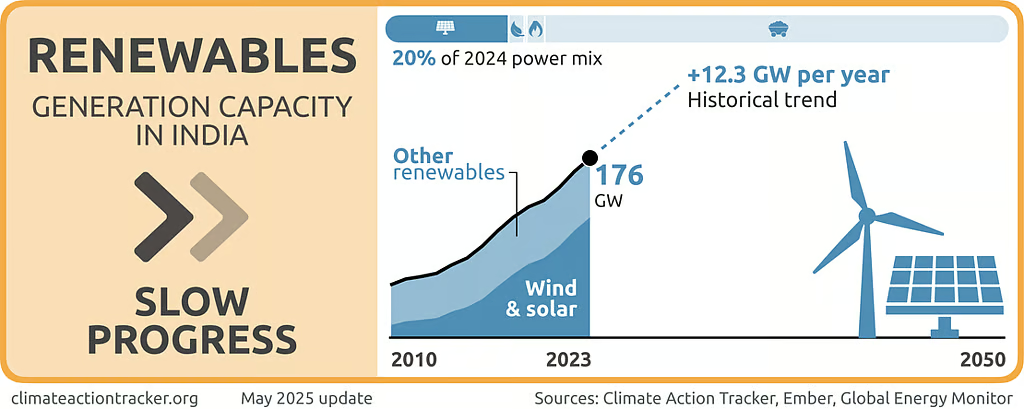
Grid operators are adapting. Hybrid projects combining solar, wind, and battery storage are expanding to smooth fluctuations and improve reliability. Analysts also note that most Indian solar projects meet or exceed expected generation levels, reducing financial risk.
The broader conclusion is practical. Solar power can deliver dependable annual output when systems are well designed. However, it cannot serve as a base-load source on its own without storage, flexible grids, or supporting generation. For policymakers and investors, the debate has shifted. The issue is not whether solar performs in mixed weather, but how quickly power systems can evolve to handle its variability.
Reference- Down To Earth, Business Insider, National Geographic, ScienceDirect, Business Standard, Anern