



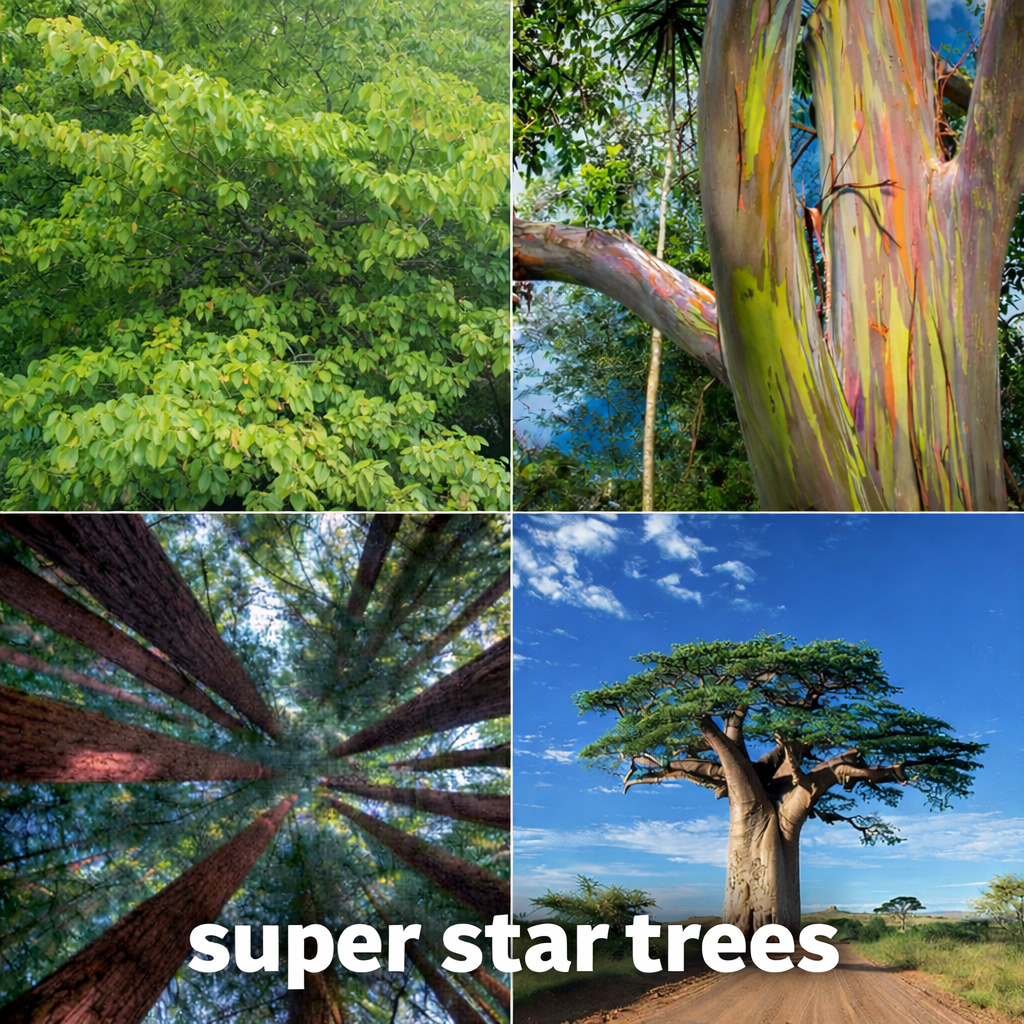
Trees stand at the front line of the climate fight. Some species stand out as nature’s super stars. Their stories show why forests matter and why protecting them is urgent.
The baobab is known as the “Tree of Life.” It can store up to 32,000 gallons of water and live for more than 2,000 years. It provides food, shade, and fiber to African communities. The fruit of the Baobab contains high amounts of vitamin C, calcium, potassium, magnesium, iron, antioxidants, and fiber.
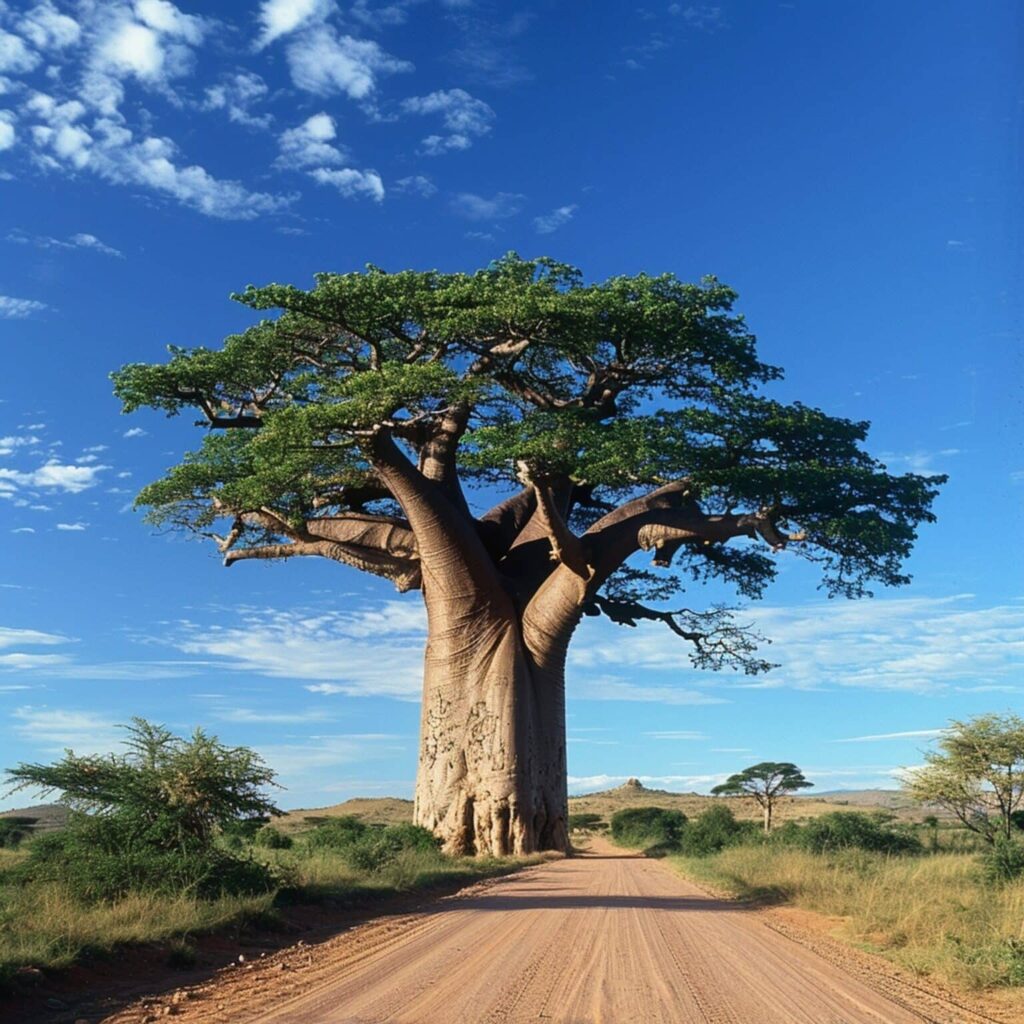
Also, their leaves are rich in iron and can be eaten like spinach, while their seeds can be roasted and used to make a drink similar to coffee or pressed to make oil. Plus, the roots, bark, and leaf extract also have antiviral and antibacterial properties, which local communities use to treat malaria and fever.
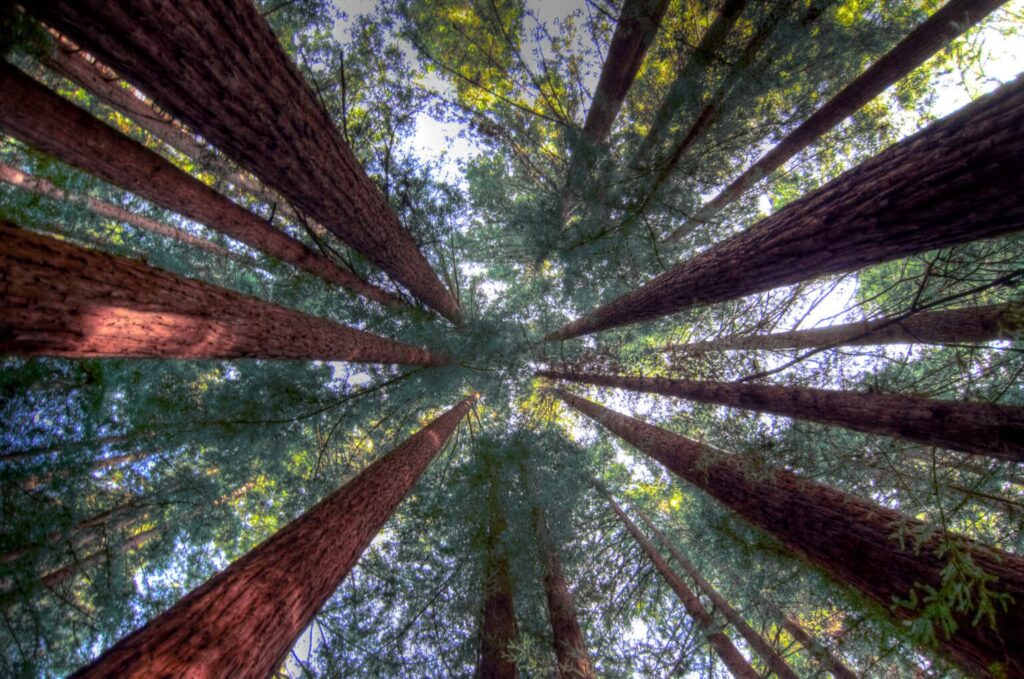
The redwood is another giant. The tallest known tree, Hyperion, reaches about 380 feet in California. For reference, Hyperion’s height makes it 1.25 times bigger than the Statue of Liberty in New York City. The mild temperatures and foggy weather of Northern California serve as an ideal climate for redwoods to absorb moisture through the air and it is these perfect conditions which allow for their extraordinary height.
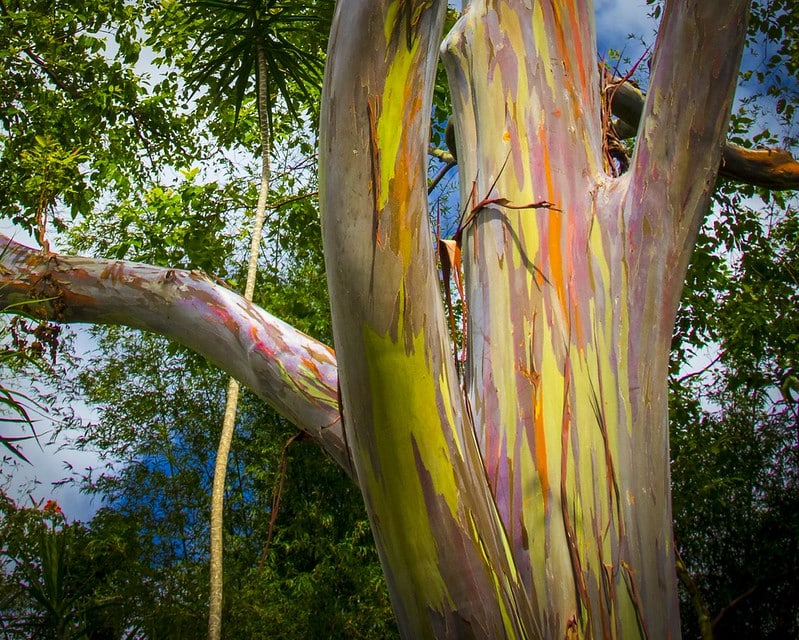
Nature also paints trees in rare colors. The rainbow eucalyptus shows strips of green, blue, purple, and orange as its bark peels. The pigments come from chlorophyll and tannins. These trees serve as decorative plants, but companies harvest them for white paper production.
Similarly, the ginkgo tree is known as a living fossil. It is the last surviving member of a plant family that once lived alongside dinosaurs. The tree is native to China. It now grows across East Asia, including Korea, and arrived in the United States in 1784. The ginkgo has remained genetically unchanged for more than 180 million years.
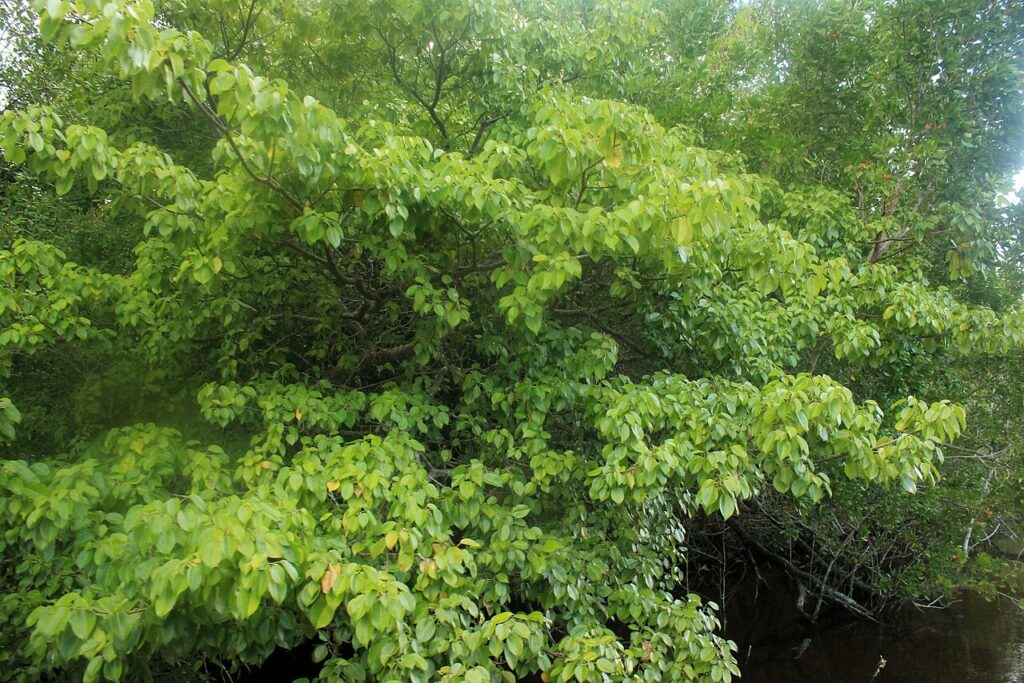
While we love all trees, some can hurt us. Arguably the most dangerous tree on Earth, the Manchineel hides its toxicity behind a deceptively ordinary appearance. In fact, every part of the Manchineel tree is toxic, not just its fruit. The bark and milky sap are highly acidic and poisonous, and even the smoke from burning its wood or leaves can cause blindness. Seeking shelter beneath the tree during rain is equally dangerous — the sap dissolve in water, and raindrops can carry it onto the skin, causing severe burns. Yet it protects coastlines from erosion.
Beyond their stories, trees play a critical climate role. Forests absorb roughly 30% of global carbon emissions from human activity and help regulate rainfall and soil. “Forests and forest soils store more than one trillion tonnes of carbon, twice the amount in the atmosphere,” the United Nations and FAO report. Experts warn that deforestation threatens this natural carbon sink. About 10 million hectares of tropical forest disappear each year.
Super star trees inspire awe. They also send a clear message. Protecting forests is one of the fastest and cheapest climate solutions available to mankind.
Reference- UN report, EARTHDAY.ORG, National Geographic, The Guardian