




Waymo has long billed its robotaxis as a breakthrough in autonomous transport. The vehicles drive without human hands inside. That promise still holds. But recent disclosures show humans still play a role behind the scenes. The revelation is drawing fresh scrutiny.
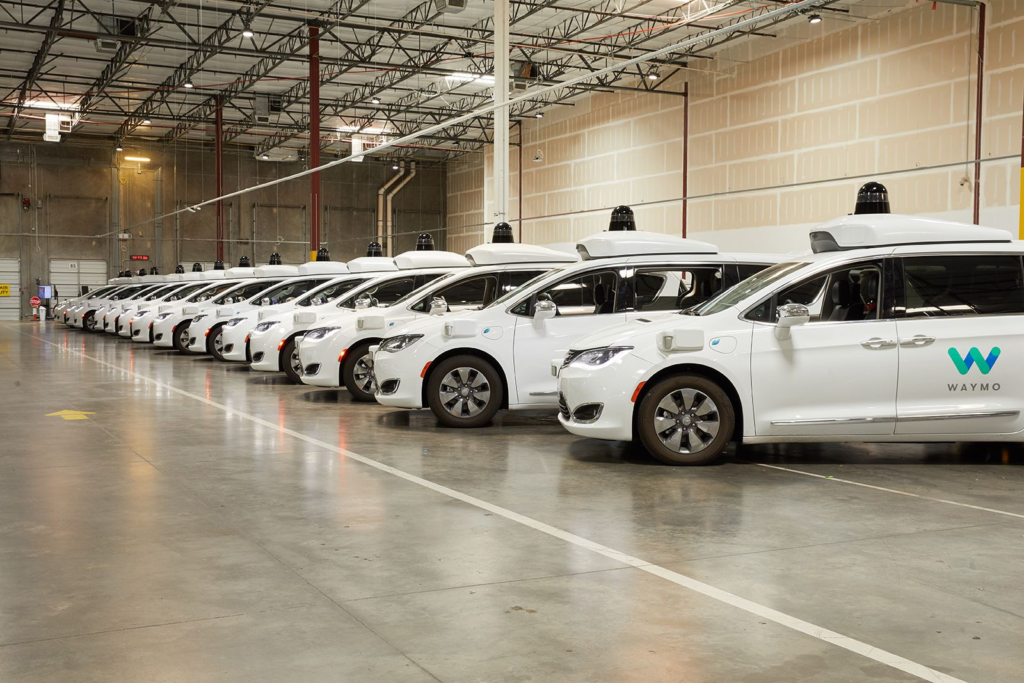
The company says its fleet of around 3,000 autonomous taxis does not depend on remote drivers. But it does employ humans to support tricky situations. These staff are called remote assistance agents. They provide guidance when Waymo’s automated system requests help. The vehicles make the final call.
In a recent letter to lawmakers, Waymo disclosed it typically has “about 70 remote assistance agents on duty worldwide at any given time.” About half of the operators work from the Philippines, while the remaining team works across centers in the United States.
The revelation came amid questions about autonomous tech and national security. Some U.S. senators have raised concerns that foreign-based operators could influence vehicles on American roads.
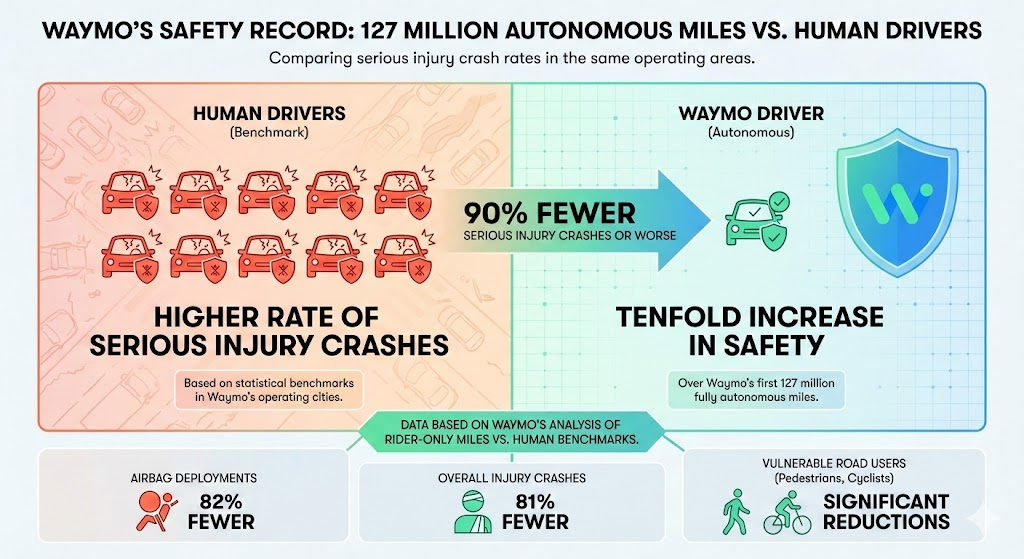
Waymo pushed back and stressed that its system remains the primary authority. It said that during its first 127 million fully autonomous miles, its vehicles recorded 90 percent fewer serious injury crashes or worse than human drivers in the same areas — a tenfold increase in safety.
Critics of robotaxis say the presence of remote staff shows that full autonomy is still years away. They argue that if humans are needed for edge cases, the “driverless” label is misleading. Proponents counter that remote support is standard for level-4 autonomy. They point out that in numerous test miles Waymo’s software shows strong safety performance.
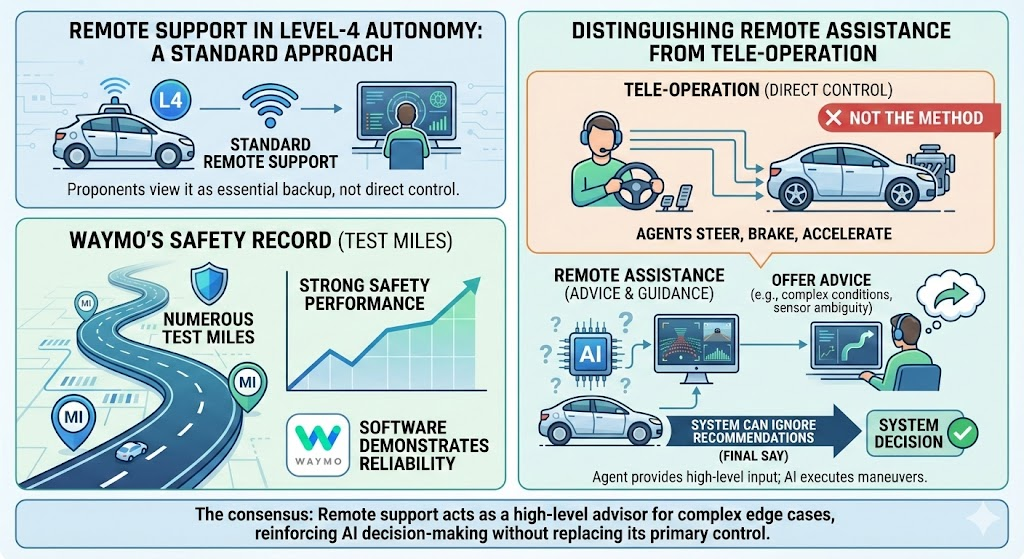
Safety advocates also note that remote assistance differs from actual tele-operation. Agents do not steer, brake, or accelerate the car. Instead, they offer advice when sensor data or complex road conditions confound the AI. The system can ignore these recommendations.
Public reaction has been mixed. Some see transparency as overdue. Others fear that dependence on offshore staff may open doors to cyber risk. Still, Waymo’s backers say that no system is perfect. They argue that the interim solution of guided autonomy is preferable to relying on human drivers alone.
In truth, the debate over whether robotaxis are safer than human drivers is far from settled. Supporters argue that restricting them would cost lives. Critics argue that companies selectively present safety data and that autonomous vehicles still make mistakes that experienced human drivers would likely avoid.
Reference- Futurism, Bloomberg, Waymo blog post, InsideEVs, Electrek