



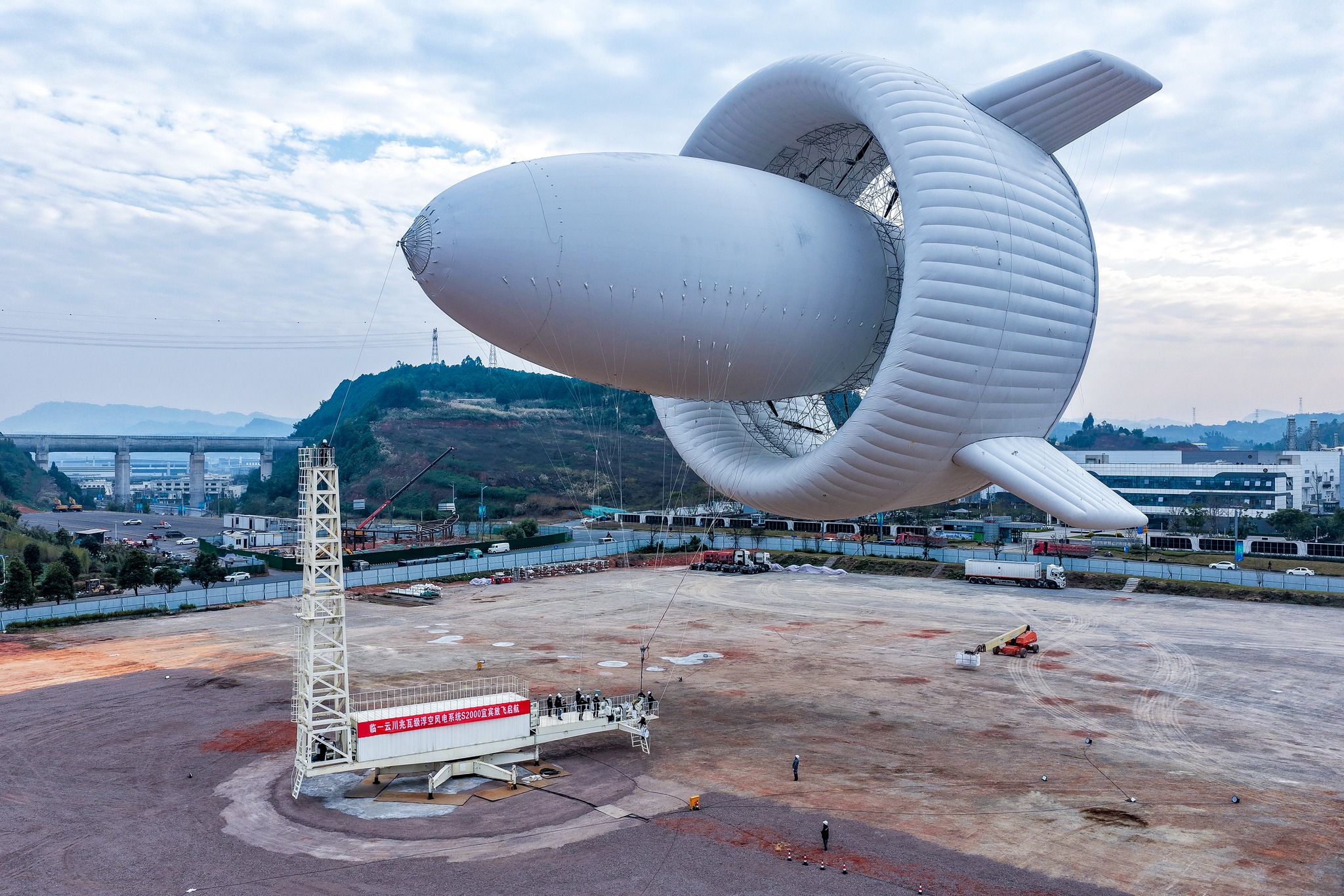
China has made a bold step in wind energy innovation with a new generation of airborne wind turbines that capture high-altitude winds. These floating systems rise fast above the ground. There, they tap stronger, steadier winds than traditional turbines can reach. This technology could reshape how clean power is produced in the future.
Most notably, the latest breakthrough is the S2000 Stratospheric Airborne Wind Energy System (SAWES). Developed by Beijing Linyi Yunchuan Energy Technology Co., Ltd., the project received technical support from Tsinghua University and the Chinese Academy of Sciences.
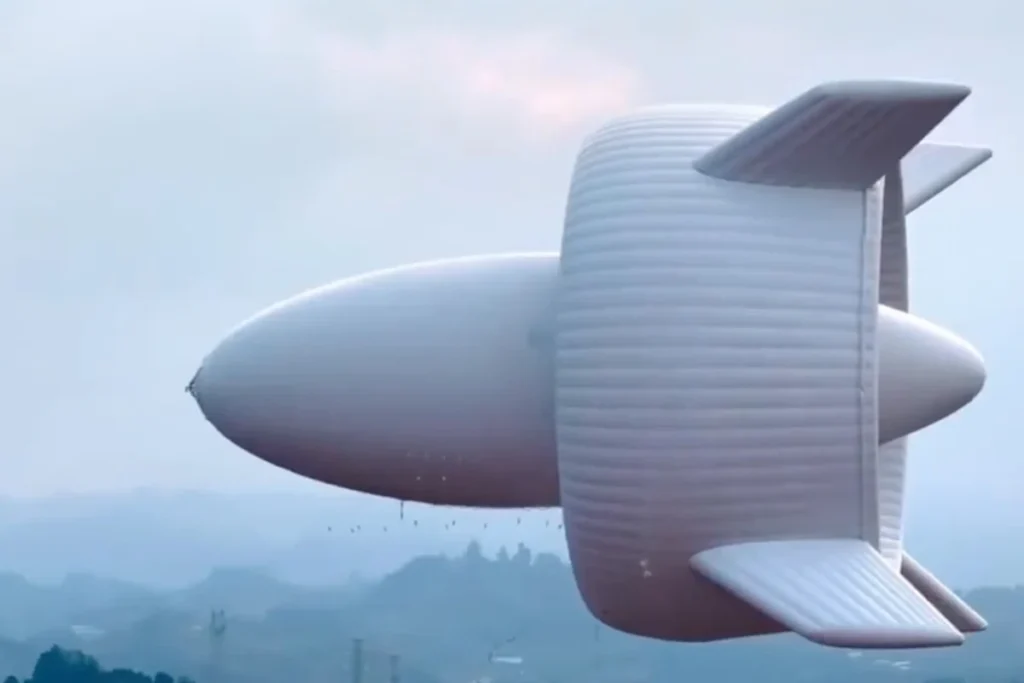
According to Weng Hanke, CTO of SAWES, the system uses a helium-filled platform to lift lightweight turbines into stronger, high-altitude winds. During a recent test, the S2000 climbed to around 2,000 meters (6,560 feet) and generated 385 kilowatt-hours of electricity. Crucially, this power was fed directly into the grid, marking a world first for airborne wind energy.
Each S2000 unit measures roughly 60 meters long and 40 meters wide, with 12 turbine generators mounted on its structure. These turbines capture wind energy and send electricity through a tether cable to ground substations. According to the developers, the system can generate up to 3 megawatts (MW) of power. At current output levels, one hour of operation could fully charge more than 30 premium electric vehicles.
Meanwhile, China’s earlier airborne system, the S1500, also made headlines. It completed test flights and demonstrated stable operations at high altitude, becoming one of the first airborne turbines to generate a megawatt of power. Its design features a ducted structure that reduces material needs and cuts electricity costs compared to ground-based towers.
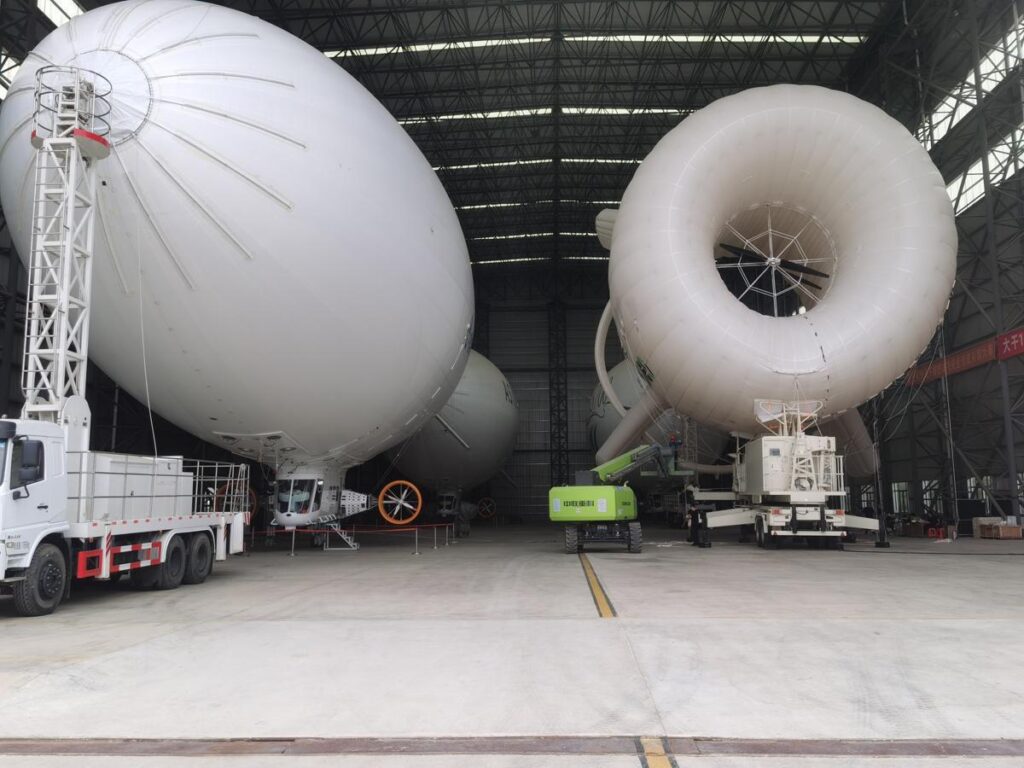
This airborne wind energy approach offers several potential advantages. First, it eliminates the need for large tower foundations that conventional turbines require. Second, it accesses wind speeds that rarely occur at ground level. However, challenges remain. Operators must navigate safety, airspace regulation, and helium supply logistics.
Overall, China’s airborne wind turbine milestone points to a future where wind power may come not only from land and sea but also from the skies above.
Reference- Futurism, SAWES developer interviews, China Daily, Chinese journalist Li ZexinX handle, Seol Ecnomic Daily, Reuters