




IBM and NASA’s Marshall Space Flight Center have announced a partnership to employ IBM’s artificial intelligence (AI) technology to unearth new insights in NASA’s huge repository of Earth and geospatial scientific data. For the first time, the collaborative endeavor will apply AI foundation model technology to NASA’s Earth-observing satellite data.
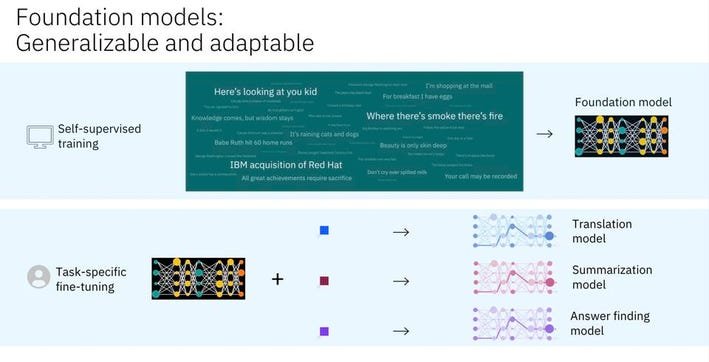
Foundation models are AI models that are trained on a large quantity of unlabeled data, may be utilized for a variety of tasks, and can apply knowledge from one context to another. Over the last five years, these models have dramatically improved the field of natural language processing (NLP) technology, and IBM is pioneering uses of foundation models outside language.
IBM and NASA intend to create a number of new technologies to harvest information from Earth observations. One project will employ NASA’s Harmonized Landsat Sentinel-2 (HLS) dataset to train an IBM geospatial intelligence foundation model, which is a record of land cover and land use changes acquired by Earth-orbiting satellites.
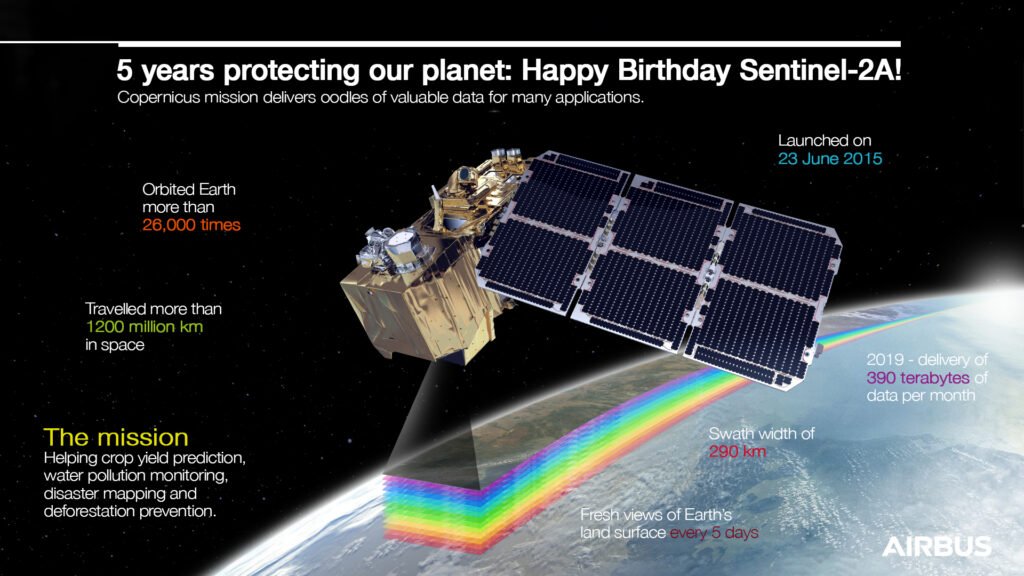
This foundation model will assist academics in providing critical analysis of the planet’s environmental systems by analyzing petabytes of satellite data to discover variations in the global footprint of phenomena such as natural catastrophes, cyclical agricultural yields, and animal habitats.
This partnership is also planned to provide a readily searchable corpus of Earth scientific publications. To organize the literature and make it simpler to identify new knowledge, IBM created an NLP model trained on approximately 300,000 Earth science journal articles.

Other potential IBM-NASA joint projects in this agreement include constructing a foundation model for weather and climate prediction using MERRA-2, a dataset of atmospheric observations.
Applying foundation models to geospatial, event-sequence, time-series, and other non-language aspects in Earth science data might provide extremely useful insights and information to a far larger range of academics, corporations, and individuals. Finally, it may enable a greater number of individuals to work on some of our most important climate challenges.
Reference- IBM website, NASA website & PR, Forbes, Globe PR Newswire, Venture Beat