



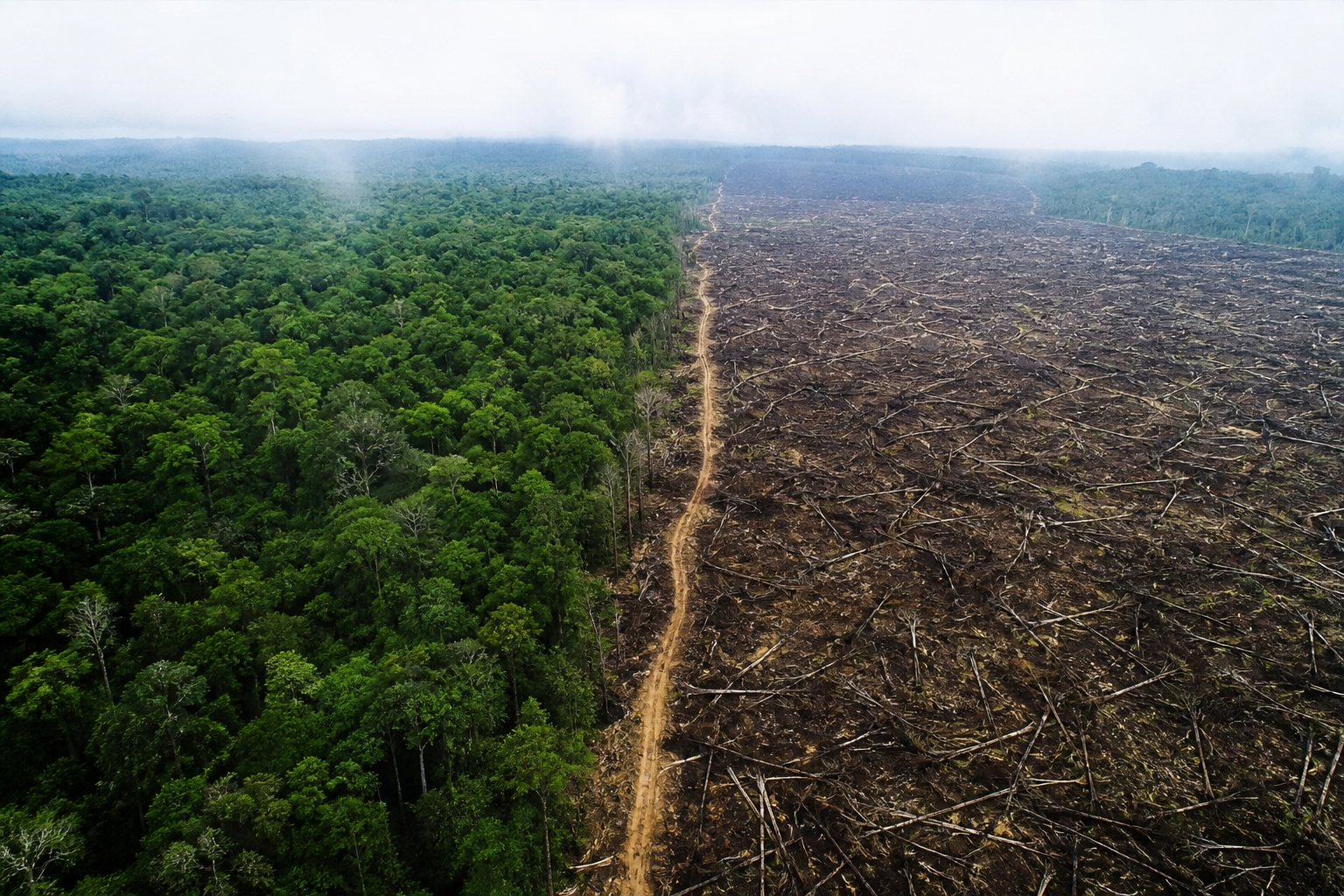
The world’s tropical forests got a brief reprieve in 2025. Yet the crisis is far from over.
Global tropical primary forest loss fell 36% year-on-year to 4.3 million hectares. That is a sharp drop from 2024’s record devastation. Still, researchers warn the planet is losing an area of pristine rainforest equal to 11 football fields every minute.
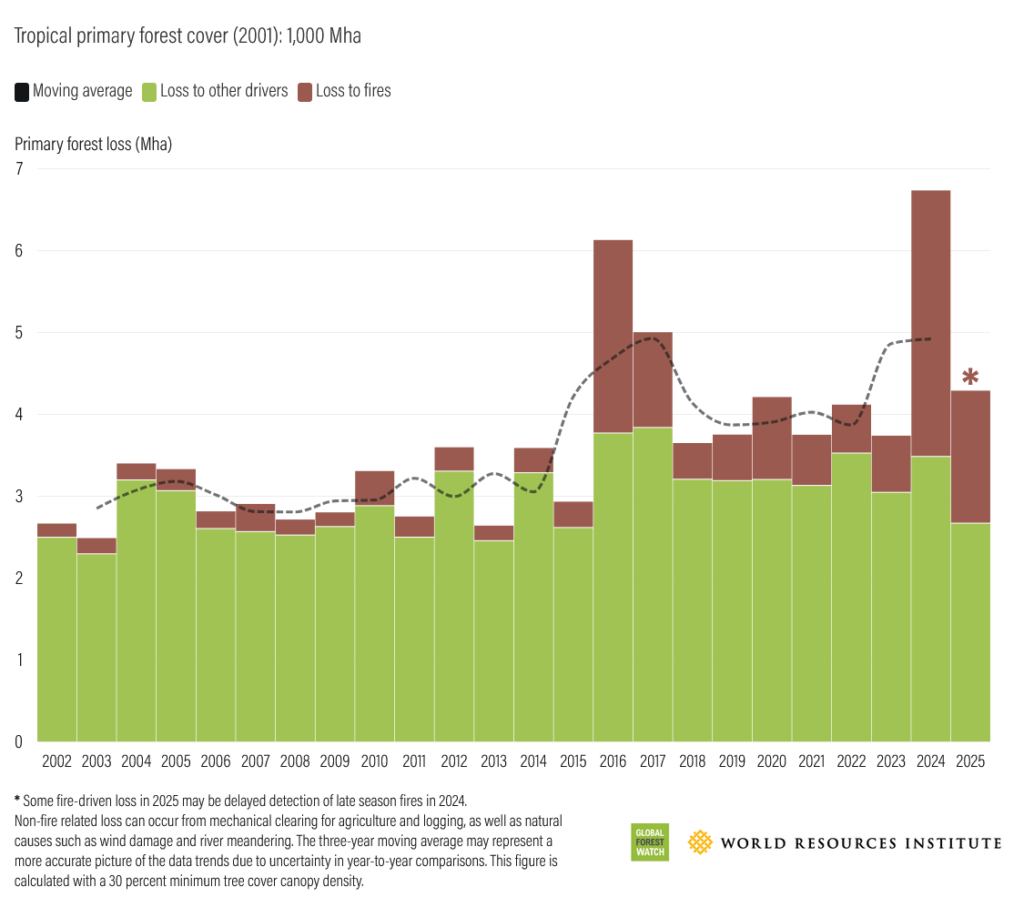
The improvement came largely from Brazil. President Luiz Inácio Lula da Silva tightened enforcement, expanded monitoring, and revived anti-deforestation policy after taking office in 2023. The result was visible: forest destruction slowed materially across the Brazilian Amazon.
But this is not a victory lap. It is a warning.
Researchers say current forest loss remains 70% above the level required to meet the global 2030 pledge to halt deforestation. Fires, drought, and agricultural expansion continue to eat into the tropics. Climate-driven wildfires are now being called a “dangerous new normal.”
India should pay close attention.
India is not part of the Amazon story, but it sits on its own fragile forest edge. The country has pledged an additional carbon sink of 2.5 to 3 billion tonnes of CO2 equivalent by 2030 through forests and tree cover under its Paris commitments. That target becomes harder if tropical nations continue to lose biodiversity buffers and rainfall regulators globally. Monsoon systems, agricultural cycles, and regional heat resilience are all linked to broader forest health.
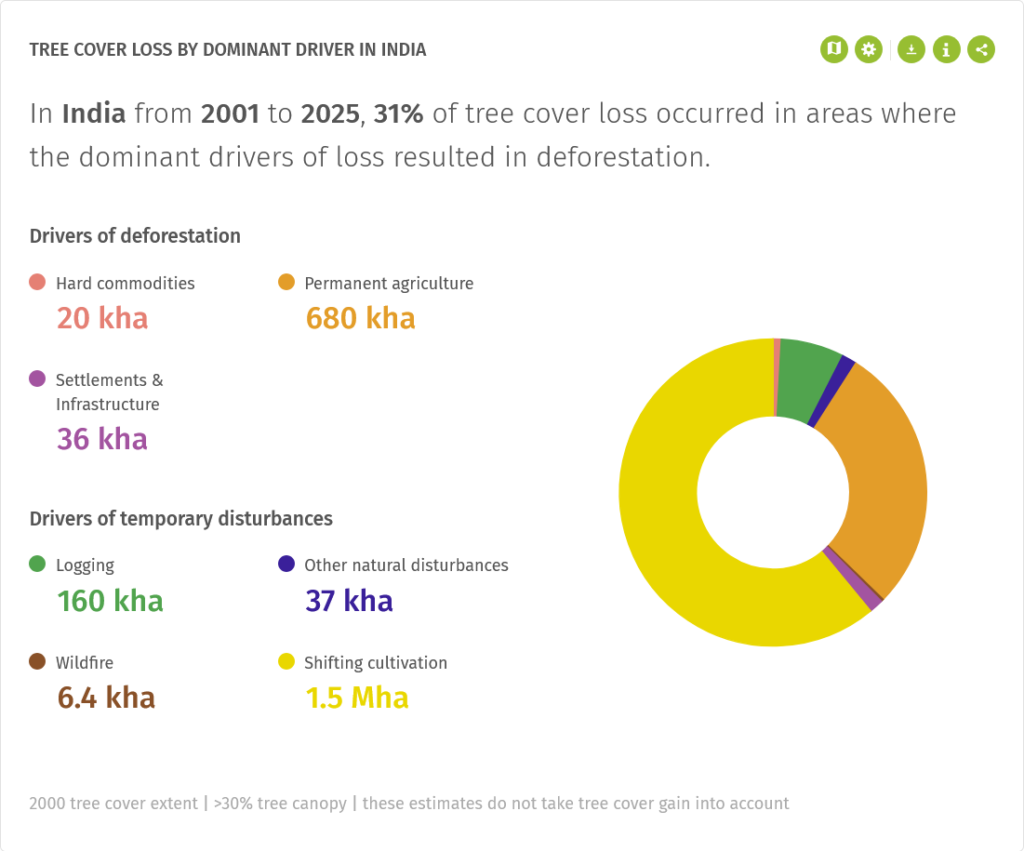
India’s development push also carries familiar risks. Road building, mining, linear infrastructure, and plantation expansion continue to pressure forest corridors from the Northeast to central India. The lesson from Brazil is blunt: policy matters, and enforcement matters more.
“Decisive government action can help keep trees standing,” Reuters noted in its assessment. That sentence should resonate in New Delhi.
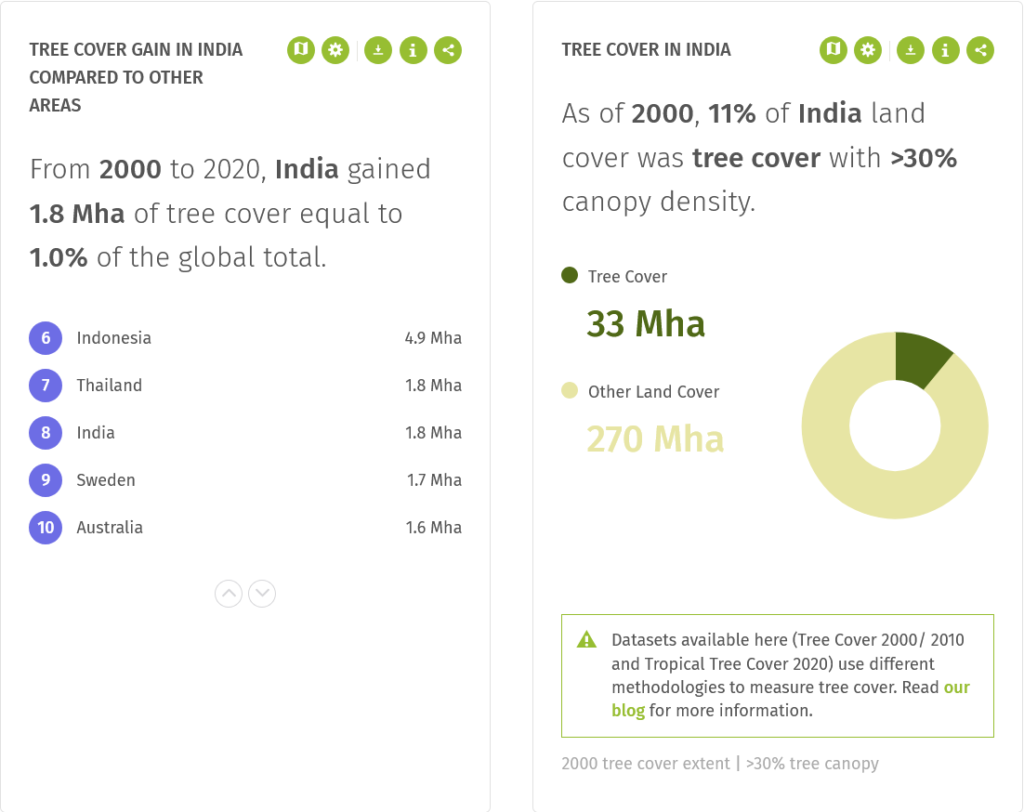
This means India must move beyond plantation headline numbers and instead focus on natural forest preservation, indigenous stewardship, and satellite-led monitoring. After all, counting saplings is easy. However, saving mature ecosystems is far harder.
The world has shown forest loss can slow in one year. Whether that becomes a durable trend depends on what governments do next.
Reference- Reuters, WRI Global Forest Watch, National Geographic, Down To Earth