



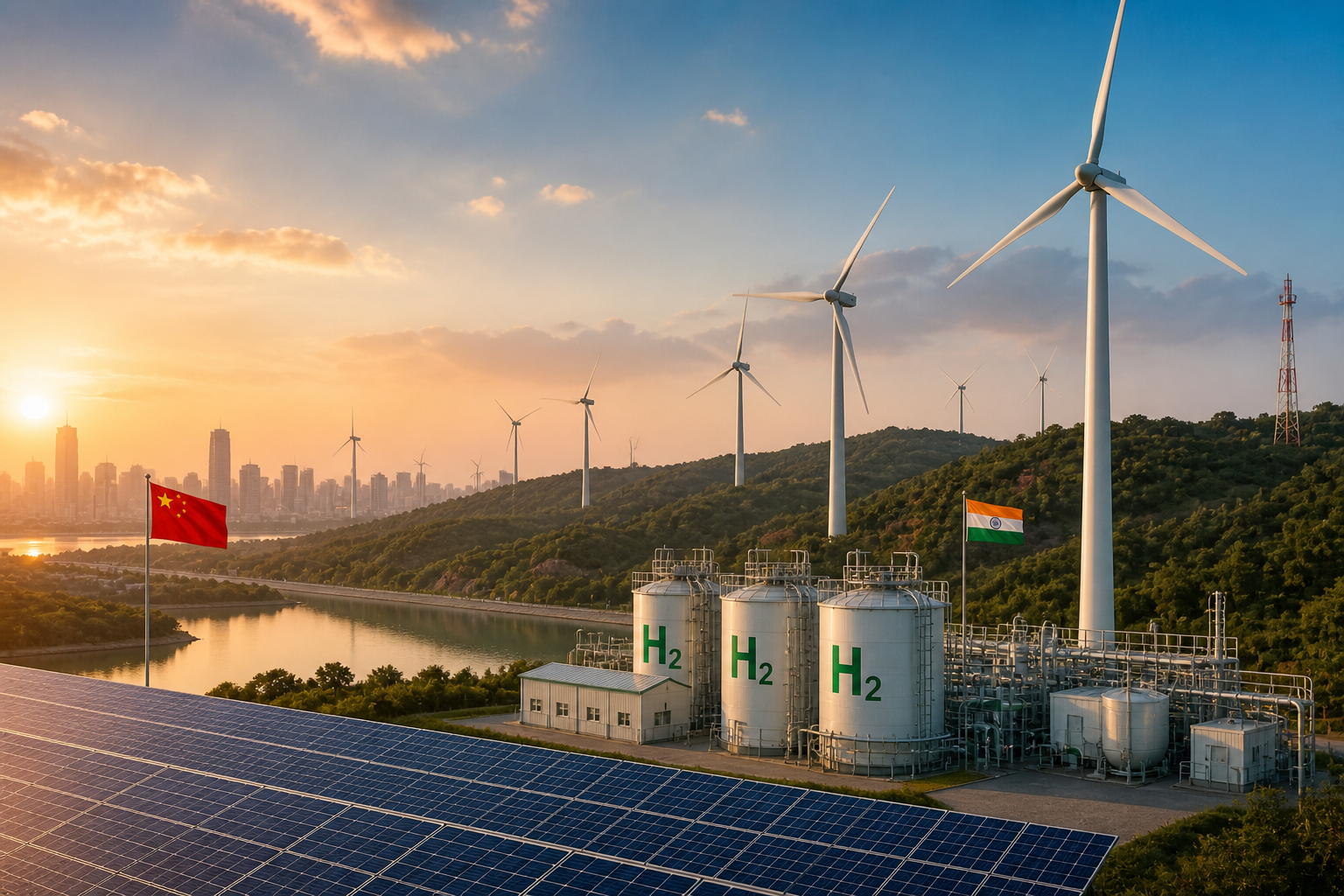
The global clean energy race is no longer being led by Washington or Brussels. It is increasingly being shaped in Beijing and New Delhi.
As several Western economies pull back from costly hydrogen and renewable commitments, China and India are doubling down on strategic clean energy investments. The shift is not symbolic. It is industrial, geopolitical, and deeply economic.
China has already invested nearly $3.7 billion in green hydrogen projects in 2025. In Inner Mongolia alone, a wind-powered hydrogen complex worth $2 billion is under development. Beijing now expects annual green hydrogen capacity to touch 2.6 million metric tonnes by 2031.
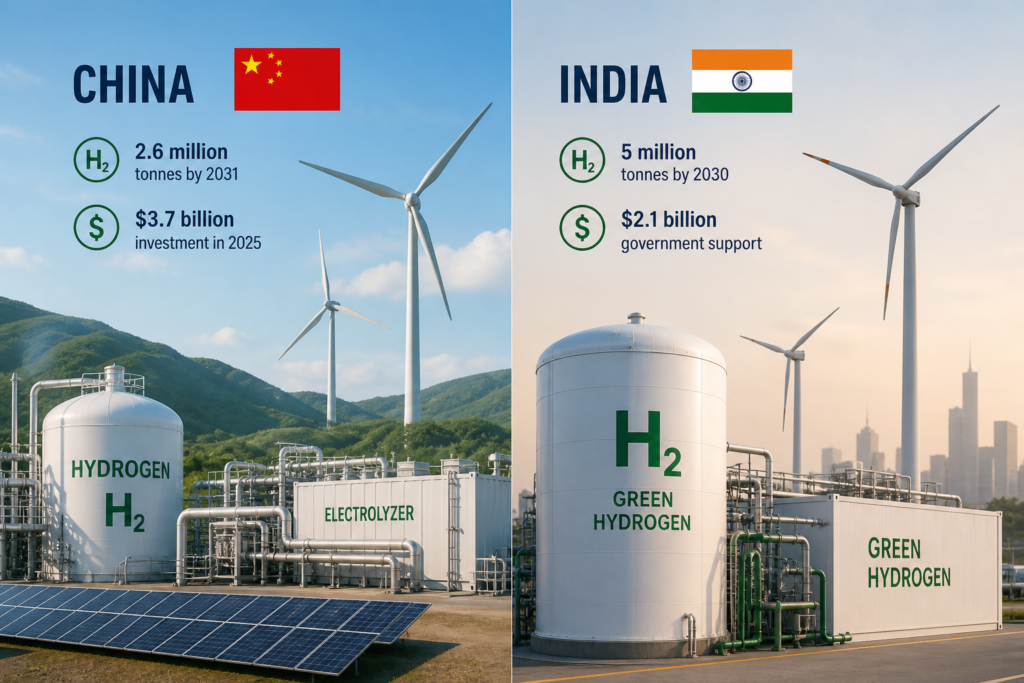
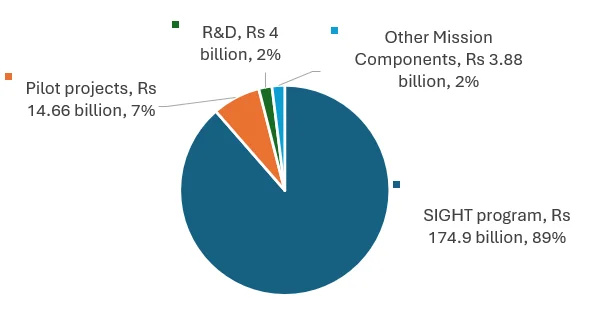
India, meanwhile, is moving faster on volume. Backed by government subsidies of $2.1 billion, New Delhi has fixed a target of producing 5 million metric tonnes of green hydrogen each year by 2030. That is nearly double China’s projected output and almost five times the size of today’s global green hydrogen market.
This aggressive push comes at a time when Europe and the United States are showing hesitation. High production costs, weak demand visibility, and delayed policy support have made many Western hydrogen projects commercially fragile. Several developers have slowed final investment decisions.
However, Asia sees the equation differently. China and India are treating clean energy as a national security asset rather than a climate slogan.
Both countries are making “strategic bets” to cut fossil fuel dependence, strengthen manufacturing, and dominate future export markets. That language matters. This is not only about emissions. It is about controlling the next trillion-dollar industrial supply chain.
China already commands between 60% and 85% of global renewable technology manufacturing. Solar modules, batteries, electrolysers, and critical materials are increasingly flowing from Chinese factories.
India is building its own hedge. From domestic solar cell mandates to green ammonia partnerships and public-sector hydrogen auctions, the country is trying to avoid dependence on imported clean tech.
The result is clear. While the West debates transition costs, Asia is building transition capacity.
Clean energy leadership is no longer about who talks climate ambition. Instead, it is about who finances factories, secures minerals, and locks in future demand. Right now, China and India are doing all three.
Reference- Reuters, IEA, Ember, Mercom India, JMK Research, Monycontrol.com, The Guardian