



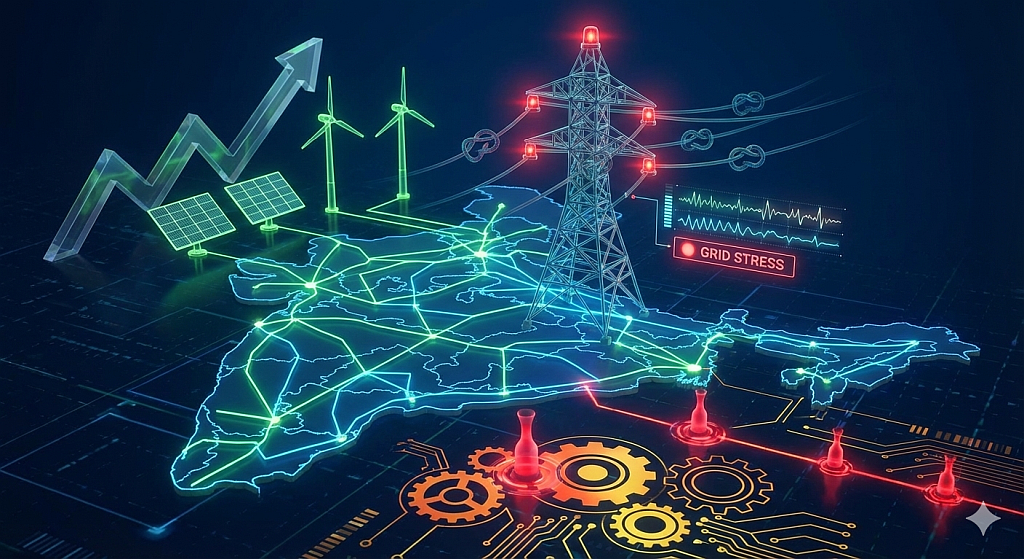
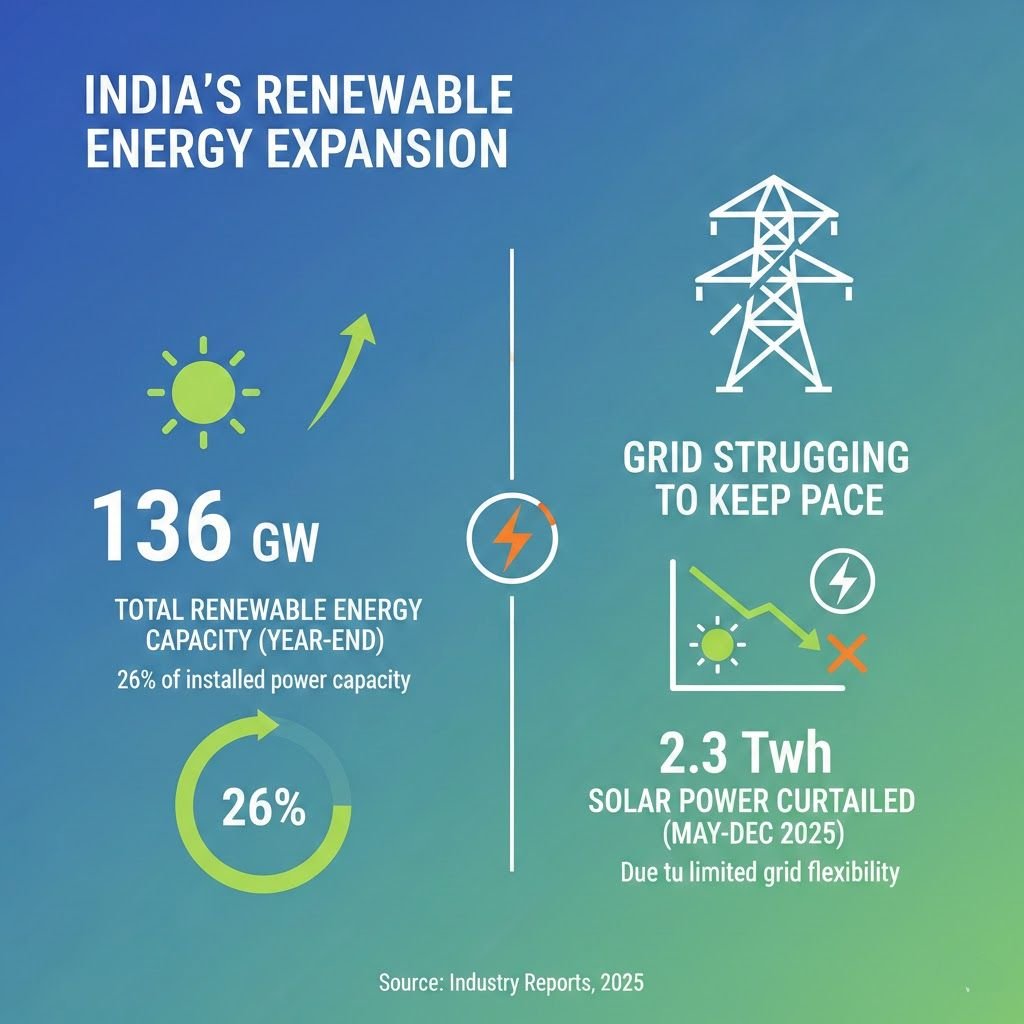
India’s clean energy growth is impressive. The country added a record 38 GW of solar capacity in 2025. At the same time, wind and large hydro continued to expand. The rapid expansion pushed total renewable energy capacity to about 136 GW by year-end, or 26% of installed power capacity.
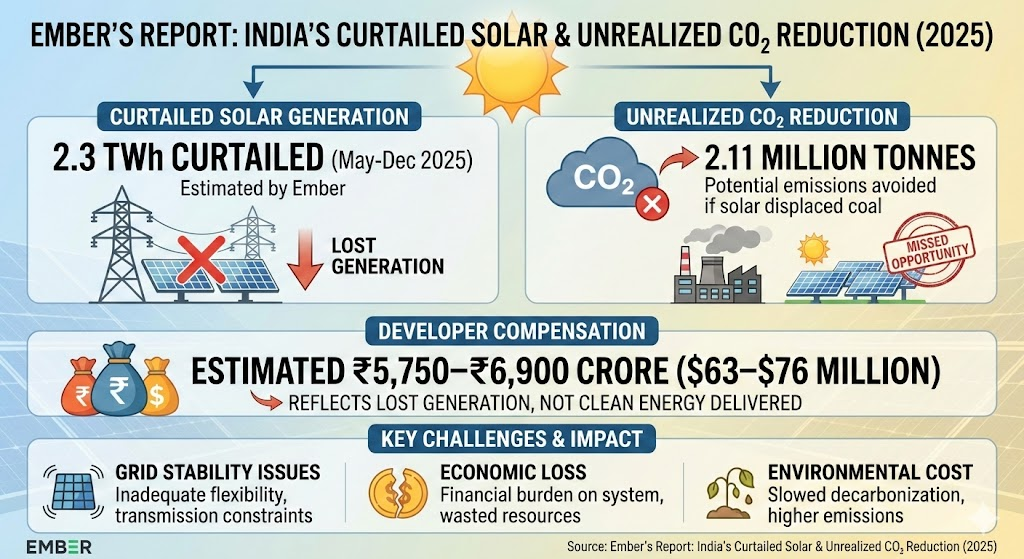
Yet the grid is struggling to keep pace. Between May and December 2025, India curtailed about 2.3 TWh of solar power due to limited grid flexibility.
The problem stems from India’s reliance on coal plants that cannot reduce output low enough when renewables surge. Most coal plants run above 55% of minimum load. This restricts the grid’s ability to cut generation during sunny hours.
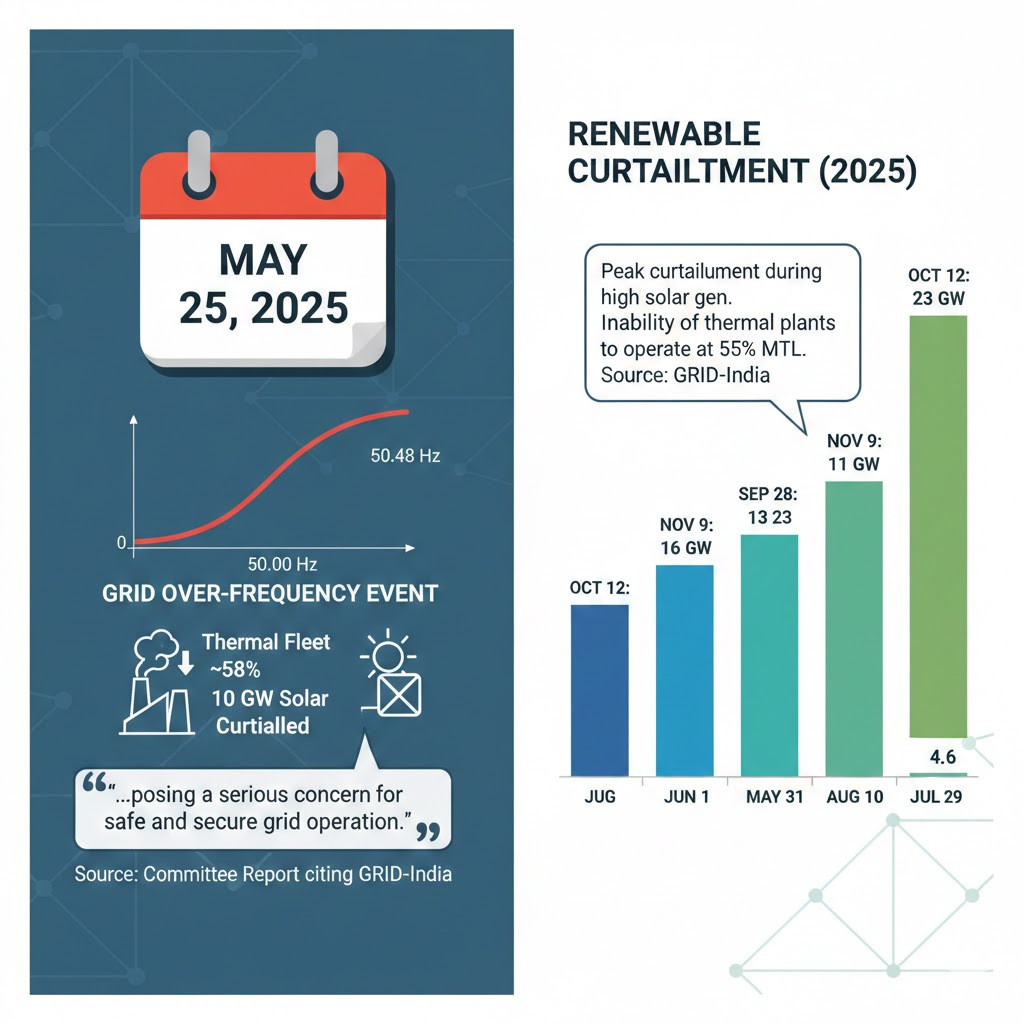
On high solar days, demand peaks later in the evening. This leads to the so-called “duck curve,” where midday power overshoots local needs and forces operators to curtail clean generation to stabilize frequency.
Curtailment levels peaked at nearly 23 GW on some days, according to a Central Electricity Authority committee review. In October 2025, solar output was curtailed most intensely as coal plants could not reduce their output further.
Transmission bottlenecks also contribute to the issue. In some regions, grid operators curtailed as much as 4 GW of solar capacity during midday in late 2025 because developers did not expand transmission infrastructure quickly enough to evacuate power from generation points.
The economic and climate costs are substantial. Ember’s report estimates that curtailed solar in 2025 resulted in 2.11 million tonnes of unrealized CO₂ reduction. Solar developers were compensated with roughly ₹5,750–₹6,900 crore ($63 million–$76 million), but that reflects lost generation rather than clean energy delivered.
Looking ahead, India’s clean energy targets remain ambitious. The country aims for 500 GW of non-fossil fuel capacity by 2030, with half of its installed generation from renewables and nuclear.
To meet these goals, experts say grid flexibility — through deeper coal load reduction, energy storage, and demand response — must improve rapidly. Otherwise, India risks undermining both its climate and economic gains from the clean power transition.
Reference- The Indian Express, Down To Earth,The Financial Express, Solar Now, Mercom India