



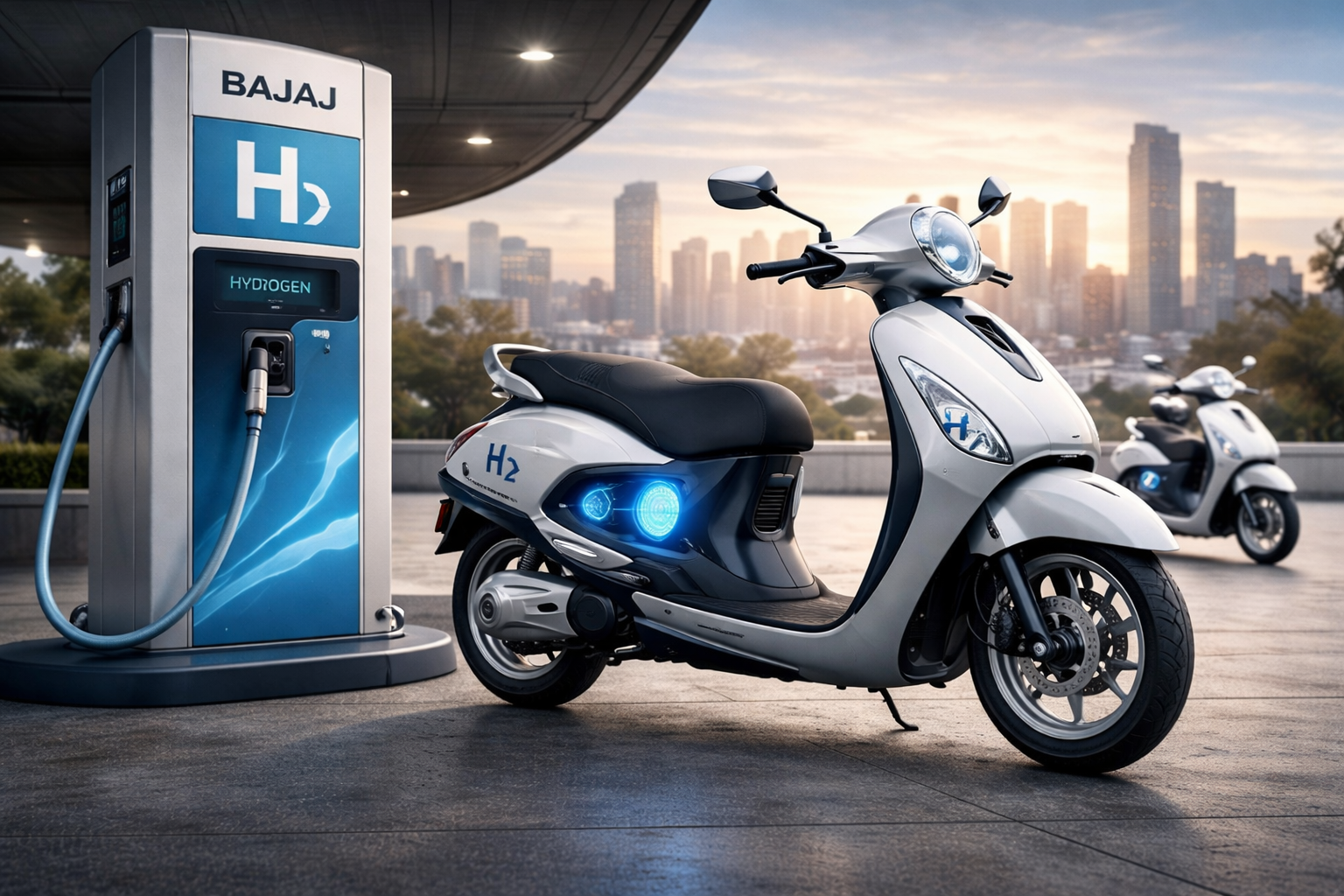
India’s clean mobility push is entering a new phase. Bajaj Auto is now exploring hydrogen-powered two-wheelers under its iconic Chetak brand. The move signals a shift beyond electric mobility, even as the company expands its existing EV lineup.
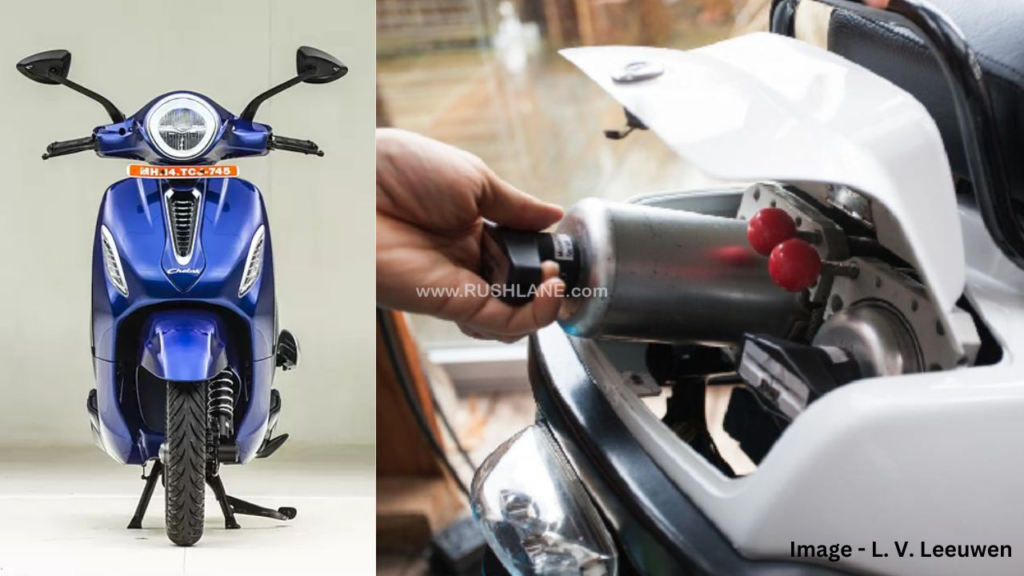
The project is still at an early stage. It is being led by Chetak Technology Ltd, a subsidiary focused on advanced mobility solutions. Bajaj aims to evaluate hydrogen as a viable fuel for both two- and three-wheelers.
Hydrogen is being positioned as a long-term alternative to battery-electric systems. It offers faster refueling and potentially longer range. Yet, infrastructure remains limited. India has fewer than a handful of hydrogen refueling stations today, according to industry estimates.
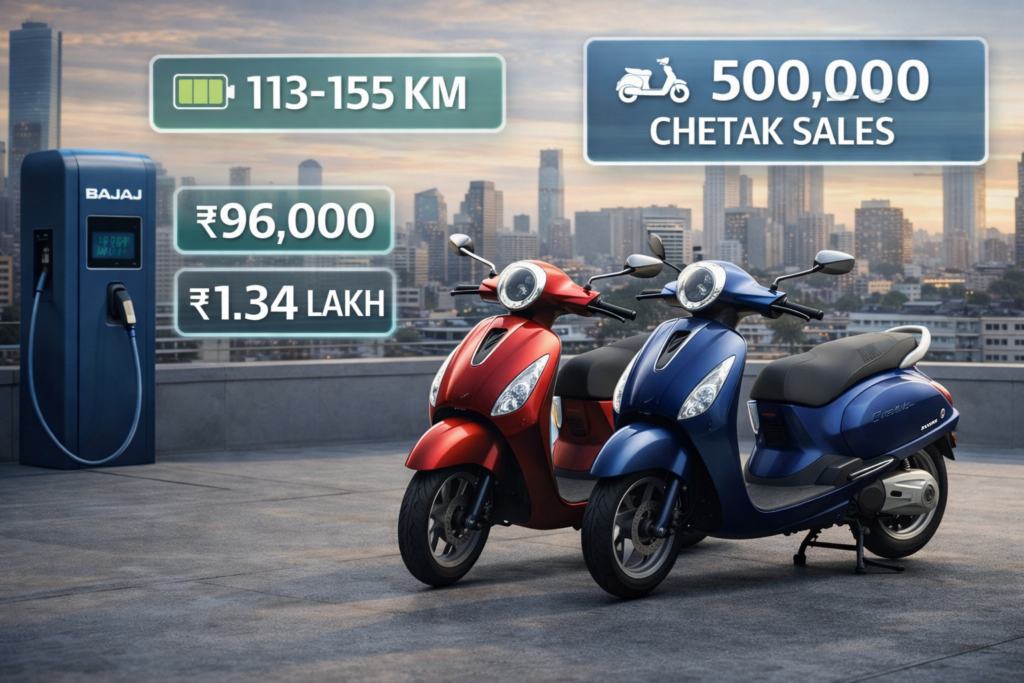
At present, Bajaj’s core strength lies in electric mobility. Its Chetak e-scooter range delivers a real-world range of 113 km to 155 km per charge. Prices start at around ₹96,000 (ex-showroom) and go up to ₹1.34 lakh for premium variants. The company has already crossed 500,000 Chetak sales, reflecting strong demand in urban markets.
However, electric vehicles face supply chain and cost challenges. A global shortage of rare earth magnets disrupted production in 2025, highlighting vulnerabilities in EV manufacturing. This has prompted automakers to diversify technology bets.
Globally, hydrogen mobility is still evolving. Japanese manufacturers have begun joint efforts to develop hydrogen-powered vehicles, though adoption remains limited. Experts argue that hydrogen could complement EVs rather than replace them.
Still, key hurdles remain. Hydrogen production is energy-intensive. Storage and transportation add further complexity. Without large-scale investment, costs may stay high.
“Hydrogen is promising, but ecosystem readiness is low,” analysts say. Public policy will play a decisive role in scaling adoption.
Bajaj’s strategy reflects a broader industry trend. Automakers are hedging bets across multiple clean technologies. While EVs dominate today, hydrogen could emerge as a niche solution for specific use cases.
For now, the transition will be gradual. Electric scooters will continue to lead India’s urban mobility shift. Hydrogen, meanwhile, remains a long-term play—one that could redefine the future of two-wheelers if infrastructure catches up.
Reference- Autocar India, The Times of India, Bajaj Auto website, Rushlane website