



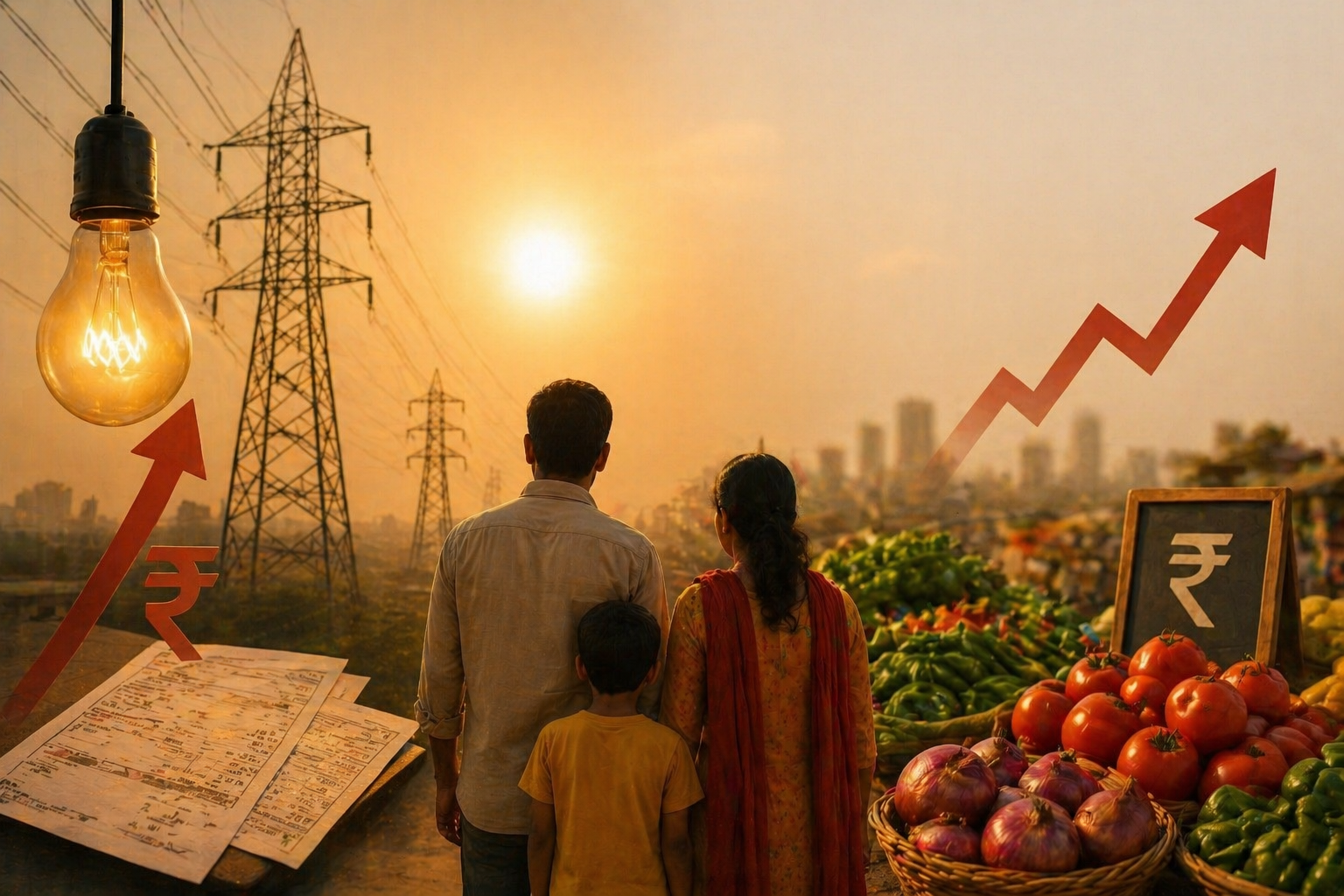
India’s summer heat is no longer just a weather event. It is becoming an inflation event.
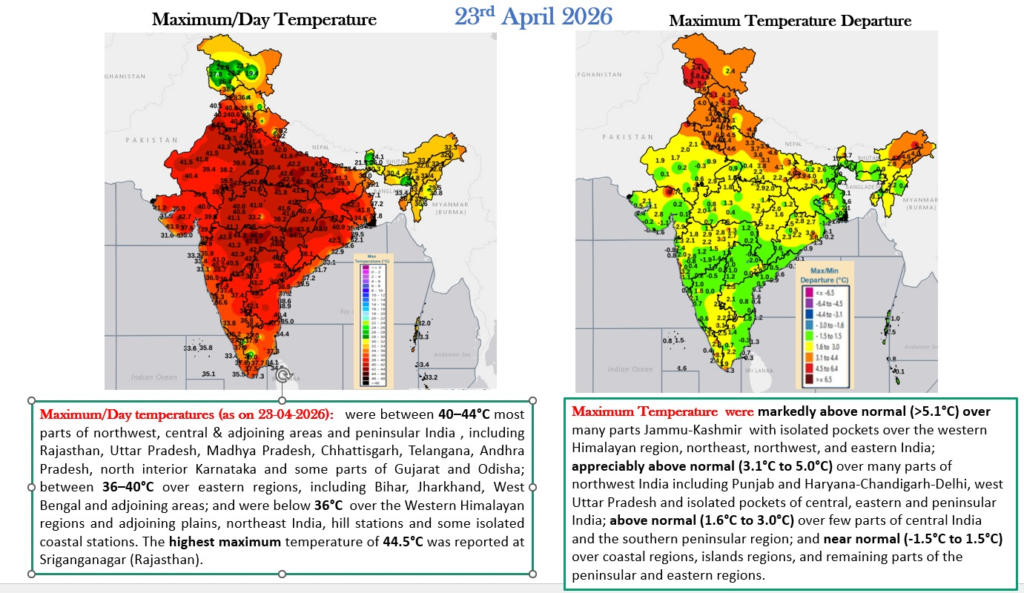
Temperatures have already crossed 45°C to 47°C in several northern and western states, weeks before the usual May peak. The economic shock is now visible in electricity bills, grocery prices, and transport-linked household spending.
The first hit is power consumption. Government data shows India’s peak electricity demand has surged to 250–256 gigawatts, levels usually recorded deeper into summer. Gujarat alone touched a record 25,360 MW on April 25 as cooling demand spiked across homes and offices.
That surge carries a direct cost. As local grids strain, distribution firms buy short-term power at elevated market prices. Those costs are later transferred through tariff revisions and fuel surcharges.
Meanwhile, India’s cooling economy is booming. Air-conditioner, beverage and refrigeration manufacturers have reported nearly 50% jump in sales in the last ten days, confirming how heat is rapidly lifting household discretionary expenses.
The second blow is food.

Vegetable belts in Maharashtra are reporting 30% to 100% crop losses as farm temperatures touched 46–47°C. Tomatoes, onions, gourds and capsicum are among the worst affected. Lower yields mean tighter mandis and higher retail prices in urban centers.
India has seen this pattern before. During the 2022 heatwave, wheat production fell sharply enough to trigger export restrictions. Analysts now warn that a repeat cycle in vegetables, dairy and cereals could intensify food inflation through May and June.
Then comes the broader inflation risk.
Bloomberg reports that India’s heatwave is arriving just as global oil volatility is already pressuring input costs. This means cooling, transport, irrigation and storage are all becoming more expensive at the same time.
This is the real climate bill: not future, but monthly.
A hotter India now means costlier electricity, costlier vegetables, and costlier living. Unless weather resilience improves, extreme heat may become one of the strongest invisible taxes on Indian households.
Reference- Down To Earth, The Times of India, Bloomberg, India Today, The Economic Times