



India’s electric vehicle market recorded strong gains in FY2026. Registrations crossed 25.24 lakh units, a 25 percent rise from the previous year, according to Vahan Dashboard data analyzed by JMK Research. Cumulative EV registrations reached 80.48 lakh units by the end of FY2026. Penetration climbed from 2.55 percent in FY2022 to 8.19 percent. The market expanded at a compound annual growth rate of 50.6 percent over the four-year period.
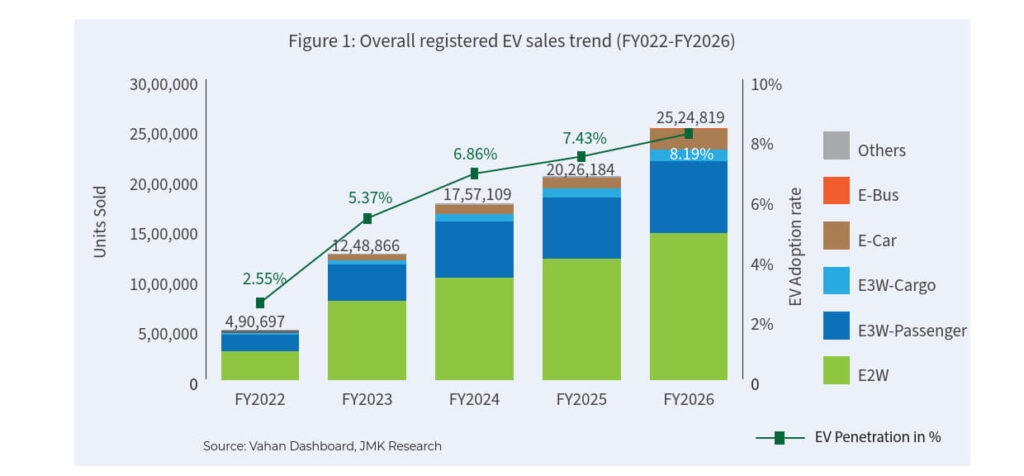
Electric two-wheelers and three-wheelers together made up 91 percent of total registrations. India remains the world’s largest electric three-wheeler market and the second-largest for electric two-wheelers.
The top 10 states accounted for 71 percent of FY2026 registrations. Uttar Pradesh led with a 16.2 percent share. Maharashtra followed at 11 percent and Karnataka at 8.5 percent. These three states contributed more than one-third of national volumes.
Adoption is spreading beyond early leaders. Madhya Pradesh and Bihar emerged as high-growth markets. Southern states such as Karnataka, Kerala, Tamil Nadu and Maharashtra showed stronger penetration in personal mobility segments, especially two-wheelers and cars. Northern and eastern states including Uttar Pradesh, West Bengal, Bihar and Delhi recorded higher penetration in commercial three-wheelers.
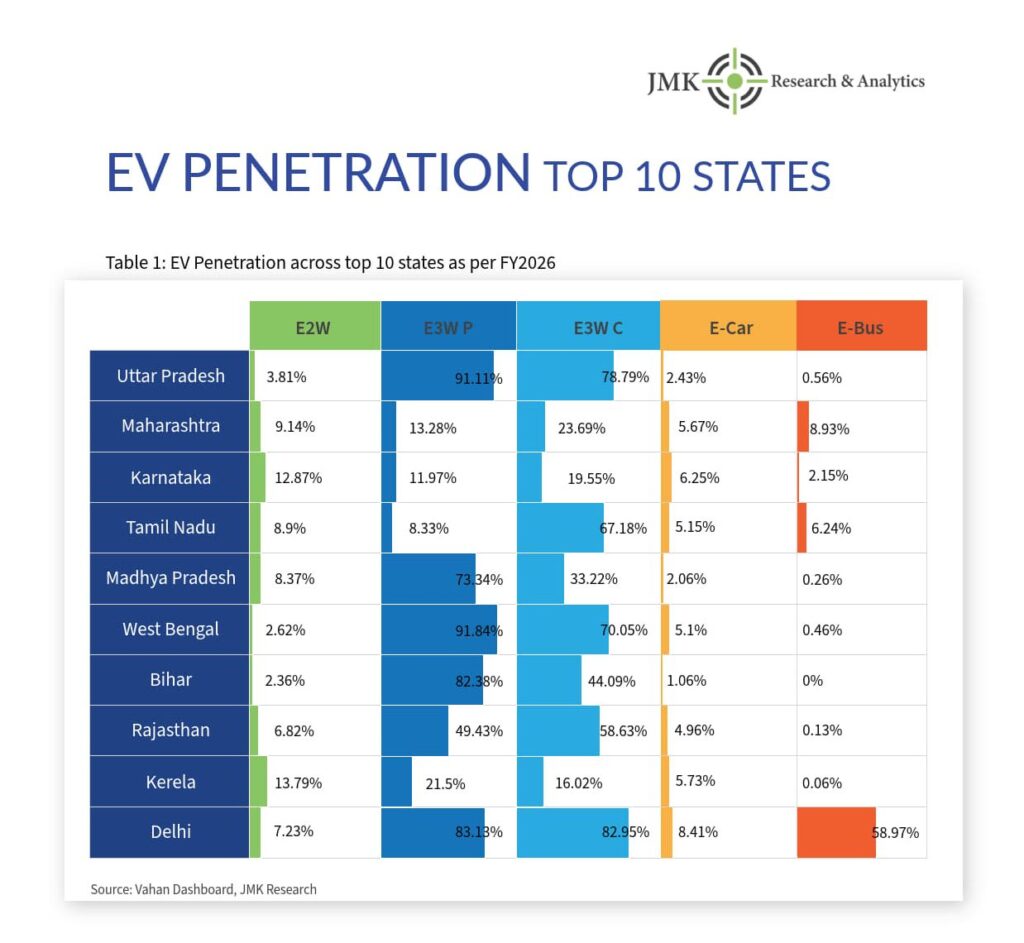
Electric car penetration stayed below 10 percent across the top 10 states. Delhi recorded the highest at 8.41 percent. This points to long-term potential in the passenger car segment.
Policy support focused on lowering ownership costs and expanding charging networks. Most leading states offer purchase incentives, road tax exemptions and registration fee waivers. Charging infrastructure remains a shared priority, though support methods differ.
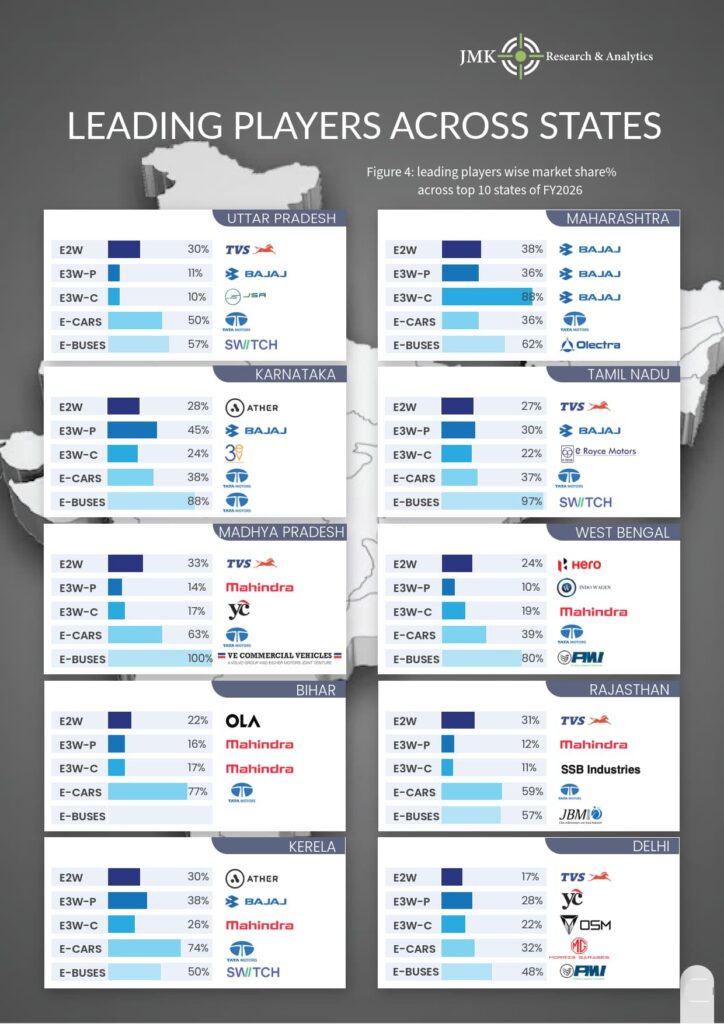
Market leadership, however, varied by segment and state. For example, Maharashtra led electric two-wheeler and car sales. Meanwhile, Uttar Pradesh dominated passenger and cargo three-wheelers. In addition, Delhi recorded the highest electric bus numbers. Overall, Tata Motors held the strongest position in electric cars across most states.
India’s EV transition is moving into a scaling phase. Growth is shaped by state-specific mobility needs, industrial bases and policy execution rather than a single national path. Future progress will depend on manufacturing expansion, charging infrastructure, public transport electrification and circular economy measures at the state level.
Reference- JMK Research, Acodrive, AutoIndia, Vahan portal