



India’s electric vehicle market gained strong momentum during the first half of 2026. EV registrations reached 1,541,377 units between January and June. That was a 43% increase over the same period last year. EV penetration also rose to 11.43%, compared with 8% in H1 2025. These figures come from JMK Research & Analytics, based on data from the Vahan Dashboard.
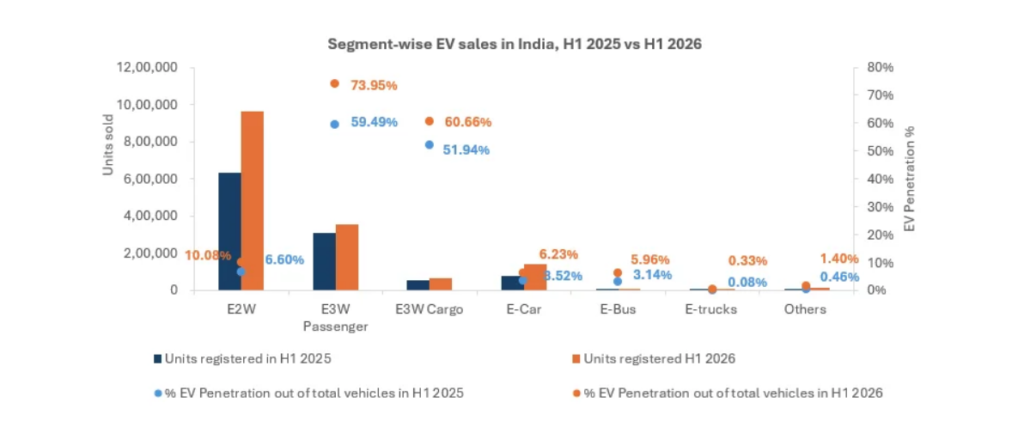
Electric two-wheelers remained the biggest growth driver. Their market share increased to 62.53%, up from 58.51% a year earlier. Attractive discounts, rising fuel prices, and growing fleet demand encouraged more buyers to switch. Electric three-wheelers also performed well. Passenger E3Ws achieved 73.95% penetration, while cargo models reached 60.66%. Demand stayed healthy despite the withdrawal of some government subsidies.
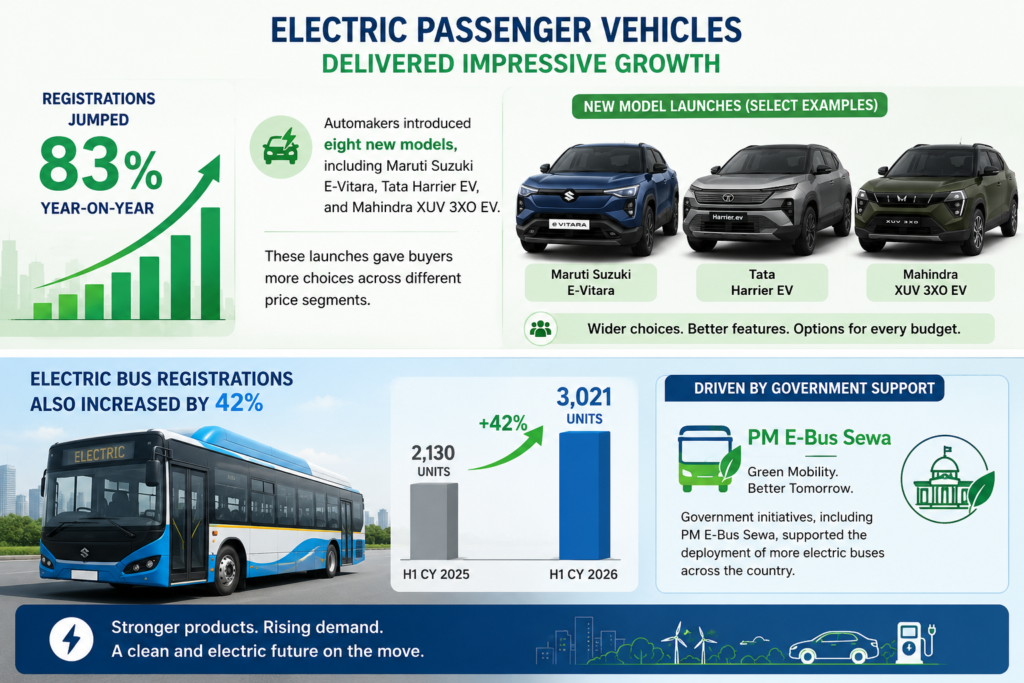
Electric passenger vehicles delivered impressive growth. Registrations jumped 83% year-on-year. Automakers introduced eight new models, including the Maruti Suzuki E-Vitara, Tata Harrier EV, and Mahindra XUV 3XO EV. These launches gave buyers more choices across different price segments. Electric bus registrations also increased by 42%, rising from 2,130 units to 3,021 units. Government initiatives, including PM E-Bus Sewa, supported this expansion.
Electric trucks recorded the fastest growth among all EV categories. Sales climbed 339.57%, increasing from 139 units to 611 units. Logistics companies adopted these vehicles to reduce operating costs and meet their environmental, social, and governance (ESG) commitments. Lower total cost of ownership also influenced purchasing decisions.
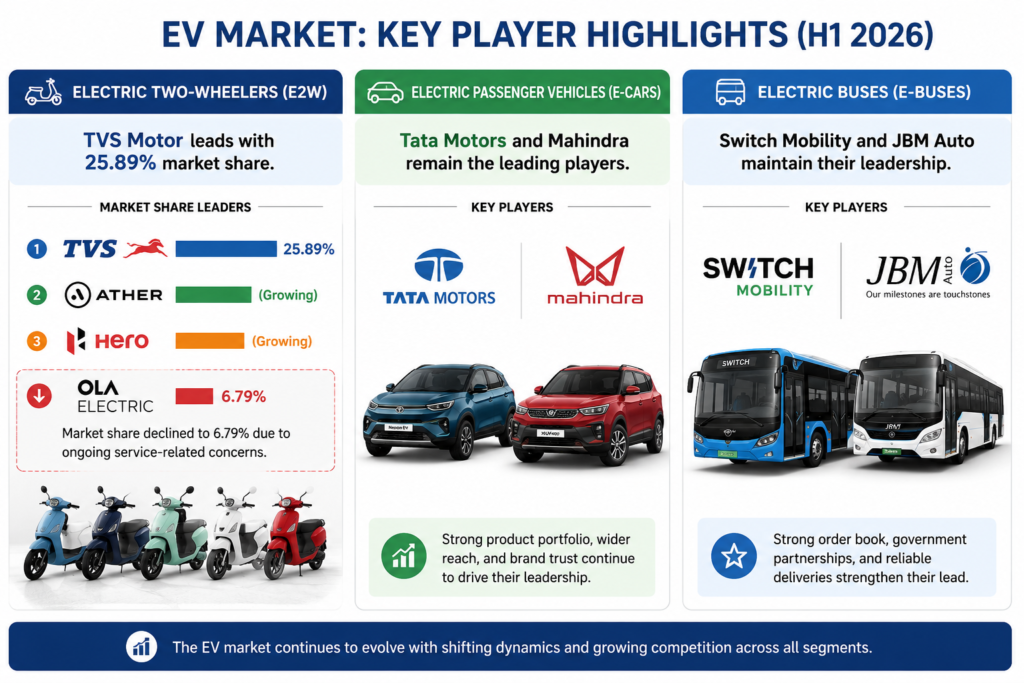
The competitive landscape continued to evolve. TVS Motor captured the leading position in the electric two-wheeler segment with a 25.89% market share. Ather Energy and Hero MotoCorp strengthened their presence during the period. Meanwhile, Ola Electric’s market share declined to 6.79% because of ongoing service-related concerns. Tata Motors and Mahindra remained the leading players in the electric passenger vehicle segment. Switch Mobility and JBM Auto maintained their leadership in the electric bus market.
Industry experts believe the sector is entering a stronger growth phase. Reports from Equirus Securities highlighted the steady rise in EV adoption across the country. Retail sales remained robust in both the two-wheeler and passenger vehicle categories. June recorded some of the highest monthly sales seen so far in several EV segments.
Supportive government policies continue to boost market confidence. Delhi’s EV Policy 2026 has earmarked ₹15,000 crore to accelerate electric mobility. Bihar has also announced a target of achieving 30% EV penetration by 2030. At the same time, manufacturers are preparing more product launches while charging infrastructure continues to expand. These developments are expected to support stronger growth during the second half of 2026.
India’s transition to clean mobility is clearly accelerating. Infrastructure gaps and affordability challenges still need attention. Even so, the latest numbers point towards a steady and long-term shift to sustainable transportation.
Reference- JMK Research Report, Vahan Dashboard, Autocar India