



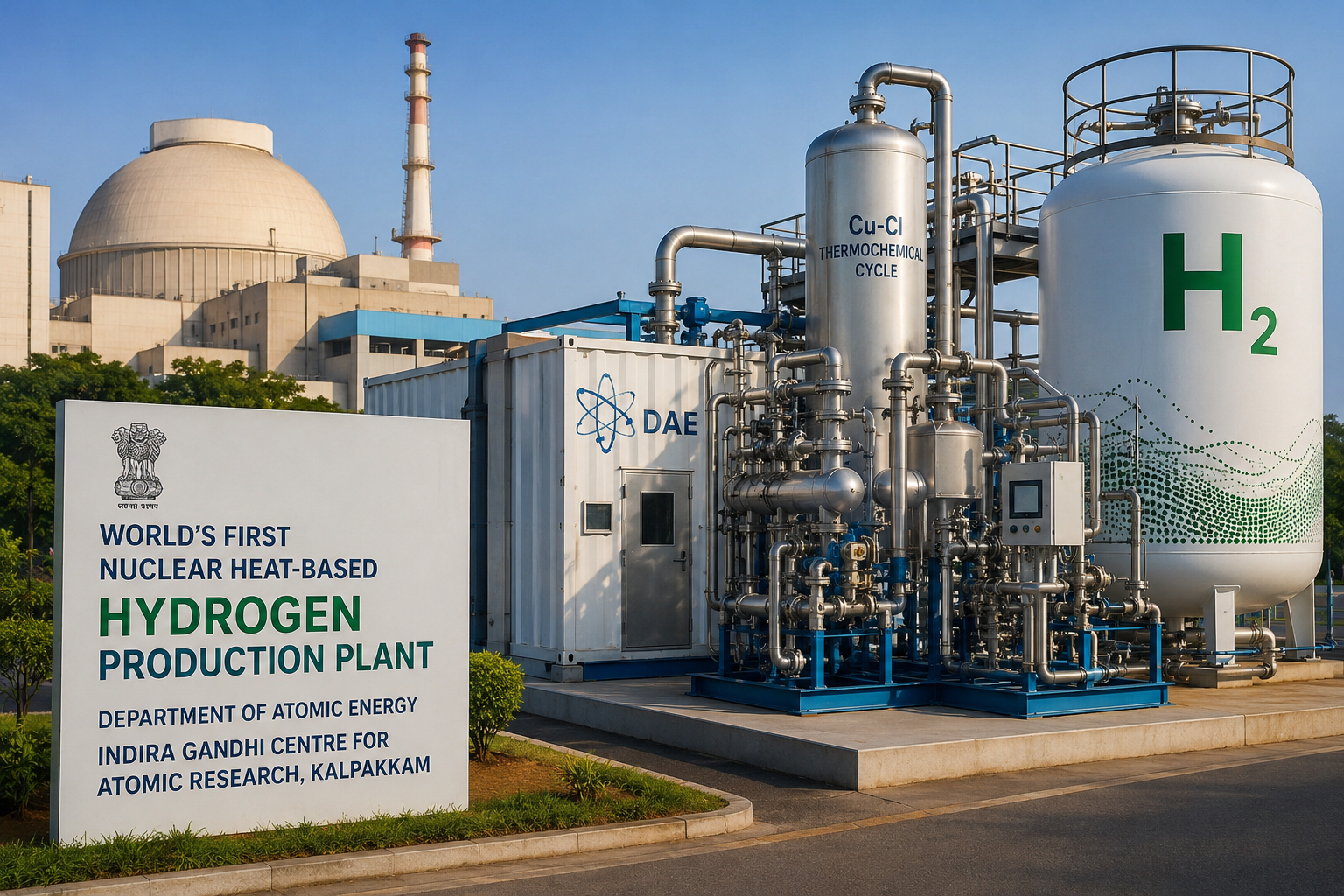
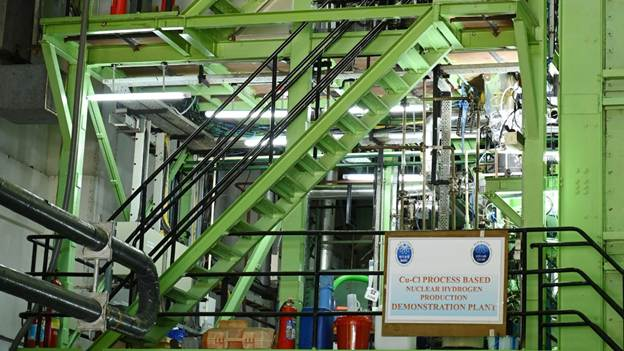
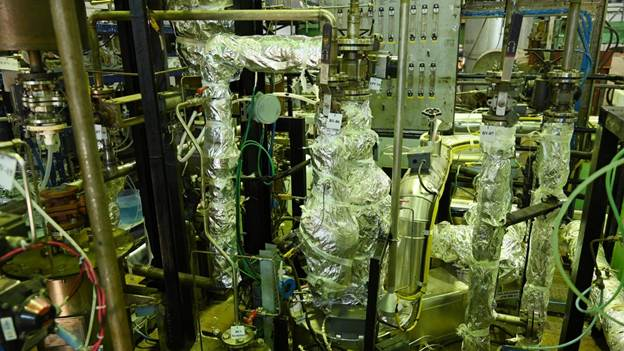
India just did something that’s quietly historic. The Department of Atomic Energy has launched the world’s first nuclear heat-powered hydrogen production facility at the Indira Gandhi Centre for Atomic Research in Kalpakkam, Tamil Nadu, using the Copper-Chlorine (Cu-Cl) thermochemical cycle. That’s a mouthful, but what it means is genuinely exciting.
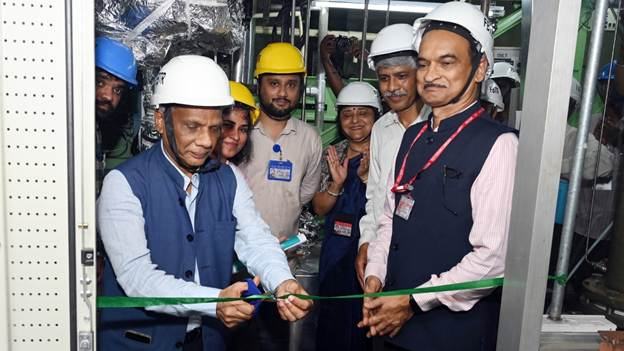
Here’s why it matters. Most hydrogen today is made through electrolysis, which gulps down electricity.The Cu-Cl process uses high-temperature nuclear heat instead of relying solely on electricity for hydrogen production. This approach cuts power consumption and improves efficiency for large-scale hydrogen generation. The Bhabha Atomic Research Centre developed the entire technology through indigenous research and engineering efforts. The achievement marks another milestone for India’s clean-energy innovation and self-reliance goals.
The demonstration plant operates within the Fast Breeder Test Reactor complex at Kalpakkam. It highlights a broader role for nuclear energy beyond electricity generation. Nuclear heat can directly support industrial decarbonisation and clean fuel production. That capability matters for sectors with some of the toughest emissions challenges.
Steel, fertilizers, oil refining, and heavy transport stand to benefit the most from hydrogen. Experts see clean hydrogen as a key tool for reducing emissions in these industries.
India has big ambitions in this space. The National Green Hydrogen Mission is targeting 5 million metric tonnes of hydrogen production every year by 2030. The plan also envisions massive investment in manufacturing, storage, and exports — potentially over ₹8 lakh crore — and hundreds of thousands of new jobs along the way.
Globally, nuclear-assisted hydrogen is still a frontier field. The US has run pilot projects using nuclear power plants, but India’s thermochemical approach, driven by nuclear heat rather than electricity, is a genuine first at demonstration scale.
The backdrop makes this even more interesting. India currently runs 25 nuclear reactors with a combined capacity of around 8,880 MW, and the government has set its sights on 100 GW of nuclear power by 2047. As that capacity grows, hydrogen production could become one of its most important applications.
For decades, experts have called hydrogen the fuel of the future. At Kalpakkam, India has decided to build that future today.
Reference- India Today, The Print, Press Information Bureau, PTI