



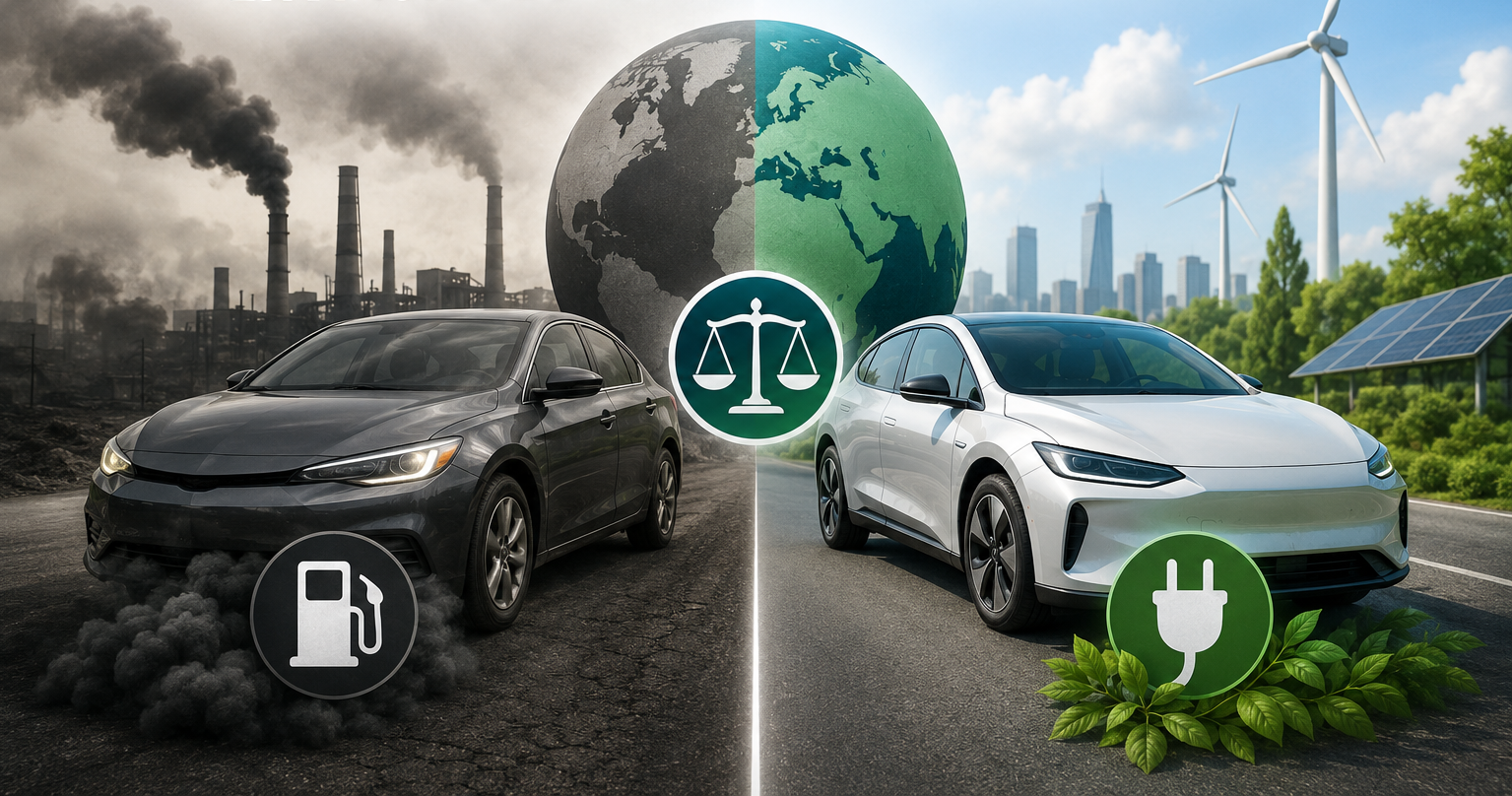
For years, critics have claimed EV battery production makes electric cars as harmful as gasoline vehicles. A growing body of research suggests otherwise. Now, a comprehensive study from the Massachusetts Institute of Technology (MIT) adds fresh evidence to the debate.
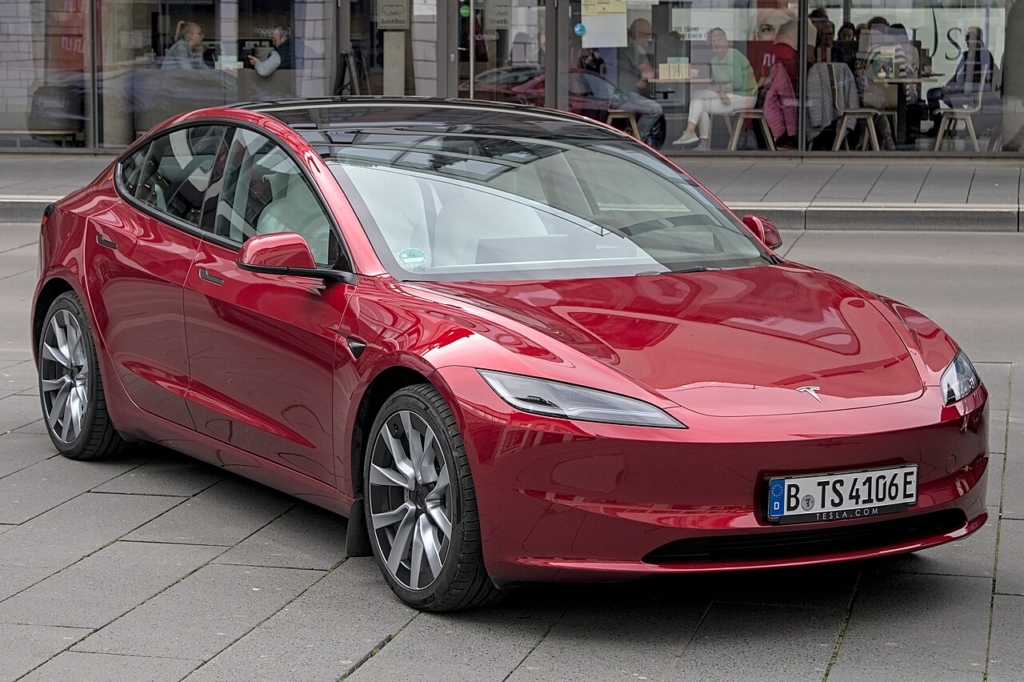
The MIT analysis examined factors including electricity generation, climate conditions, driving patterns, traffic congestion, and vehicle ownership costs across the United States. Researchers concluded that battery-electric vehicles generally produce lower greenhouse gas emissions and often cost no more to own than comparable gasoline-powered vehicles.
The findings arrive at a crucial moment. Transportation remains one of the largest sources of carbon emissions globally. According to MIT Climate Portal, cars and trucks account for roughly one-fifth of climate pollution in the United States.
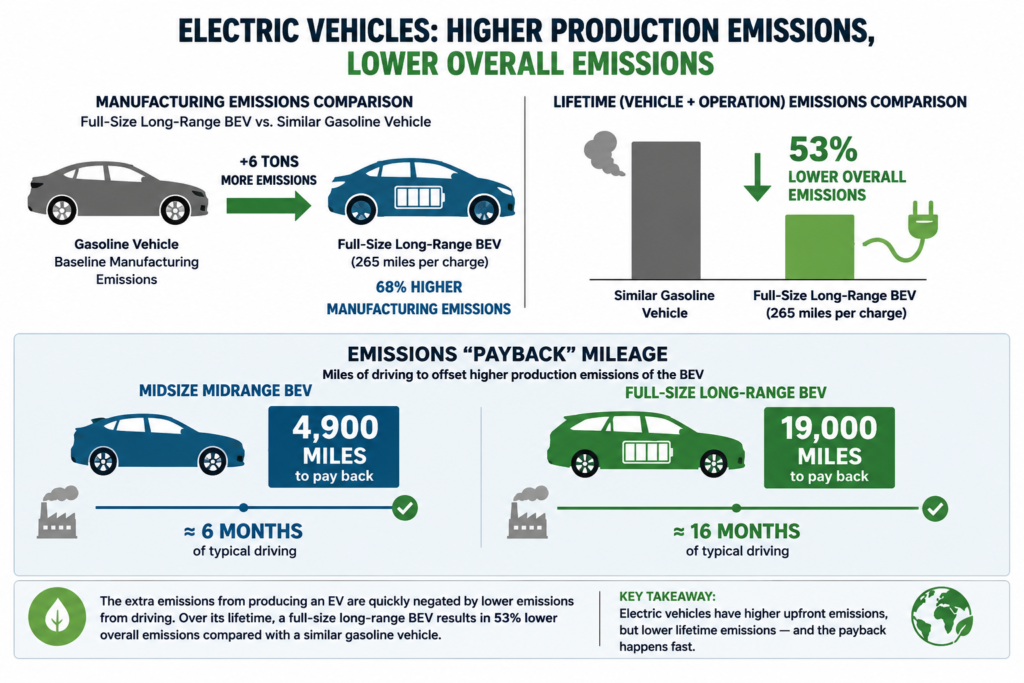
The study also addresses a common criticism of EVs: battery manufacturing. Producing an electric vehicle creates more emissions upfront than manufacturing a conventional gasoline car. MIT estimates that an EV can leave the factory with 50% to 80% higher manufacturing emissions, largely because of battery production and mineral processing.
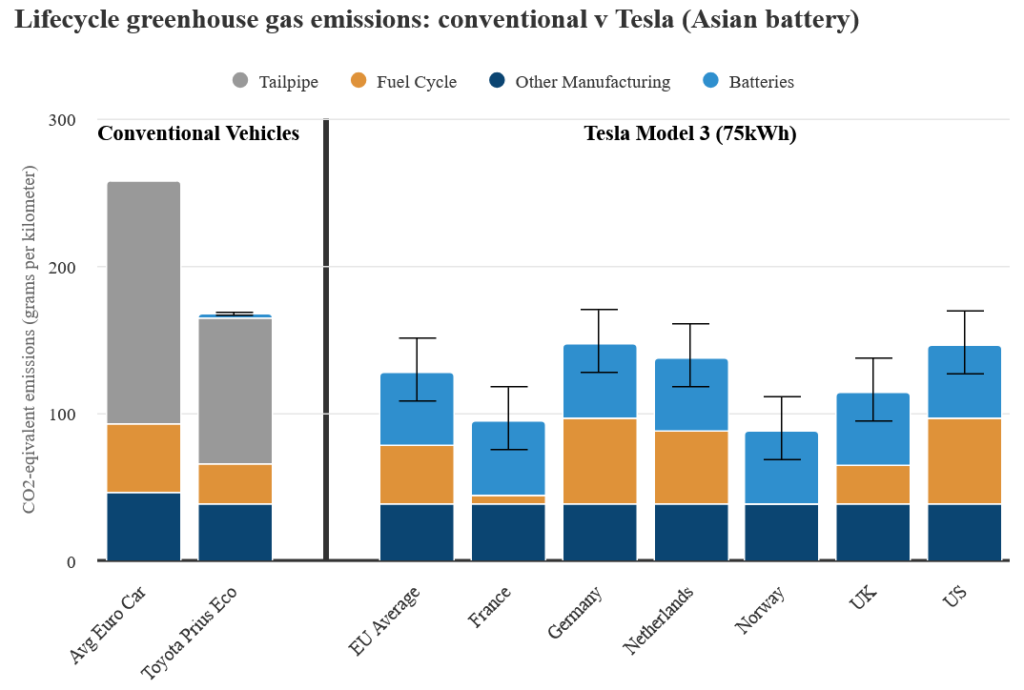
However, those initial emissions are gradually offset during vehicle operation. EVs produce no tailpipe emissions and are far more energy efficient. MIT researchers note that even when charged using electricity generated from coal, electric vehicles typically emit less carbon dioxide per mile than comparable gasoline vehicles.
The environmental advantage grows as power grids incorporate more renewable energy. MIT Climate Portal reports that an EV charged on the average U.S. electricity grid generates roughly one-third of the carbon emissions per mile of a similar gasoline vehicle.
Independent studies reinforce this conclusion. According to the Associated Press, EVs may create 30% more emissions during manufacturing but become cleaner within three years.
The broader message is clear. Electric vehicles are not emission-free. Mining, battery manufacturing, and electricity generation still carry environmental costs. Yet the latest evidence indicates that EVs remain one of the most effective tools available for reducing transportation-related greenhouse gas emissions. Governments and automakers are investing billions in EVs. The focus now is on cleaning power systems faster.
Reference- MIT Study, Futurism, Jalopnik, CarbonBrief