



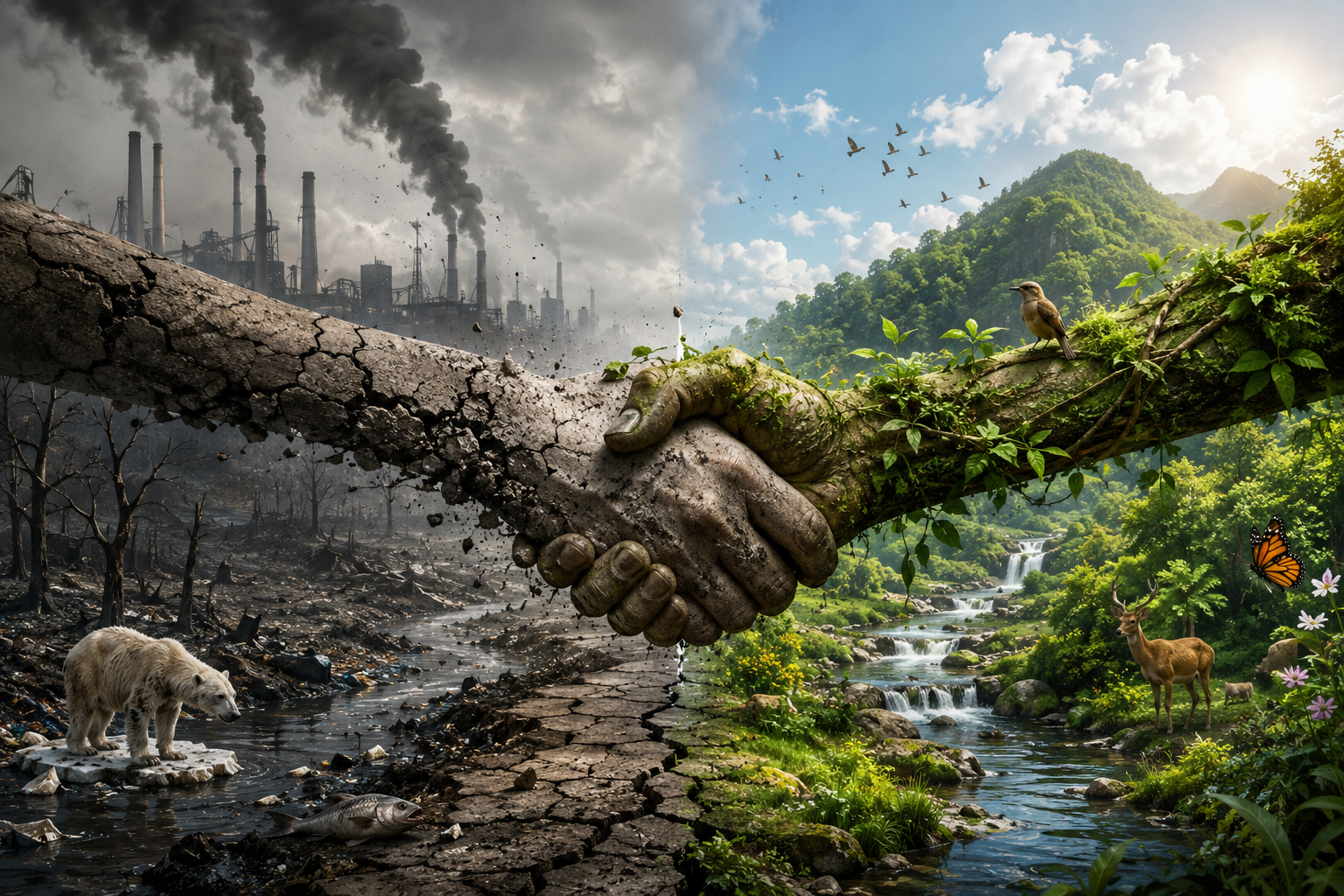
The story we have long told ourselves still lingers. Humanity stands apart from nature. Progress, we assume, comes through domination and control. Yet this mindset has brought us to a dangerous place. Cities struggle under heavy smog. Forests continue to shrink. Countless species vanish, never to return.
As Yadvinder Malhi writes, “Human lives are not merely supported by nature: they are entangled with it.” Even so, many decision-makers continue to view rivers, forests, and fertile soils as assets to be extracted. That perspective no longer serves us. It weakens the very systems that make human life possible.
The numbers leave little room for debate. One million species face extinction out of eight million worldwide. Meanwhile, humanity consumes resources equivalent to 1.6 Earths. Furthermore, seventy-five percent of the planet’s land surface has been heavily altered by human activity. These findings come from IPBES and UNEP assessments. Together, they reveal a deeply troubling reality.
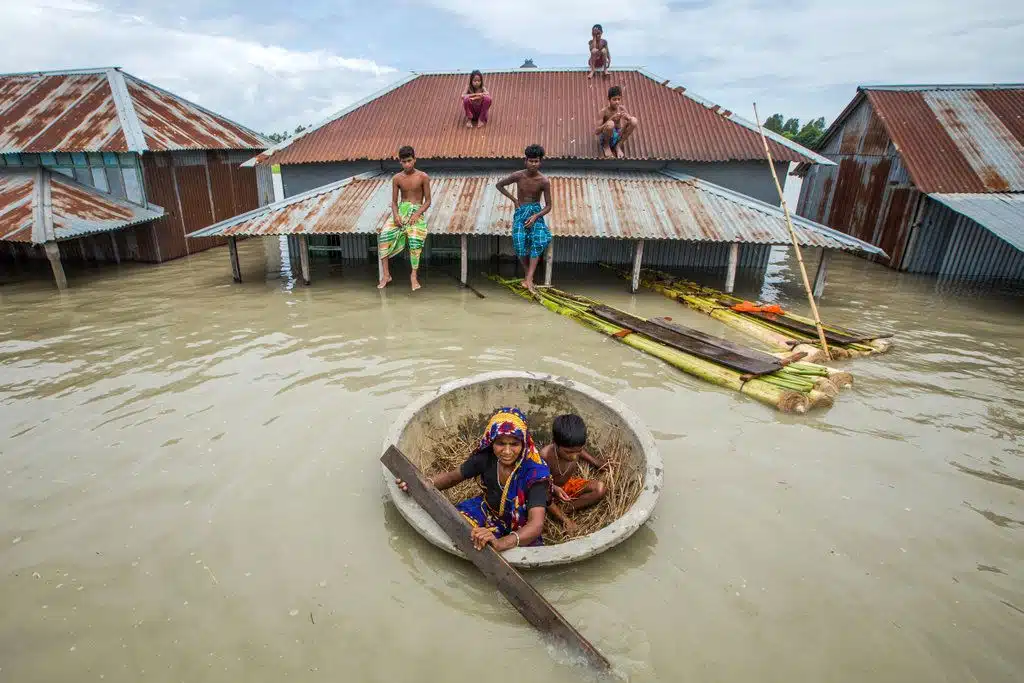
India experiences these challenges in a profound way. Rapid development has lifted millions out of poverty. However, air pollution still claims thousands of lives every year. At the same time, rivers suffer from severe contamination. Moreover, agricultural lands continue to lose their productivity. Climate-driven disasters also strike with growing intensity. Consequently, vulnerable regions face billions in losses. The traditional growth model offers immediate rewards but imposes enormous costs over time.
Indigenous communities point toward a different future. They steward 25 percent of the world’s land. Remarkably, they safeguard 80 percent of the planet’s remaining biodiversity. In addition, deforestation rates are 17–26 percent lower within their territories. Their experience demonstrates that coexistence is possible. Instead, relationships built on reciprocity replace patterns of exploitation.
A New Measure of True Progress
Hope, fortunately, is beginning to take shape. Indeed, researchers have introduced the Nature Relationship Index. Moreover, the United Nations intends to begin annual reporting from late 2026. Erle Ellis and his colleagues presented the concept in the journal Nature. As a result, the framework evaluates how societies prosper alongside living systems rather than in opposition to them.
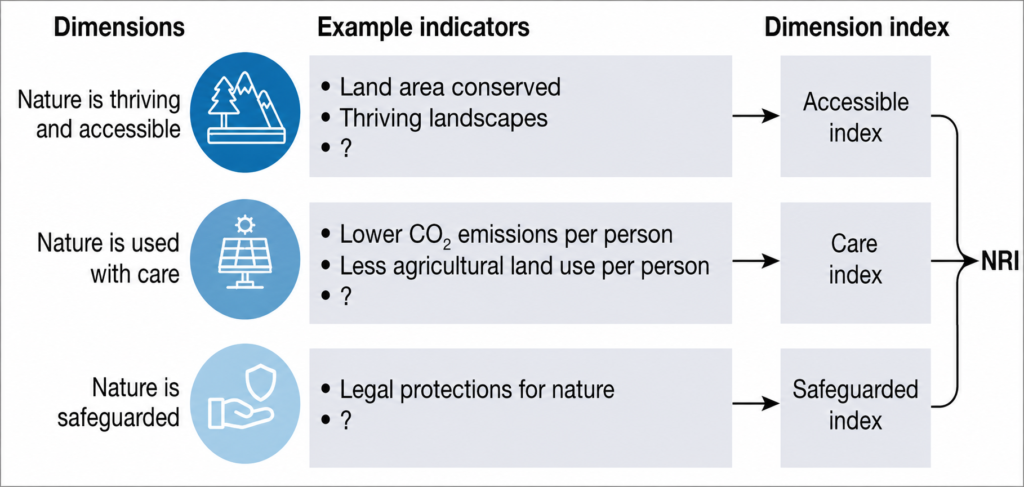
The index complements the Human Development Index. In addition, it emphasizes green spaces, healthy ecosystems, and accountability for environmental impacts beyond national borders. However, countries such as Norway and Canada still receive cautionary signals despite their prosperity. After all, fossil fuel exports can overshadow local environmental achievements. Likewise, similar contradictions can be found across the globe.
At Clean Future, this transformation cannot come soon enough. Renewable energy sources like solar and wind must expand rapidly. Reforestation efforts deserve greater urgency. Urban areas need cleaner air and more accessible green spaces. Public policy should encourage growth that strengthens nature rather than depleting it. India, with its cultural heritage and renewable ambitions, has a genuine opportunity to lead.
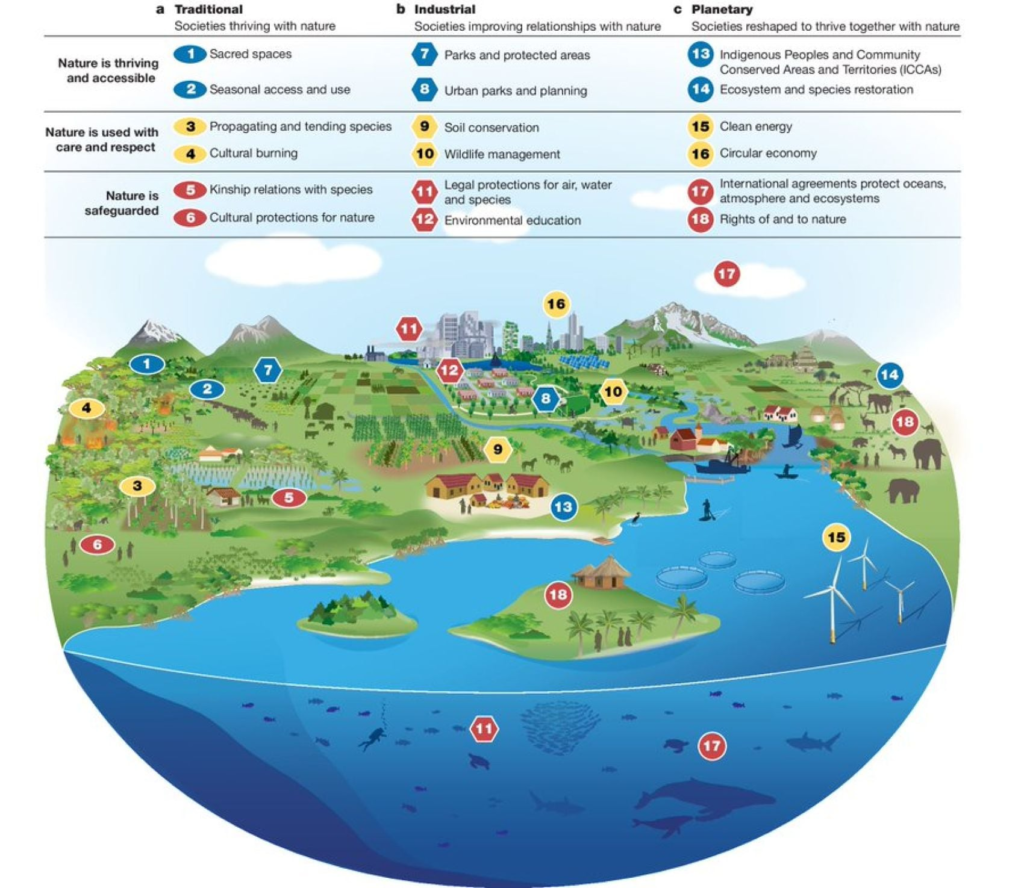
The message is becoming impossible to ignore. Viewing humanity and nature as opposing forces harms the only home we share. It ultimately places prosperity itself at risk. New stories can foster collective well-being. People flourish when ecosystems flourish alongside them. Time, however, is limited. Leaders must move decisively, and citizens must insist on better measures and meaningful action. Future generations deserve thriving landscapes, not the remnants of what once existed.
Reference- Aeon essay, Nature journal, Earth, UNEP reports, Down To Earth