



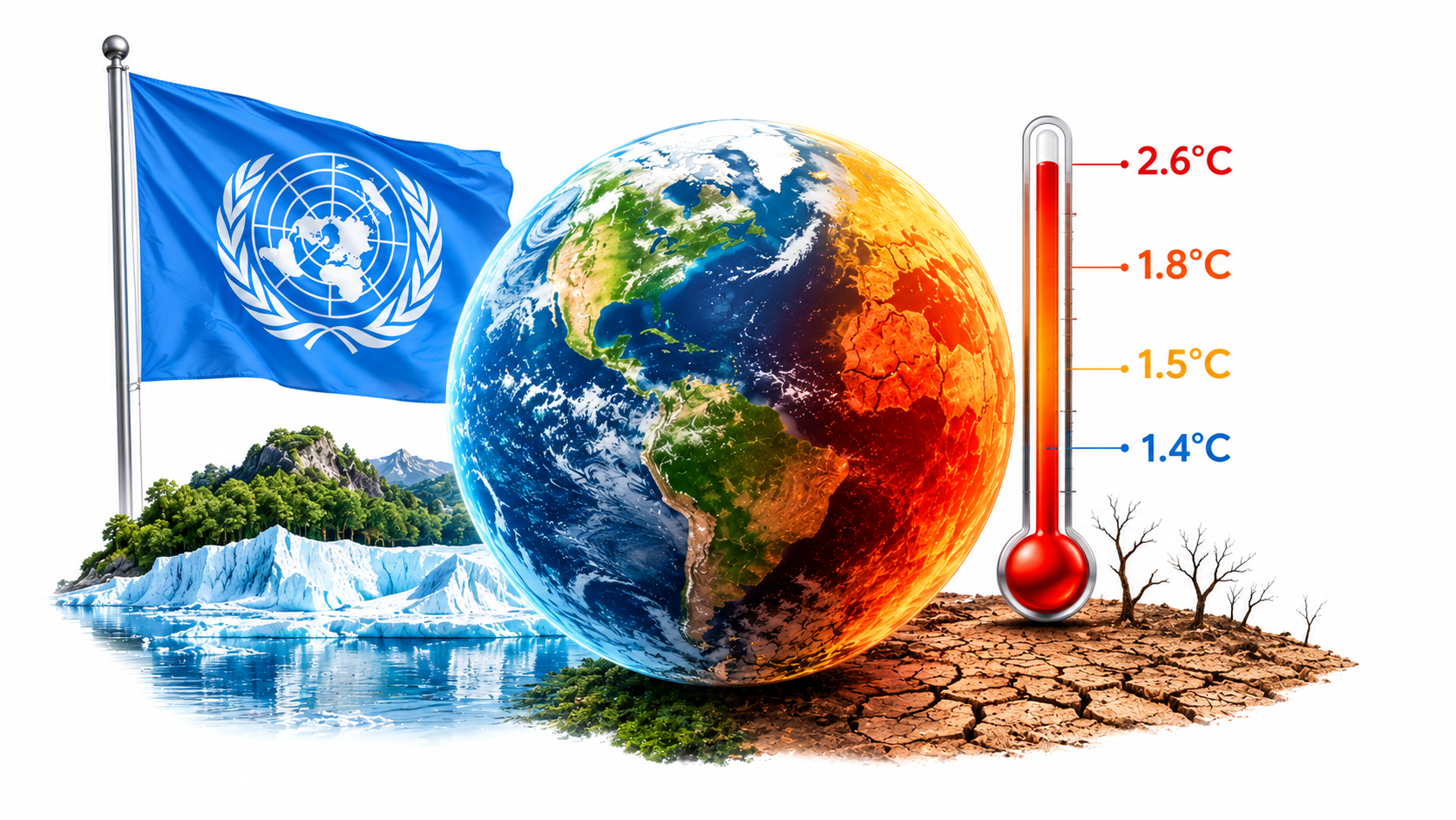
The United Nations Environment Programme has concluded that efforts to hold global warming to 1.5 degrees Celsius above pre-industrial levels have failed. A new report calls on the world to accept the inevitability of overshoot.
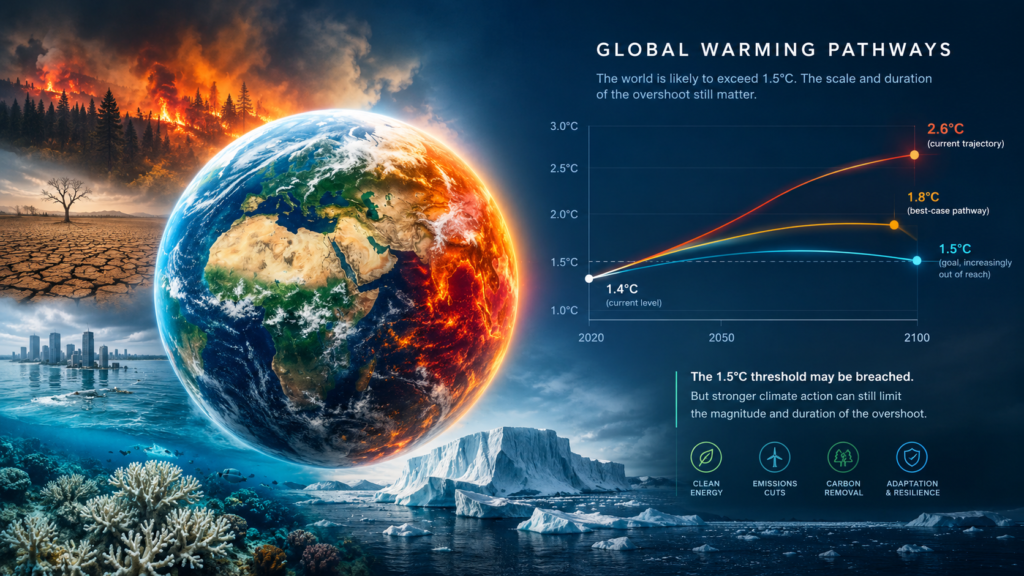
The paper, titled “Limiting Overshoot,” states that even full implementation of existing climate commitments and policies will produce at least 1.8 degrees of warming. Under current trajectories, temperatures could reach 2.6 degrees by 2100. Global average temperatures already stand near 1.4 degrees.

Crossing 1.5 degrees raises the risk of irreversible tipping points. These include major ocean circulation breakdowns, abrupt boreal permafrost thaw, and tropical coral reef collapse, according to UN climate science summaries.
UNEP Executive Director Inger Andersen told CBC News the 1.5 degree target remains the goal. “But now we need to approach it differently from above,” she said. “Every tenth of a degree we avoid still means less damage.”
Returning temperatures to 1.5°C later this century would require sustained net-negative CO₂ emissions globally. Further cuts in non-CO2 gases may also be needed. Decisions taken this decade will determine whether that path stays open.
The report follows the hottest summer on record in many regions. Scientists have long linked the 1.5 degree threshold to reduced chances of catastrophic impacts. The UN now frames 1.5 degrees as a floor that must be regained rather than a ceiling that can still be defended without overshoot.
Nations agreed in Paris in 2015 to pursue efforts to limit warming to 1.5 degrees while holding the increase well below 2 degrees. Current policies fall short of both aims. Emissions continue to rise overall despite rapid growth in renewable energy and electric vehicles.
The findings underscore the narrowing window for deep emissions cuts. Stronger near-term action can still limit peak warming and reduce long-term damage. The alternative is a higher risk of cascading climate impacts across ecosystems and societies.
Reference- Futurism, Nature, NYTimes,