




Sheep grazing in a field of solar panels will soon becoming an increasingly common sight as both farmers and solar developers are starting to experiment with co-locating solar photovoltaic (PV) systems and agriculture. The arrangement made sense for low-power agricultural needs in locations where running distribution lines was too expensive or not possible.
More recently, the idea of solar systems on farm land has expanded to large-scale, grid-connected systems that have vegetation growing around and under the panels and/or livestock grazing on the same parcel of land.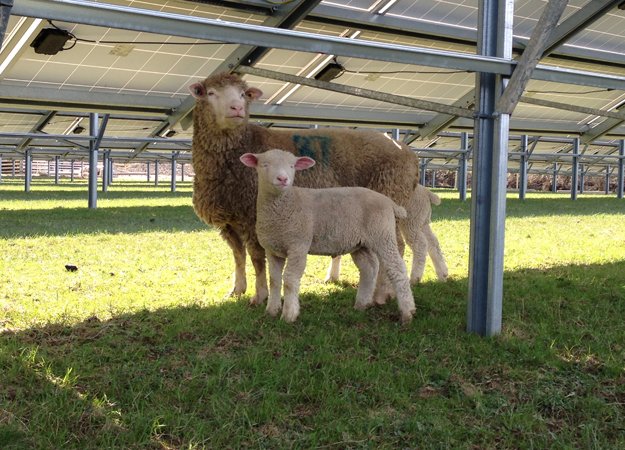
As an alternative to restricting solar installations on agricultural land via policy measures, low-impact solar development and co-location of solar and agriculture is a technique currently being researched that has the potential to alleviate agriculture displacement by allowing solar arrays, vegetation, and livestock to occupy the same land area.
Low-impact solar development can serve a variety of project goals and can be divided into three categories:
- Solar-Centric Design
- Optimized for solar output but keeps low-lying vegetation for ground cover and habitat.
- Vegetation-Centric Design
- Optimized for vegetation growth but allows for solar arrays to be located in areas where vegetation will not be negatively affected (see Figure 2).
- Co-Location Design
- Solar and vegetation configurations are designed jointly for maximum dual output.
All three of these categories can include leaving existing vegetation in place or replacing it with low-growing native vegetation, designing the solar project around natural land contours, and having vegetation that support habitats (for example, pollinator species or livestock).
Co-location of solar and agriculture can have multiple benefits for both land owners and solar developers, as highlighted in the table below.
| Benefits to Land Owners | Benefits to Solar Developers |
|---|---|
| Self-generation of electricity and reduced energy bills | Reductions in site preparation and installation costs |
| Control of wind and soil erosion | Reductions in operation and maintenance costs |
| Compatible with grazing activities, provides shade and cover for livestock | Reduced need for dust suppression |
| Market opportunity for shade tolerant crops | Decreased permitting time |
| Improved habitat for pollinator species | Increased solar production from cooler air zone created under modules |
| Reduction in environmental mitigation investments |
With research and pilot projects continuing to develop in the field of co-locating solar with agriculture, expect to see some solar panels in a pasture near you ;o)
Reference- NREL Report