



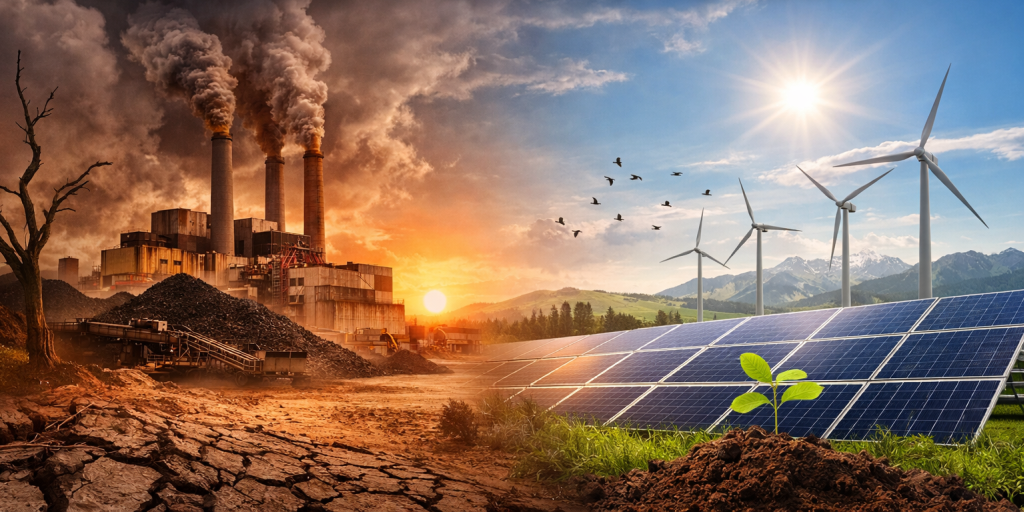
Climate change is accelerating. The world faces rising temperatures, extreme weather, and ecosystem loss. Scientists warn the world must act now to avoid irreversible damage. Methane concentrations have risen faster in recent years, making warming more intense.
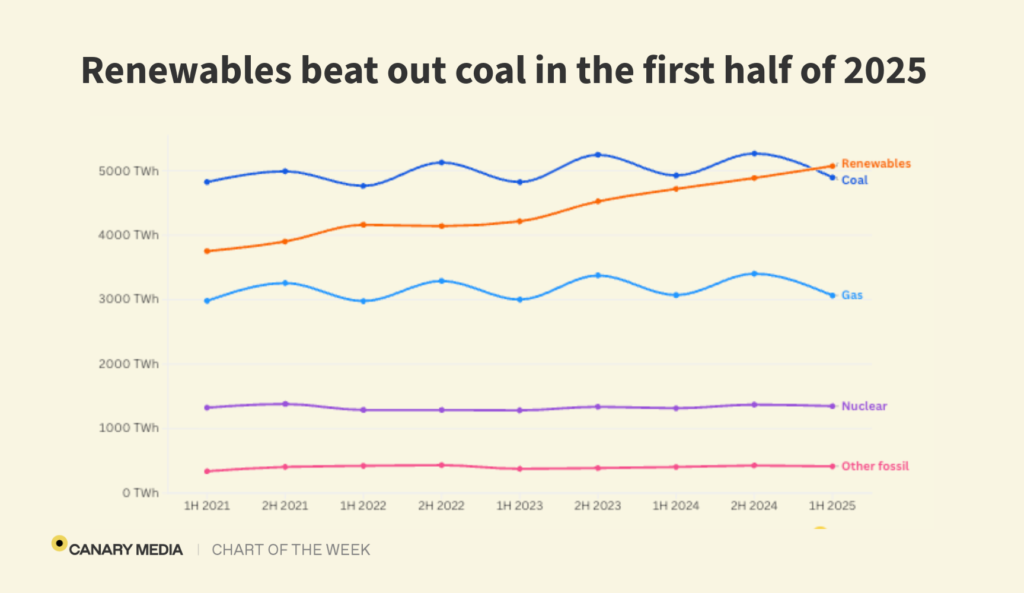
Yet, solutions exist. Clean energy deployment has surged globally. Wind and solar power generation surpassed coal in 2025 for the first time, driven by strong growth in China and India.
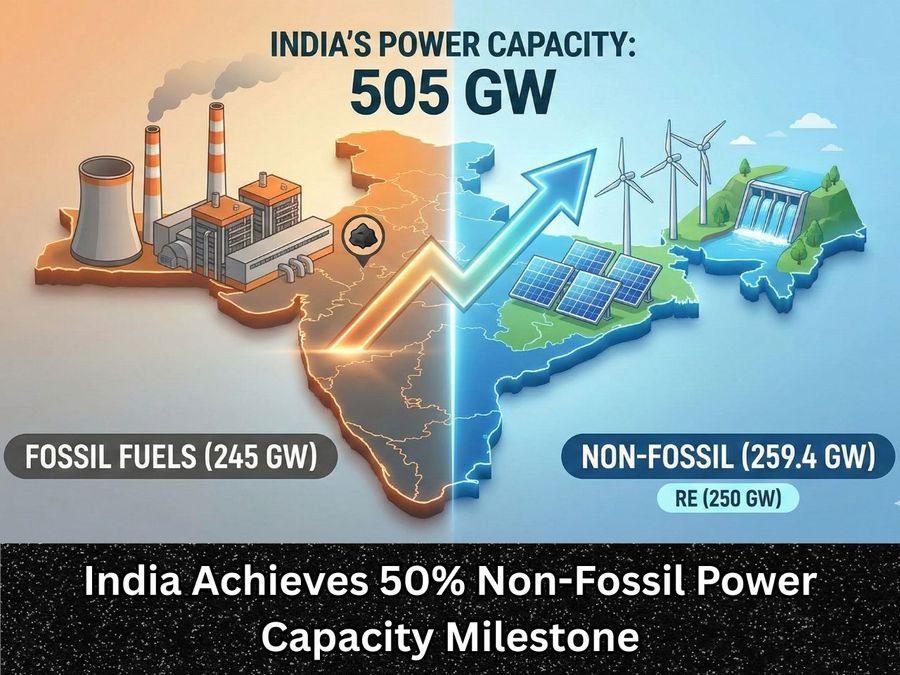
In India, clean energy has expanded rapidly. The country hit a milestone with more than 50 % of its power capacity coming from non-fossil sources well ahead of its 2030 target. India added a record 44.5 GW of renewables in 2025, led by solar and wind.
Despite this progress, challenges remain. India has stopped setting annual clean energy tender targets because of a 43 GW backlog of renewable projects without buyers. Power demand is rising, and local renewable output has dipped in some regions like Delhi.
Still, clean energy advancements matter. Battery storage and pumped hydro are identified as critical tools to manage renewable intermittency in India. Without storage, solar and wind can’t fully meet peak demand.
Climate solutions start with consuming less.
Individual and collective actions are necessary. Energy consumption must be reduced in wealthy nations. Policy must price carbon pollution to push cleaner practices. Beyond cutting emissions, governments and companies must remove greenhouse gases already in the air through industrial-scale solutions.
There is hope. If emissions are cut and renewable energy scales faster, the atmosphere can recover within a lifetime. But delay increases the cost and risk of climate impacts. The transition to clean energy is not just technical. It is essential for human survival.
Reference- Aeon Essay, The Guardian, Reuters, Times Of India, Economic Times