



India’s clean energy transition gained momentum this week. A state-owned energy giant, GAIL (India) Ltd. has moved to expand its renewable portfolio with a large wind power project in the western state of Maharashtra. The company announced the decision after its board approved the plan at a meeting on 27 February 2026.

The proposed wind farm will have 178.2 megawatts (MW) of installed capacity. The project will more than double GAIL’s existing wind energy capacity, which currently stands at around 117.95 MW.The investment needed for the project is estimated at ₹1,736.25 crore.
Construction will start after the contract is awarded, and the company will complete the project within 24 months. The financing will combine debt and equity, a typical structure for large infrastructure builds.
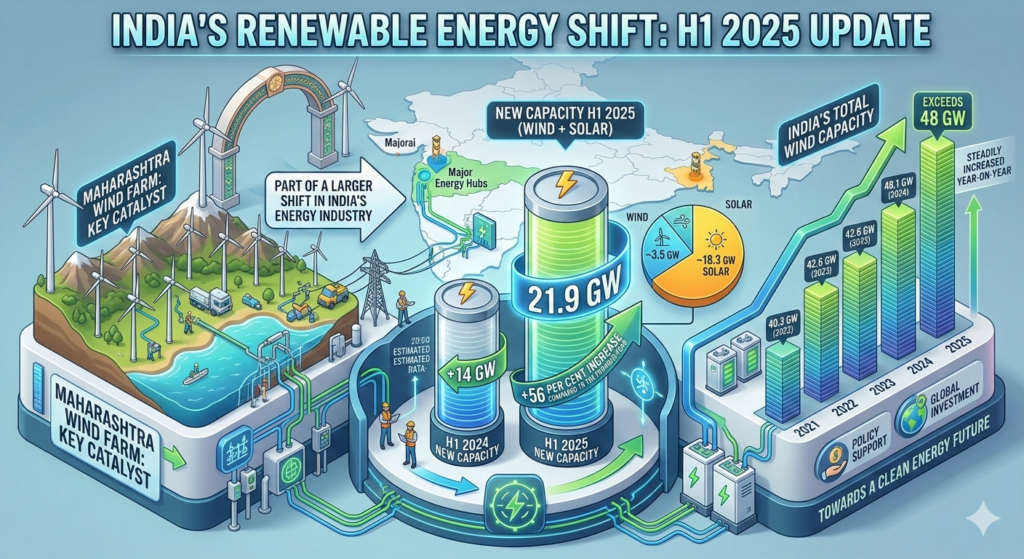
The Maharashtra wind farm is part of a larger shift in India’s energy industry. Wind and solar generation together supplied 21.9 GW of new capacity in the first half of 2025, a roughly 56 per cent increase compared to the previous year. India’s total wind capacity exceeds 48 GW, a number that has steadily increased year-on-year.
GAIL’s expansion also aligns with its own climate goals. The company has pledged to reach net-zero carbon emissions by 2035. It will cut Scope-1 and Scope-2 emissions first. It also plans to reduce Scope-3 emissions by 2040. To achieve this, GAIL aims to reach a total renewable capacity of 3.4 GW by 2035, including wind, solar, and other clean fuels.
Industry observers view the wind project as a strategic business move. Renewable energy, once peripheral for a gas major, has now become central to growth plans. Market observers note that GAIL’s diversification into renewables reflects broader energy market trends in India.
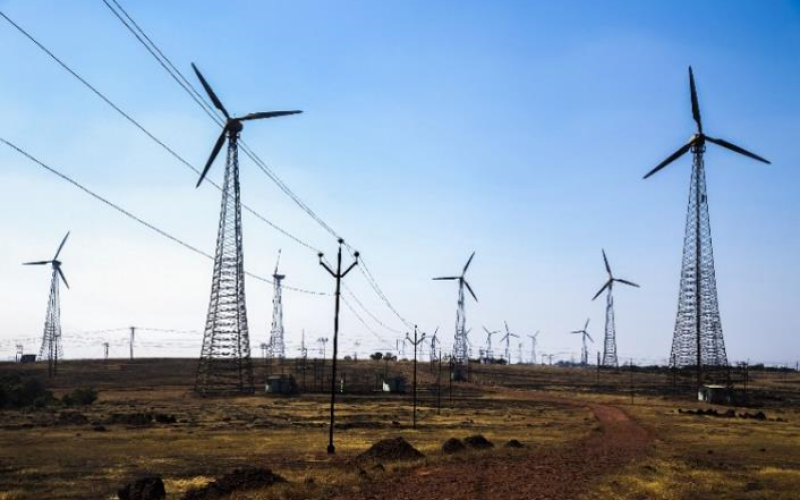
Wind energy in Maharashtra has long been part of regional targets for clean power development. The state government has set ambitious goals to increase its share of renewables in the energy mix.
If successful, the project will demonstrate that large fossil-fuel companies can pivot toward cleaner power sources. India’s energy transition rests not only on solar and wind growth, but on mainstream firms making sustained investments in reliable, low-carbon generation.
Reference- Free Press Journal, NDTV Profit, The Economic Times, Times of India