



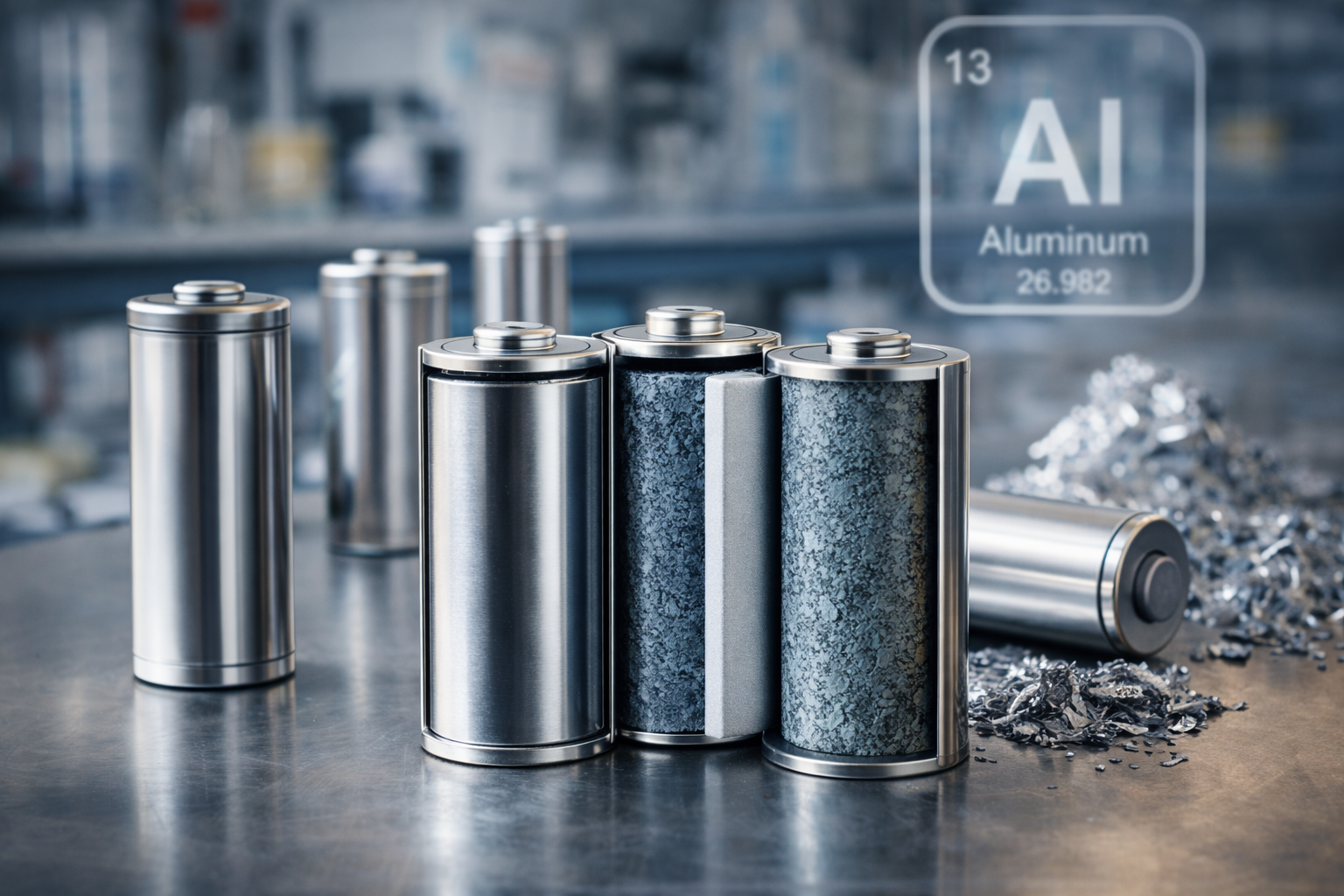
A breakthrough in battery science is drawing fresh attention to aluminium as a viable alternative to lithium. Researchers say a new material could extend battery life and cut costs, potentially reshaping clean energy storage.
Scientists in India have developed a composite electrode that addresses a long-standing weakness in aluminium-ion batteries. These batteries often degrade quickly due to material instability. The new design reduces cracking and prevents capacity loss over time.
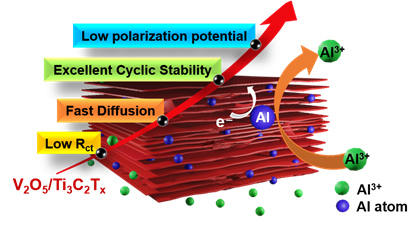
The shift matters. Aluminium is the most abundant metal in the Earth’s crust and costs far less than lithium. This makes it attractive for large-scale energy storage. However, performance issues have held the technology back. Traditional these batteries lose efficiency because cathode materials dissolve in the electrolyte. As a result, lifespan is reduced and reliability suffers.
The new material changes that equation. The team combined vanadium oxide with another layered material known as MXene. This stabilizes the battery structure and improves ion movement. Electrochemical tests showed that the battery maintained more than 73% of its original capacity after 100 charging cycles and even after 500 cycles , it still held at about 59%.
The benefits extend beyond durability. Aluminium-ion batteries are also less prone to fire risks. Unlike lithium-ion systems, they use non-flammable components. This safety advantage has been widely noted in energy research.
Speed is another factor. Some experimental batteries have shown the ability to charge up to 60 times faster than lithium-ion counterparts.
Even so, challenges remain. Energy density still lags behind lithium-ion in practical applications. As a result, companies have delayed commercial deployment. Experts say researchers must develop better materials before large-scale adoption.
The timing of this breakthrough is significant. Global demand for battery storage is rising rapidly, driven by electric vehicles and renewable energy. Safer and cheaper alternatives are being actively explored.
For policymakers and industry, the implications are clear. If the technology scales, it could reduce dependence on scarce minerals and lower the cost of clean energy systems. The question now is not whether aluminium batteries work. It is whether this new material can move them from the lab to the market.
Reference- Journal of Power Sources, Centre for Nano and Soft Matter Sciences (CeNS), Shiv Nadar Institution of Eminence in Greater Noida, The Aluminium Association