



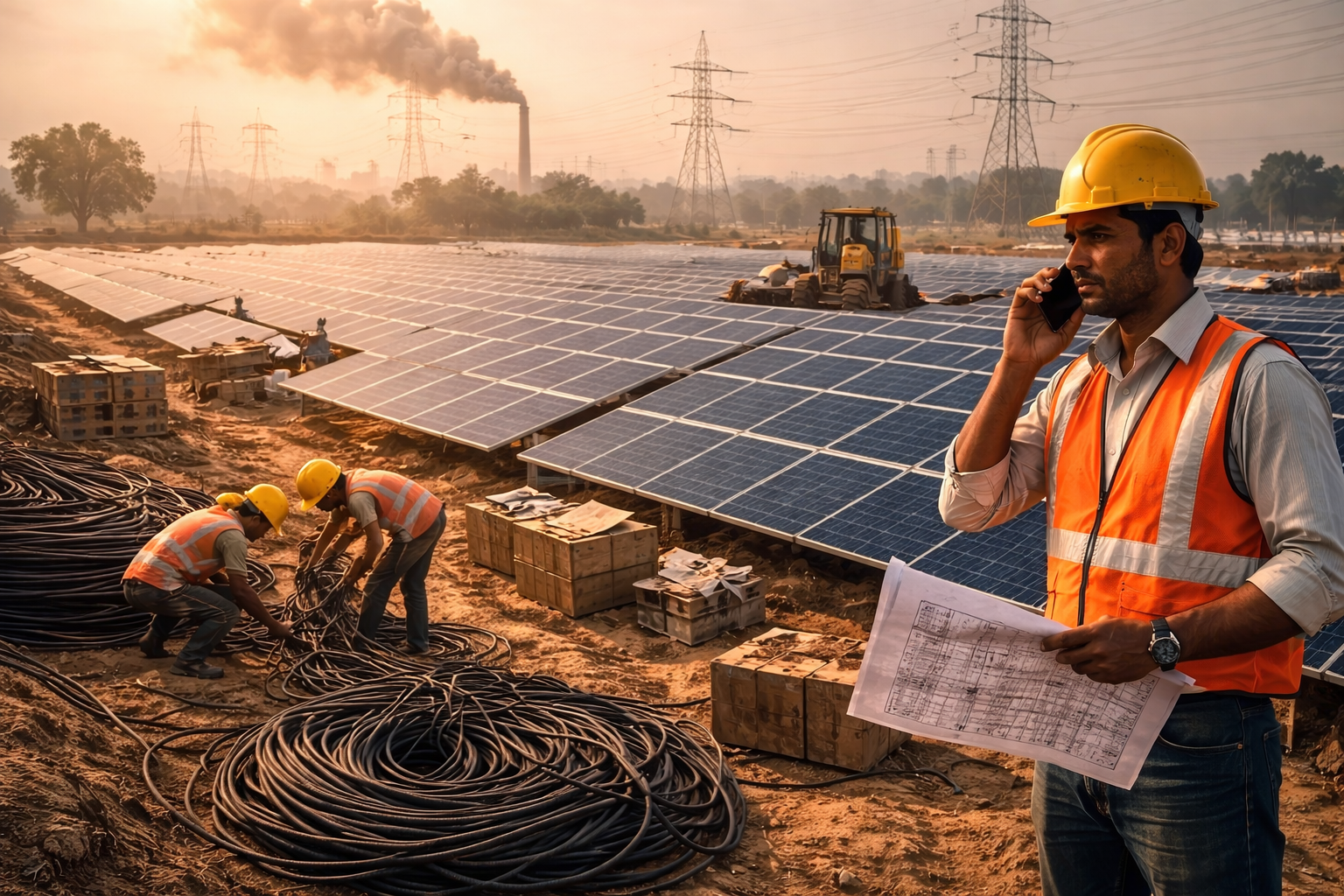
India’s solar success story is undeniable. Yet beneath the surge, structural cracks are widening.
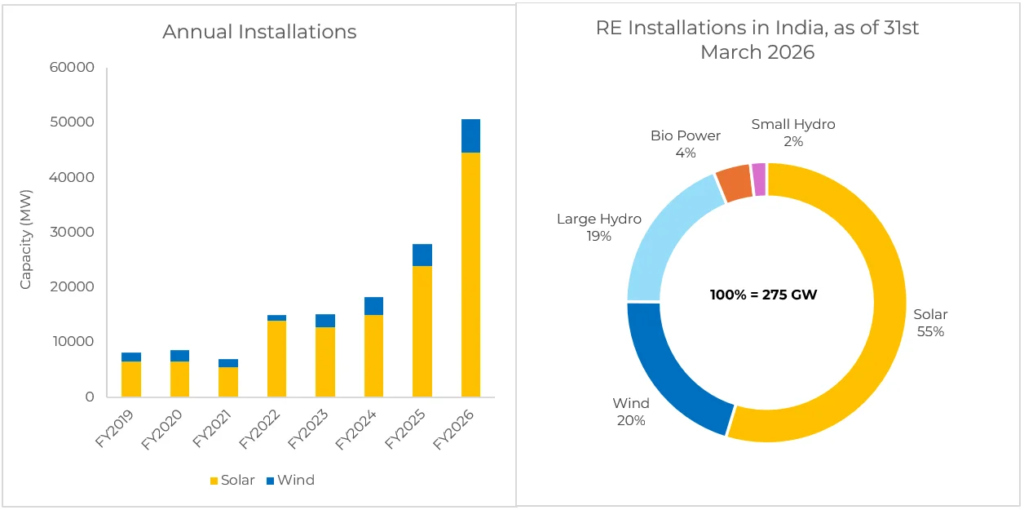
The country added a record 50.9 GW of renewable capacity in FY2026, driven largely by solar energy. Total solar capacity has crossed 150 GW, making India the world’s third-largest solar market, but bottlenecks now slow growth and policymakers can no longer ignore them.
Grid constraints choke expansion
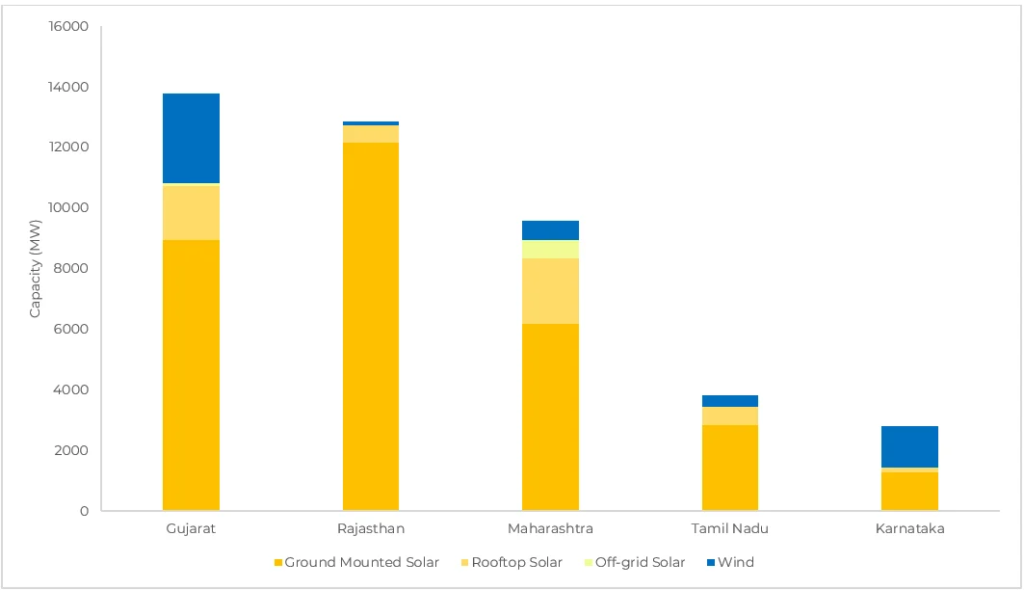
Transmission infrastructure lags behind capacity addition. In Rajasthan alone, about 60 GW of renewable projects wait for grid connectivity. Regulators flag this mismatch. Developers face uncertainty. Projects face delays. Some projects risk cancellation.
One official assessment notes that identifying transmission systems is now “a core issue.”
Rooftop solar struggles to scale
India’s rooftop solar push has also slowed. Despite subsidies of up to 40%, only 2.36 million installations have been completed against a target of 4 million.
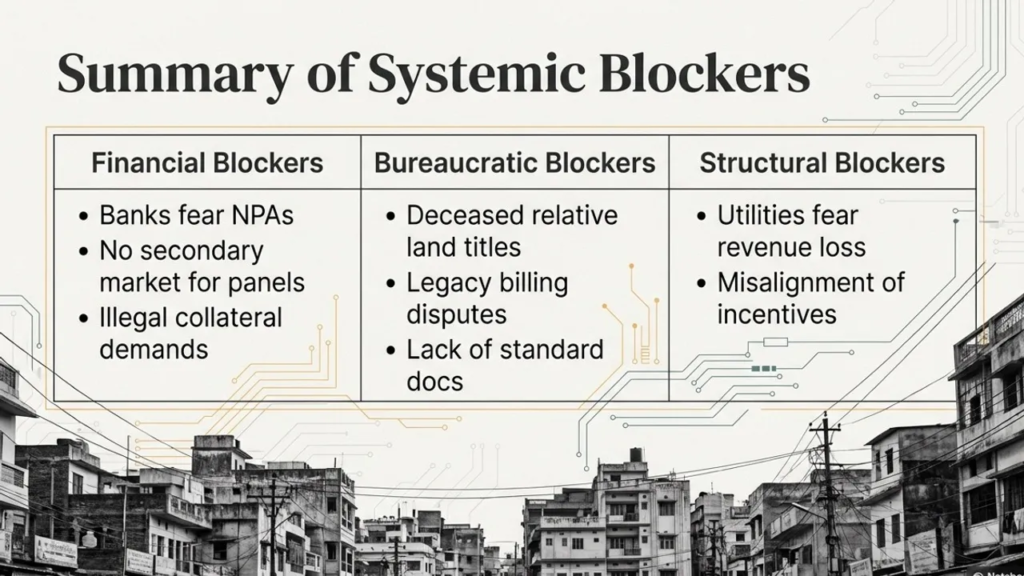
Nearly 60% of applications remain unapproved. Banks cite documentation risks. State utilities fear revenue losses. The result is clear. Adoption has been weaker than expected.
Oversupply fears emerge
India is rapidly building solar manufacturing capacity. Yet demand is not keeping pace. Government estimates suggest module capacity could reach 200 GW, far exceeding current domestic needs.
Officials have urged caution. Financing for new projects is being scrutinized. Industry leaders warn of financial stress if supply outstrips demand.
Land and environment tensions rise
Solar expansion requires vast land. Large projects need around five acres per megawatt.
This has triggered conflicts. Forest land is being cleared. Local communities are protesting displacement. Water use for panel cleaning is also rising in arid regions. Environmental trade-offs are now part of the debate.
Capacity vs actual power gap
India has crossed 52% non-fossil installed capacity. Yet fossil fuels still generate nearly 70% of electricity. The gap highlights a key issue. Capacity does not equal usable power. Grid flexibility and storage remain limited.
The road ahead
India’s solar ambitions remain strong. The country is targeting 500 GW of non-fossil capacity by 2030.
But ambition alone will not be enough. Without faster grid expansion, smoother financing, and better policy coordination, the solar boom could stall.
The next phase of India’s energy transition will depend not on how fast it builds—but how well it connects, distributes, and sustains that growth.
Reference- The New York Times, Times Of India, Reuters, JMK Research, Mercom India