



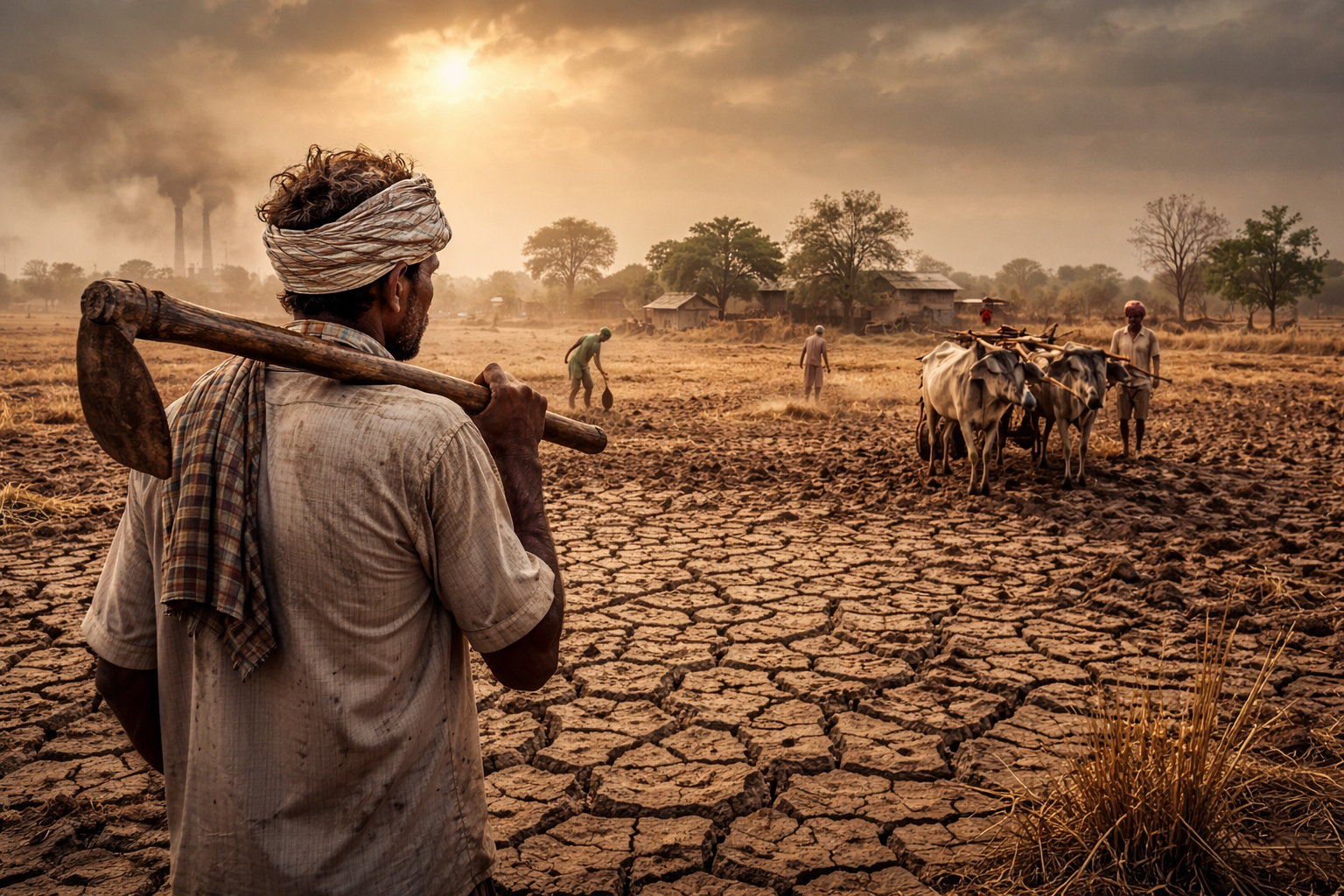
India may be heading into a fragile monsoon season in 2026. Early forecasts suggest rainfall could fall below normal levels due to a developing El Niño. The implications are significant for agriculture, inflation, and growth.
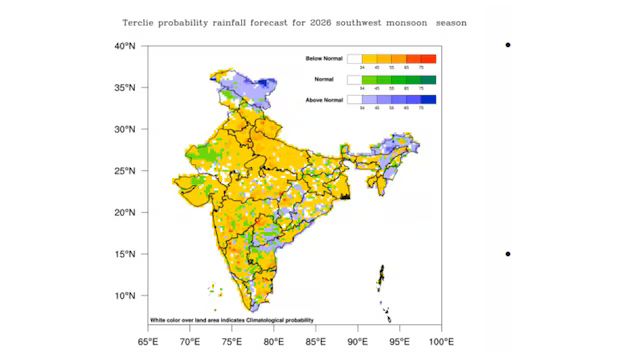
The India Meteorological Department has projected rainfall at about 92% of the long-period average, marking a below-normal monsoon. This matters because the monsoon delivers nearly 70% of India’s annual rainfall, making it the backbone of the rural economy.
El Niño, a warming of Pacific Ocean waters, disrupts atmospheric circulation and weakens monsoon winds. Scientists note that such events occur every two to seven years and influence weather patterns worldwide.
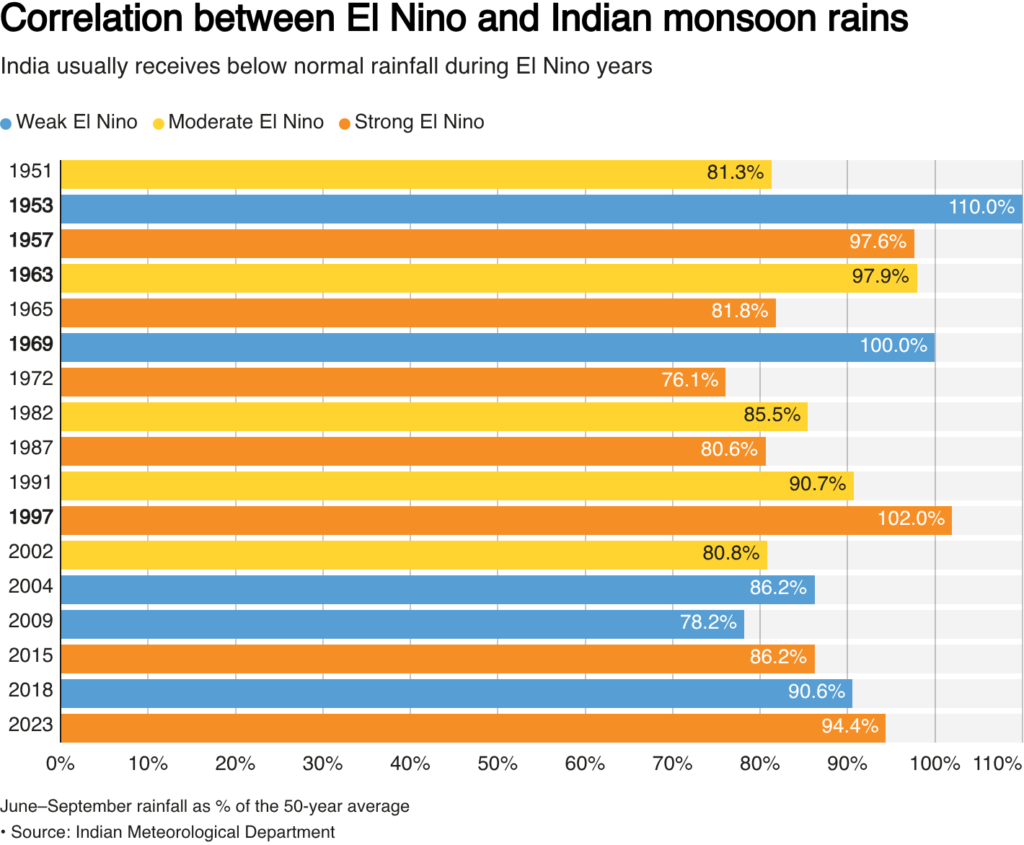
Historically, the risks are clear. Around 70% of El Niño years since 1980 have brought below-average rainfall to India. Such periods hit crops. They squeeze rural incomes. They strain food supply chains.
The stakes remain high. Agriculture contributes about 18% to India’s GDP and supports nearly half the population. A weak monsoon could reduce output of rice, wheat, cotton, and soybeans. The government may impose export curbs if shortages emerge.
Food inflation could rise. Food items make up roughly one-third of India’s consumer price index, so even small supply shocks spread quickly across the economy. Economists warn that inflation may move above 4.5%, complicating central bank policy decisions.
Energy may also be affected. Hydro-power contributes around 6% of India’s electricity generation, and lower rainfall could reduce output. This would increase dependence on fossil fuels, adding pressure on emissions and import bills.
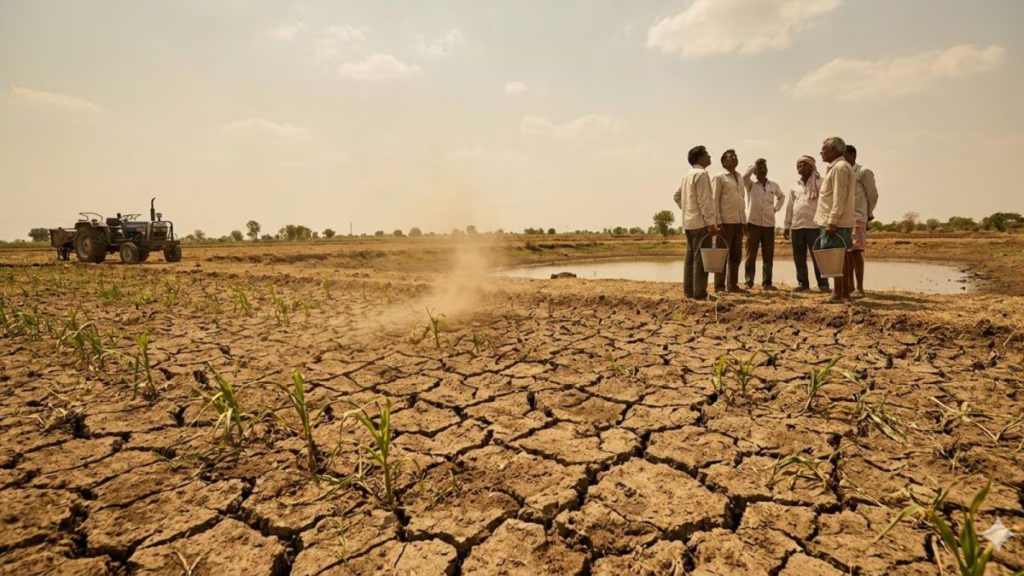
However, outcomes are not uniform. India has seen normal rainfall in some El Niño years. A possible positive Indian Ocean Dipole later in the season could offset part of the deficit.
Still, risks are building. A stronger El Niño could trigger droughts and heatwaves across Asia, according to climate scientists. Rain-fed regions remain especially vulnerable, as nearly two-thirds of farmland depends on seasonal rainfall.
Policy responses will be tested. Buffer stocks, irrigation, and rural support schemes may need to be scaled up. Markets will watch closely.
The monsoon has always shaped India’s economic rhythm. In 2026, that rhythm may face disruption.
Reference- Reuters, The Times of India, The Guardian, National Geographic