



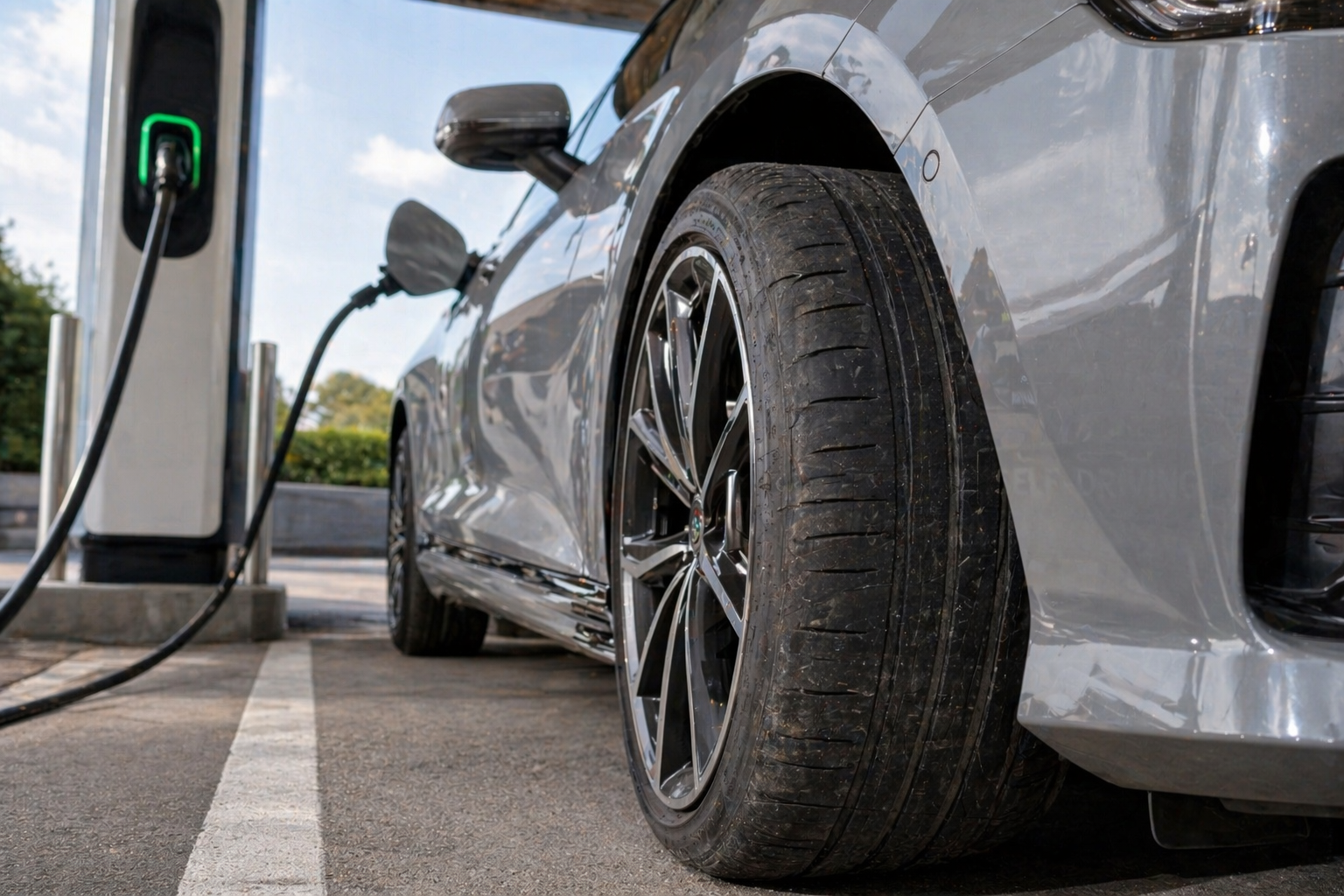
Electric vehicles promise a cleaner, quieter future. They glide through cities with minimal noise. They cut tailpipe emissions to zero. Yet beneath that smooth ride lies a less discussed reality—one that is steadily reshaping ownership costs.
At the center of the issue are tires. Unlike conventional cars, electric vehicles (EVs) place unique and constant stress on them. The result is faster wear, higher replacement frequency, and rising long-term costs.
Data from multiple tire manufacturers shows that EV tires wear 15% to 30% faster than those on comparable petrol or diesel vehicles. This is not a marginal difference. It directly impacts ownership economics.
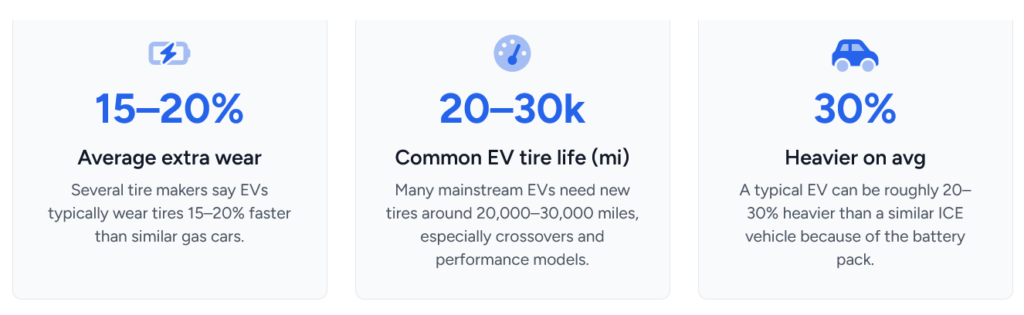
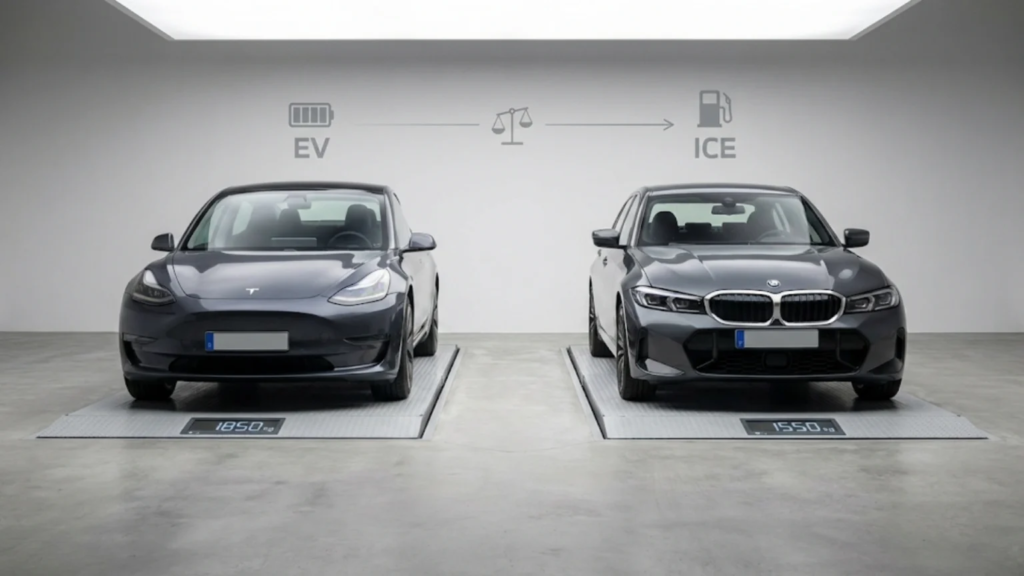
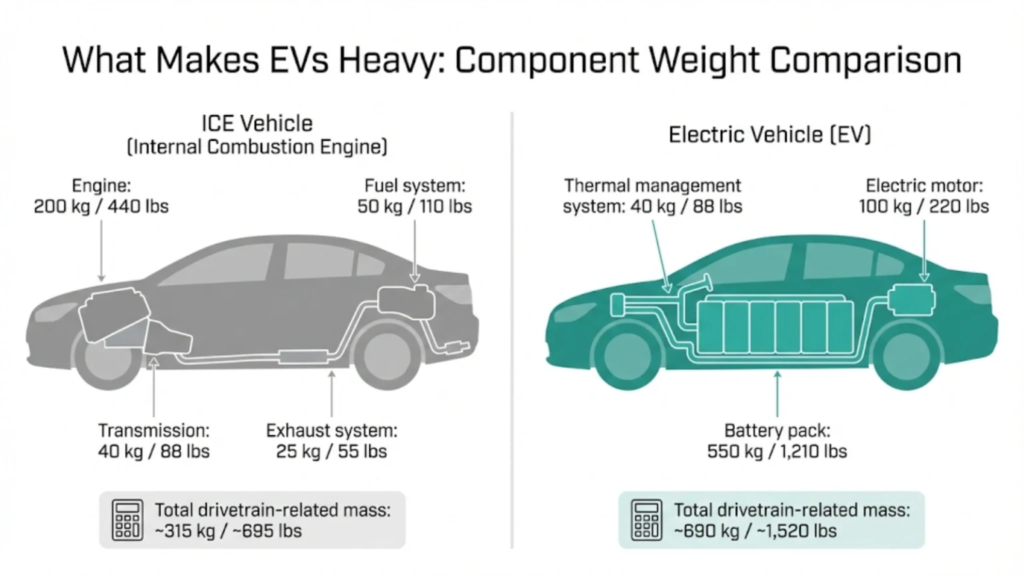
The reasons are rooted in physics. First, EVs are heavier. Battery packs add hundreds of kilograms, increasing the load on each tire. Studies suggest electric cars can be 20–30% heavier than similar internal combustion vehicles. That weight increases friction and accelerates tread degradation.
Second, electric motors deliver instant torque. Unlike gasoline engines, which build power gradually, EVs apply maximum force immediately. Tire engineers describe this as “scrubbing,” where rubber is worn down faster under sudden load. Over time, even normal driving compounds the effect.
Third, regenerative braking changes wear patterns. While it reduces brake pad usage, it shifts deceleration forces onto the tires. This added friction contributes to faster deterioration, especially in urban driving.
Together, these factors create a constant cycle of stress. Tires are rarely in a passive state. Even at steady speeds, they carry more weight and handle more dynamic forces than in traditional vehicles.
The financial impact is measurable. EV owners often replace tires at 20,000–30,000 miles, compared with 40,000–50,000 miles for conventional cars. Replacement costs can range between $900 and $1,600 per set, depending on the model.
However, the issue is not purely economic. Faster tire wear also increases particulate emissions (PM)—tiny rubber particles released into the environment. While EVs eliminate exhaust emissions, this secondary pollution is gaining attention among researchers.
The industry is responding. Manufacturers are developing EV-specific tires with reinforced structures and low rolling resistance. Yet trade-offs remain between durability, efficiency, and cost.
The transition to electric mobility is inevitable. Still, it is not without hidden complexities. For many drivers, the biggest surprise is not charging infrastructure or battery life. It is the quiet, ongoing cost of keeping their tires on the road.
Reference-Recharged, Nxcar, c&en, Inside EVs, Electek, Elec Traning