



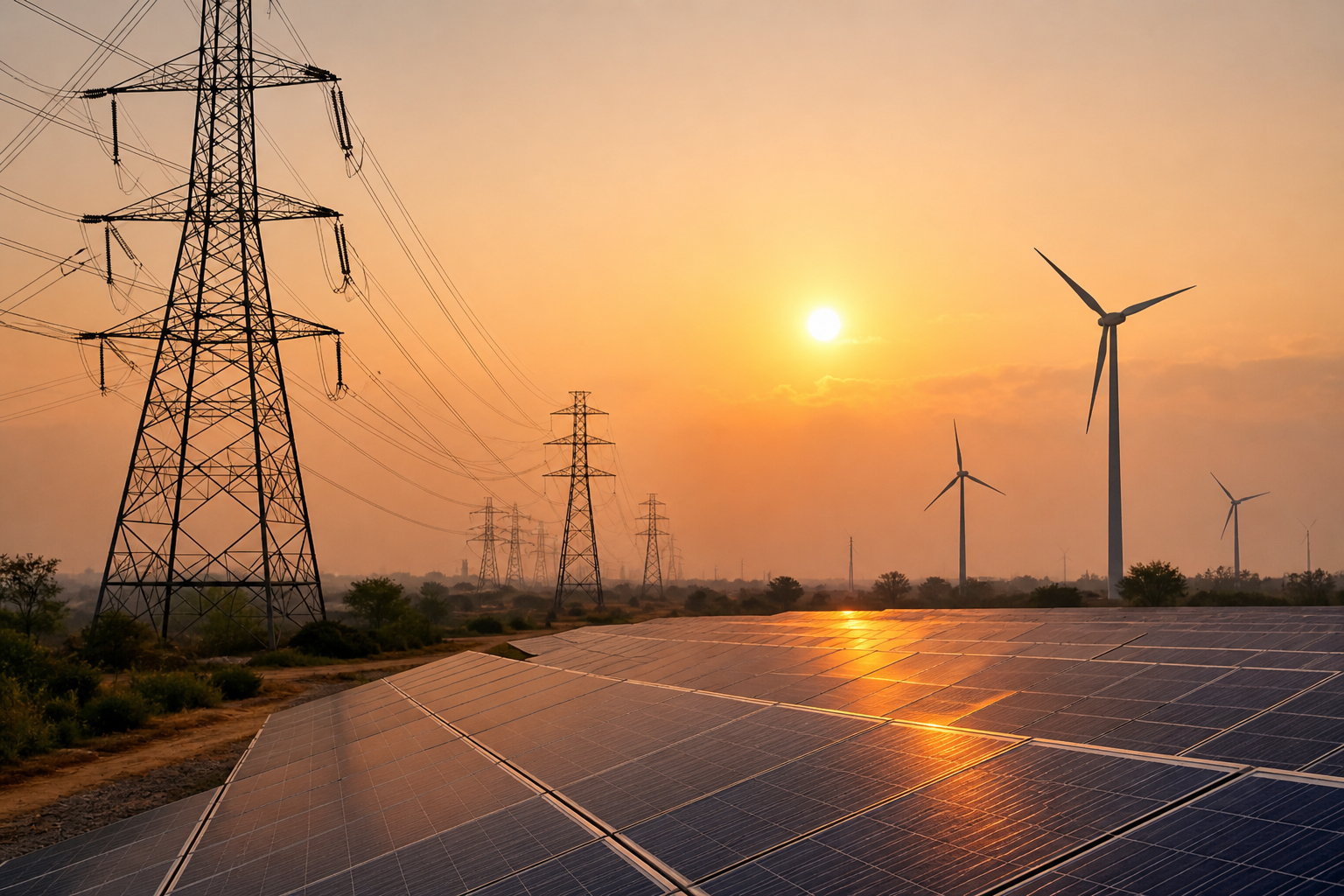
India’s renewable energy story looks impressive on paper. The country has crossed 250 GW of non-fossil installed capacity, nearly half of total generation assets. Yet this headline masks a harder truth: clean electricity is not reaching consumers with the reliability policymakers promised.
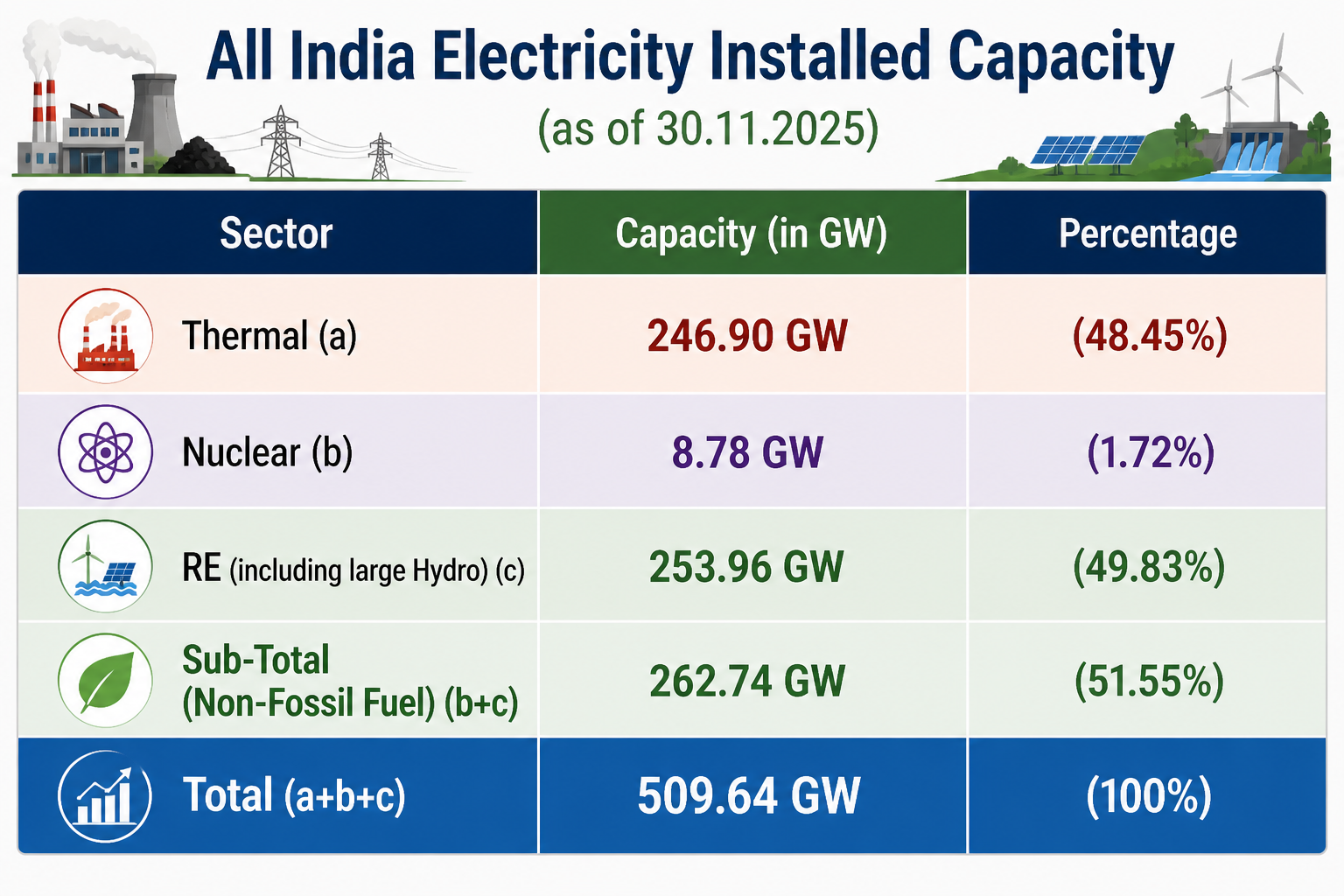
A fresh policy review now argues that India’s renewables sector needs a structural reset. The problem is no longer capacity addition. It is grid readiness, storage depth and distribution reform.
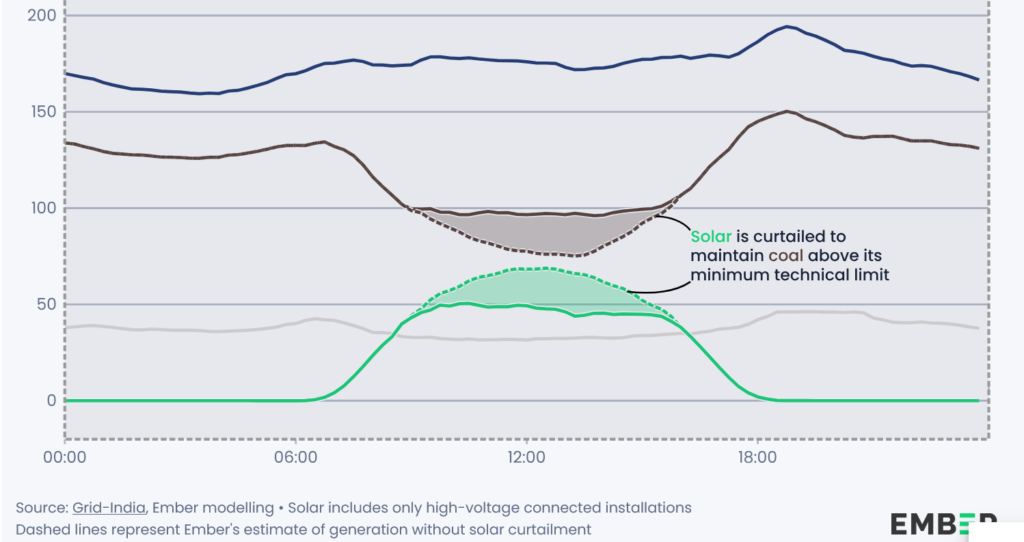
Between May and December 2025, India curtailed nearly 2.3 terawatt-hours of solar power because local grids could not absorb supply. In Rajasthan alone, curtailment touched 50%, leaving 3.3 GW idle while coal-heavy states continued buying expensive thermal power.
The arithmetic is troubling. Non-fossil sources form almost 50% of installed capacity but generate only around 25% of actual electricity, largely because solar and wind remain intermittent and storage deployment is lagging.
This is where the reset becomes urgent.
India must double annual renewable additions to stay on track for 500 GW non-fossil capacity by 2030, according to Global Energy Monitor. But adding megawatts without strengthening the wires beneath them will only widen inefficiency.
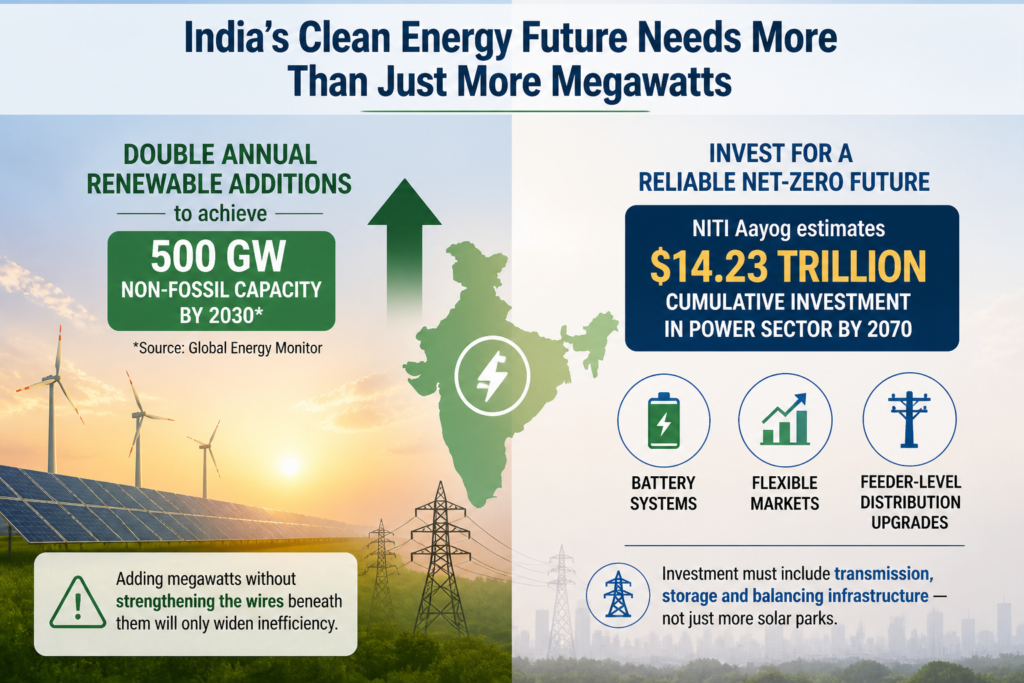
Battery systems, flexible markets and feeder-level distribution upgrades are now central. NITI Aayog estimates India will need $14.23 trillion in cumulative power-sector investment by 2070 to build a reliable net-zero electricity ecosystem. That includes transmission, storage and balancing infrastructure — not just more solar parks.
Moreover, industry observers are making the same point. India’s transition is moving beyond isolated solar wins toward “integrated planning” across storage, grids and dispatch. Meanwhile, community discussions online echo the concern, with users repeatedly flagging one issue: “the real test now is storage and grid stability.”
India has entered the second phase of the green transition. Capacity created the momentum. Reliability will decide the outcome. Unless electricity is produced, moved and priced as one coordinated system, India risks building a renewable giant on a fragile grid.
Reference- Hindustan Times, Mercom India, Reuters, EMBER, Press Information Bureau