



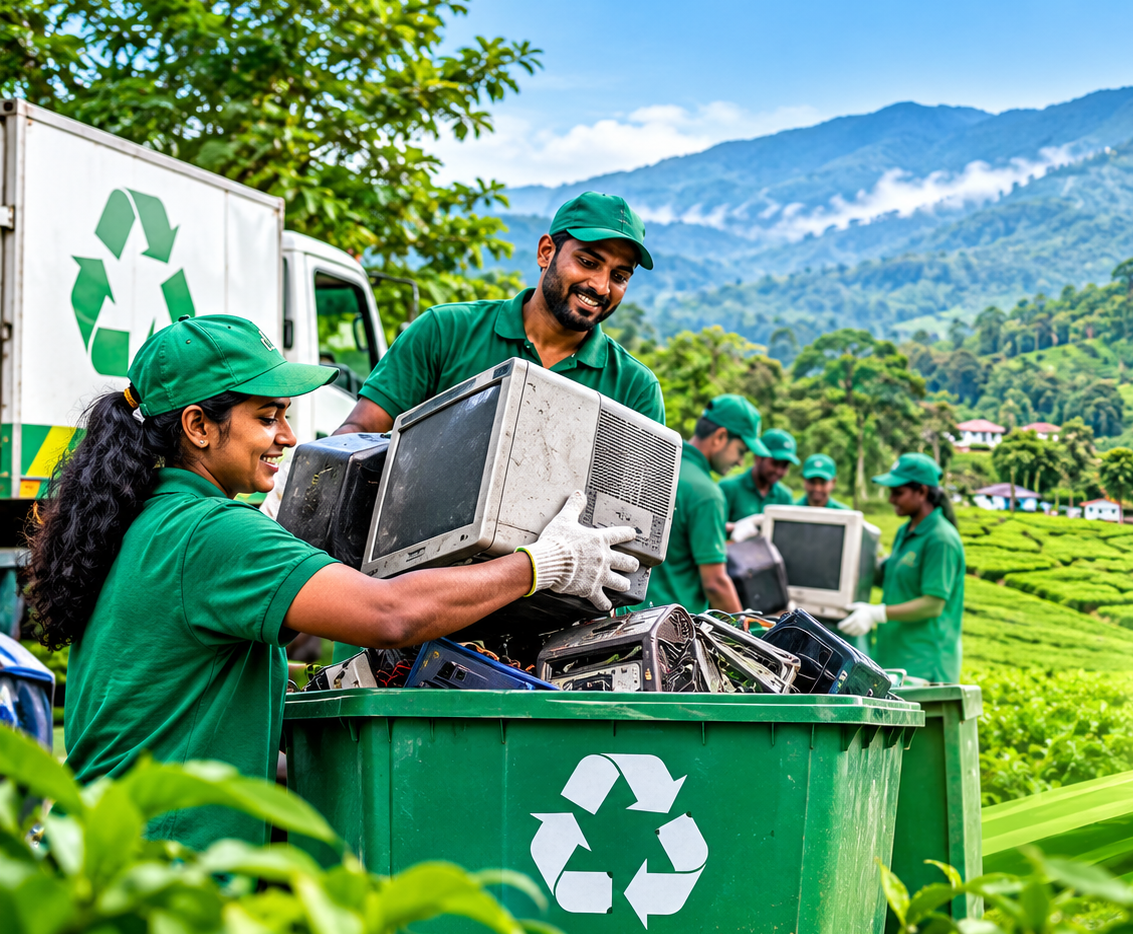
Wayanad in Kerala is preparing to make environmental history. The district is set to become India’s first e-waste-free model district on November 27, 2026. A month-long collection campaign has gathered 97.26 metric tonnes of discarded electronic equipment. The initiative offers a potential blueprint for decentralised waste management across India.
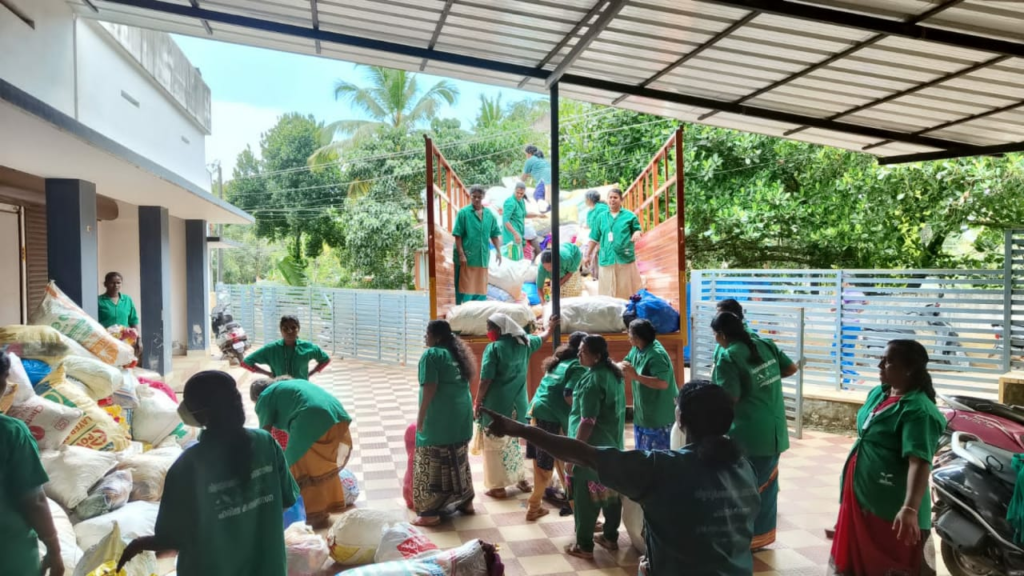
Coordinated by the Suchitwa Mission and Clean Kerala Company, the campaign brought together local self-government institutions, government departments and community organisations. The Haritha Karma Sena also played a key role in collecting electronic waste from households.
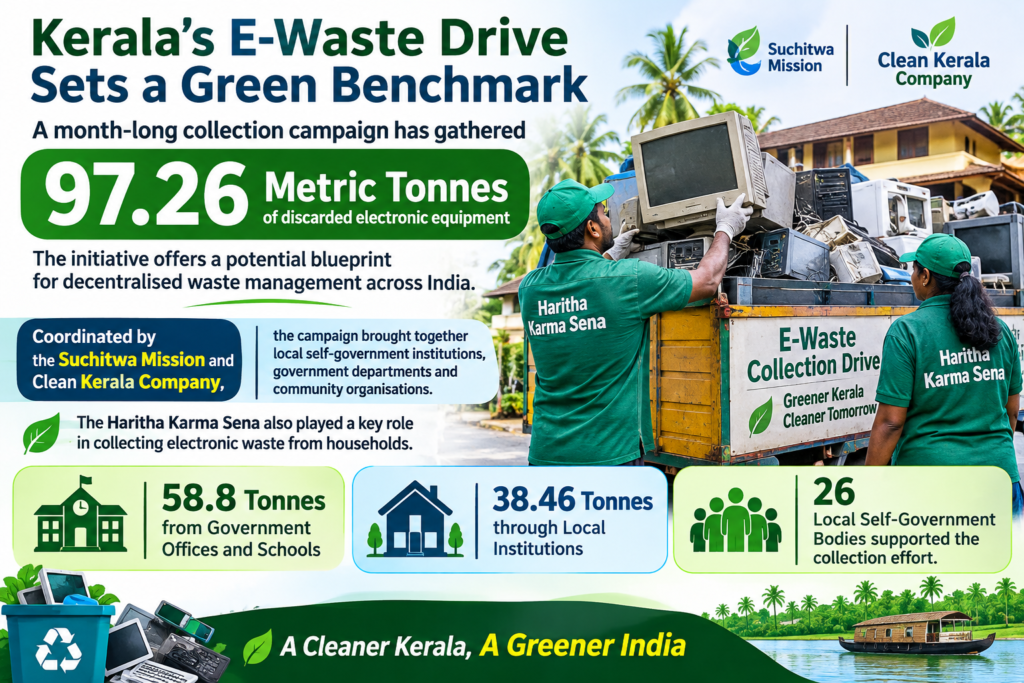
According to reported figures, the campaign collected 58.8 tonnes from government offices and schools. Another 38.46 tonnes came through local institutions. The district’s 26 local self-government bodies supported the collection and mobilisation effort.
The initiative builds on Kerala’s broader BHOOMI sustainability program. It seeks to move discarded electronics away from informal disposal channels and towards authorised collection and scientific processing.
The environmental stakes are considerable.
India generated 13.98 lakh tonnes of e-waste during 2024-25, according to the Central Pollution Control Board. This represents a substantial challenge for the country’s waste-management infrastructure.
The global picture is equally concerning. The United Nations-backed Global E-waste Monitor 2024 reported that the world generated 62 million tonnes of electronic waste in 2022. Only 22.3% was documented as formally collected and recycled in an environmentally sound manner.
The report also warned that annual global e-waste generation could reach 82 million tonnes by 2030.
Discarded electronics contain valuable materials. However, they can also contain hazardous substances such as lead, mercury and cadmium. Improper dismantling, burning and disposal can contaminate soil and water. Informal recycling also exposes workers to potentially harmful substances.
Wayanad’s approach focuses on community participation and institutional coordination. Electronic waste is collected through local networks and channelled towards authorised processing facilities. The district has also encouraged households and businesses to surrender unused devices through organised collection mechanisms.
However, the announcement will be only the beginning.
A genuinely e-waste-free district requires more than a successful collection drive. It needs regular collection points, transparent recycling records, safe material recovery and continuous public participation. Authorities must also ensure that collected electronics reach authorised recyclers rather than informal processing units.
India’s E-Waste Management Rules, 2022, provide an Extended Producer Responsibility framework. Manufacturers, producers and recyclers have defined responsibilities under the system. Stronger implementation and accessible collection networks remain essential.
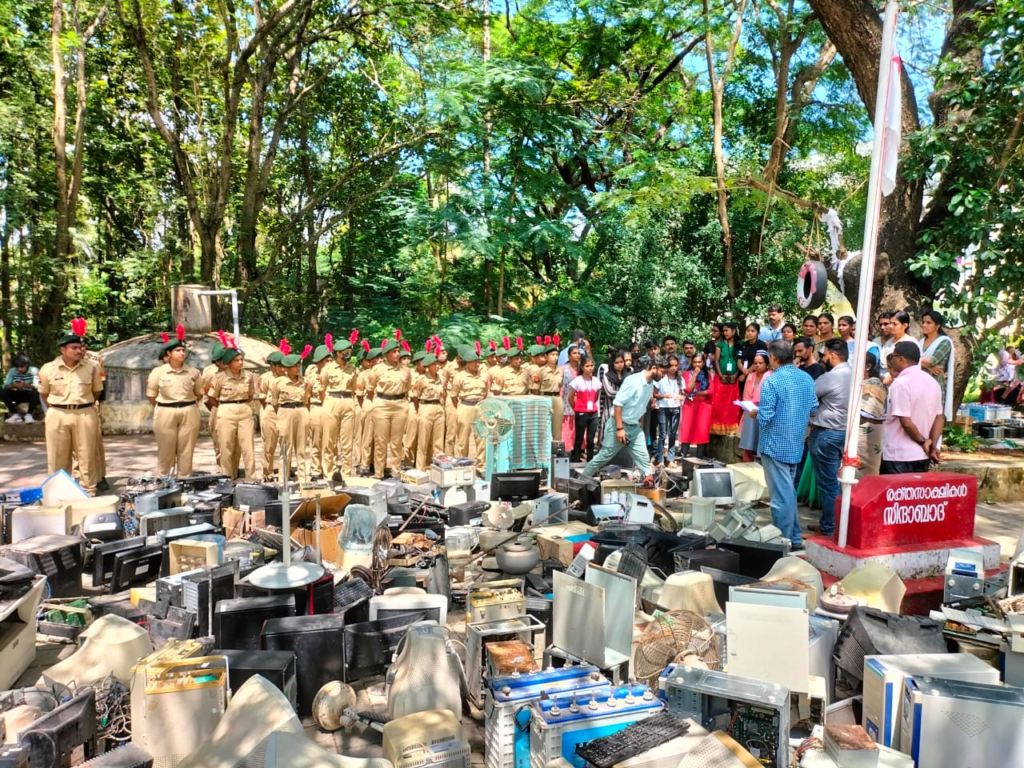
Wayanad’s 97.26-tonne achievement demonstrates what coordinated local action can accomplish. Its real success, however, will depend on what happens after November 27.
If the district can sustain collection, recycling and accountability, it could offer other Indian districts a practical model for tackling electronic waste.
The bigger challenge is not simply removing yesterday’s gadgets. It is building a system that prevents tomorrow’s electronic waste from becoming another environmental crisis.
Reference- Press Information Bureau, The Hindu, Kerala Government PR, Insights on India