



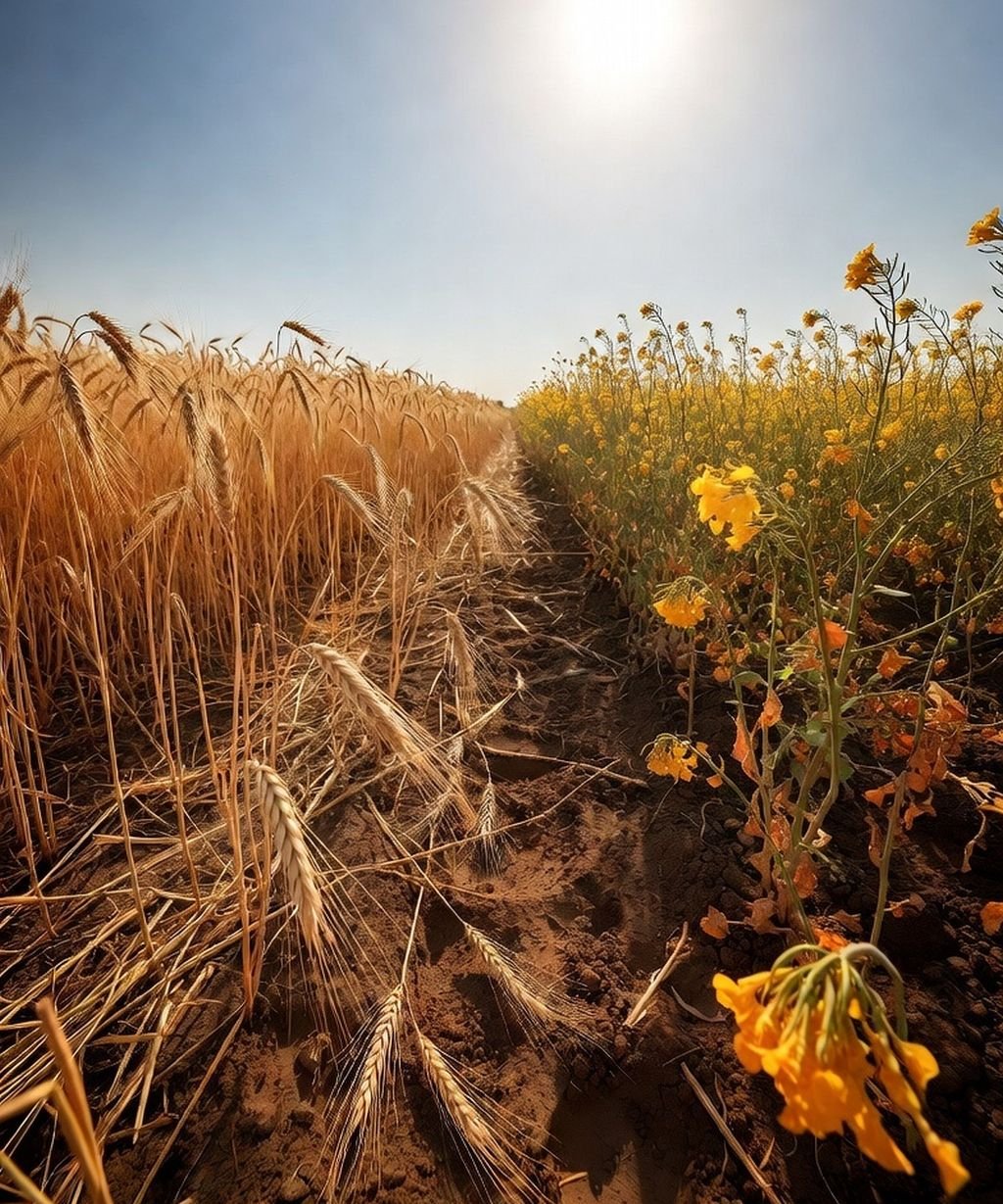
India is bracing for an unusually warm March that could hit vital crops at a sensitive stage. The India Meteorological Department (IMD) expects both maximum and minimum temperatures to be above average across much of the country in March 2026.
Northern and north-western states — Punjab, Haryana, Rajasthan, Uttar Pradesh and parts of Madhya Pradesh — could see temperatures up to 7°C above normal. These regions produce more than 80% of India’s wheat and rapeseed.
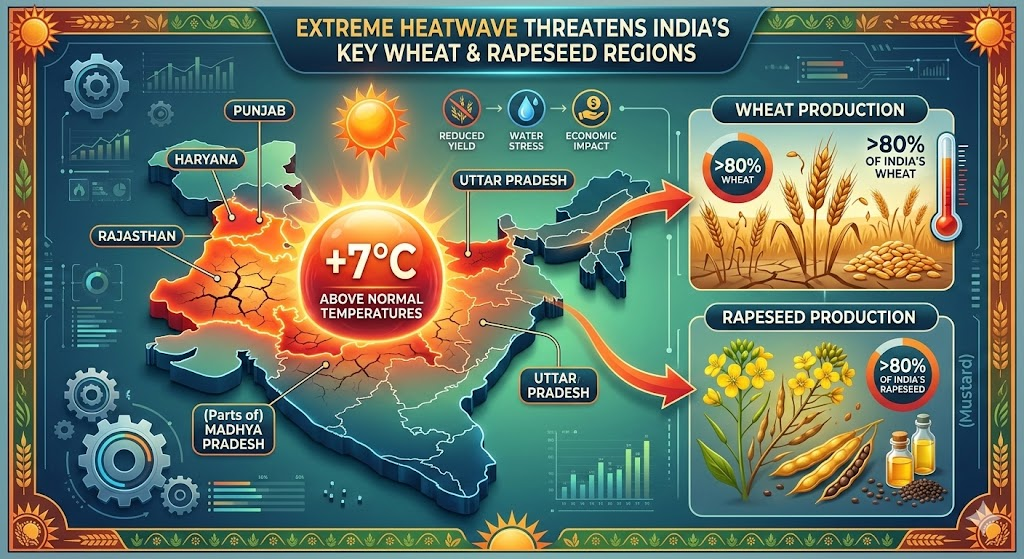
Heat during the grain-filling and maturity phase can weaken crop development. It can shrink grain size and cut yields. This risk is strengthened by rising temperatures in February, already above normal in many areas. Crop stress at this stage may lower production from the record levels farmers and analysts once forecast.
India is the world’s second-largest wheat producer and among the biggest importers of edible oils. It is counting on a strong 2026 wheat and rapeseed harvest to export surplus wheat and reduce costly imports of palm, soy, and sunflower oils. But excessive heat could dampen those expectations.
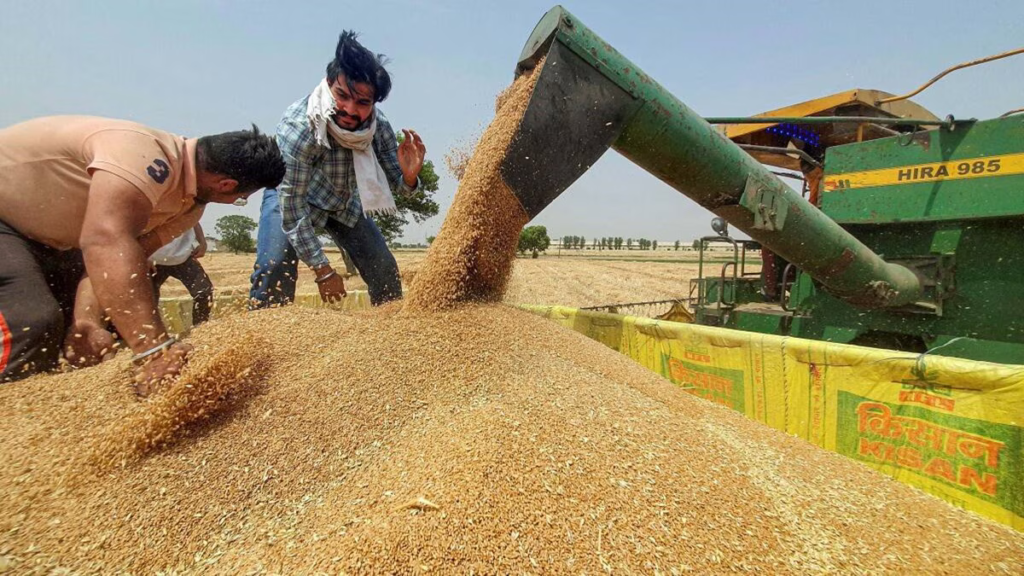
A senior IMD official, speaking to Reuters, said that higher temperatures could drive up electricity use as heat stress prompts greater cooling demand. Persistent heat can also affect soil moisture and plant respiration, adding stress when it matters most. Climate research shows that each rise in temperature can reduce wheat yields and quality.
India has faced similar heat events before. In 2022, a warm February and March led to a wheat export ban after crop output was squeezed. That experience remains a cautionary tale for farmers, traders and policymakers. Experts warn that if heat persists in early March, impact could increase.
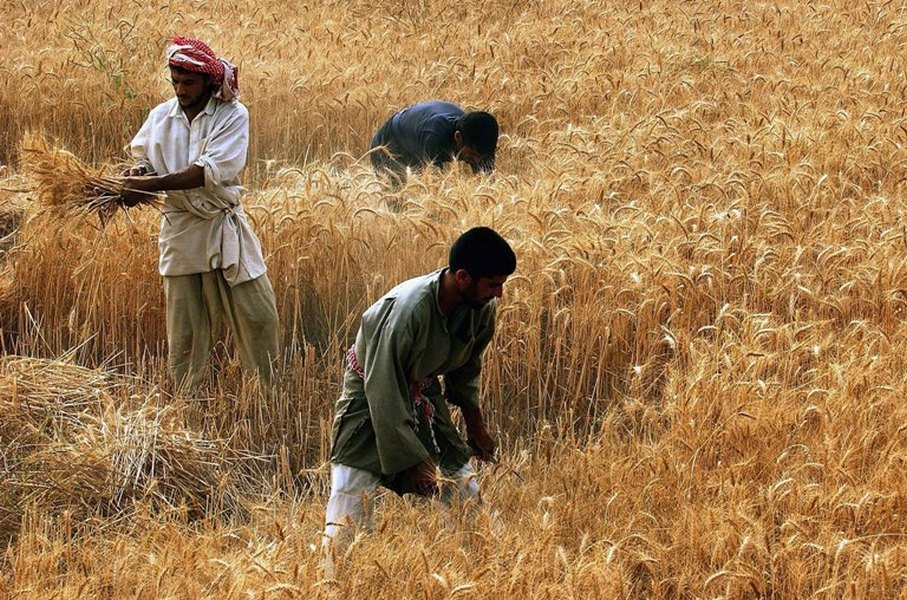
Farmers say that record sowing this year raise stakes for harvest outcomes. If temperatures climb above 40°C by late March, as some forecasts suggest, crop stress could deepen further.
India’s food security and export potential depend on how this warm March unfolds. Weather and climate trends are now central to understanding agricultural risk and resilience in the coming years.
Reference- Reuters,The Economic Times, Business Standard, IMD website, Down To Earth