



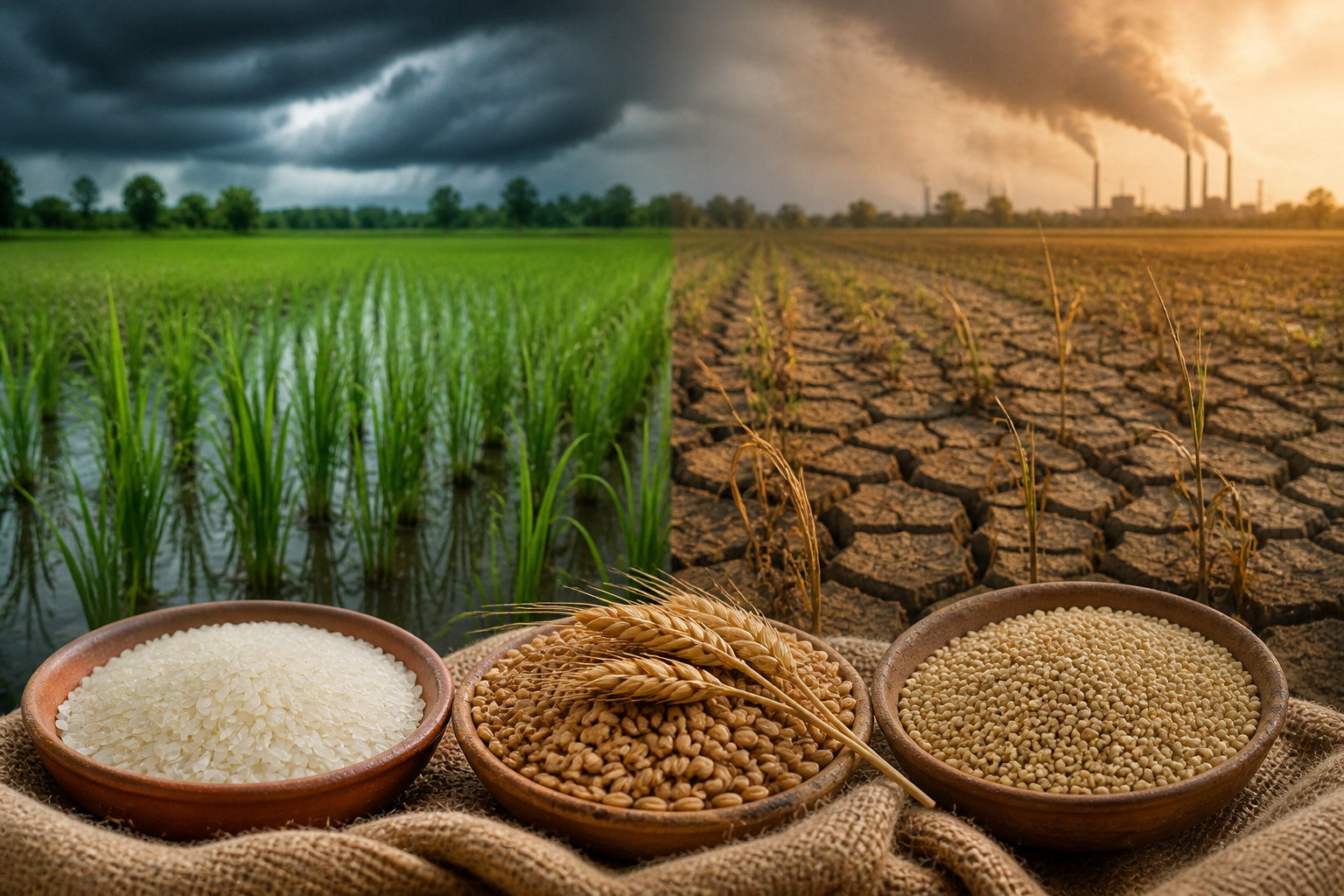
Climate change is no longer only reducing crop yields. It is now weakening the nutritional quality of the food people eat.
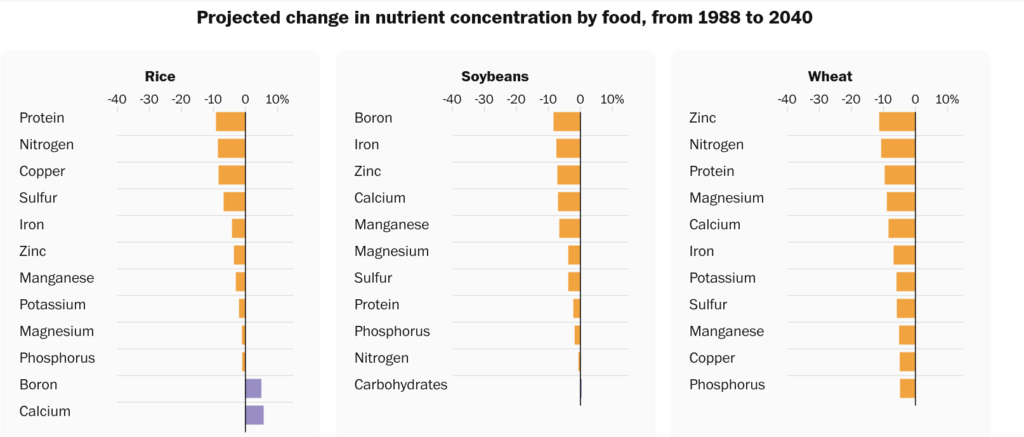
New global research shows that rising carbon dioxide (CO₂) levels are making staple crops more calorific but less nutritious. Scientists at Leiden University analyzed more than 29,500 crop observations across 43 food plants and found an average 3.2% decline in nutrient density since the late 1980s. Zinc, iron and protein levels showed the sharpest fall.
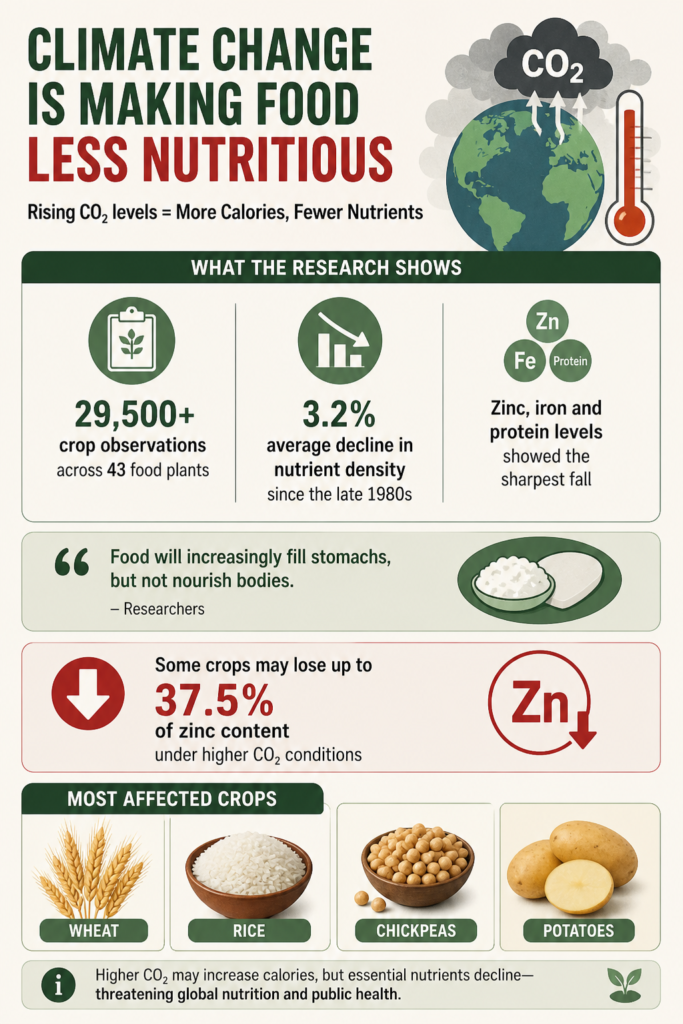
“Food will increasingly fill stomachs, but not nourish bodies,” the researchers warned.
The study, says some crops may lose up to 37.5% of zinc content under higher atmospheric CO₂ conditions. Wheat, rice, chickpeas and potatoes are among the most affected foods.
This matters deeply for India.
India still depends heavily on cereal-based diets. According to government nutrition surveys, over 57% of Indians derive their daily calories from rice and wheat, especially in low-income households. If these staples become poorer in micro-nutrients, India’s existing battle with anemia, stunting and hidden hunger could worsen.
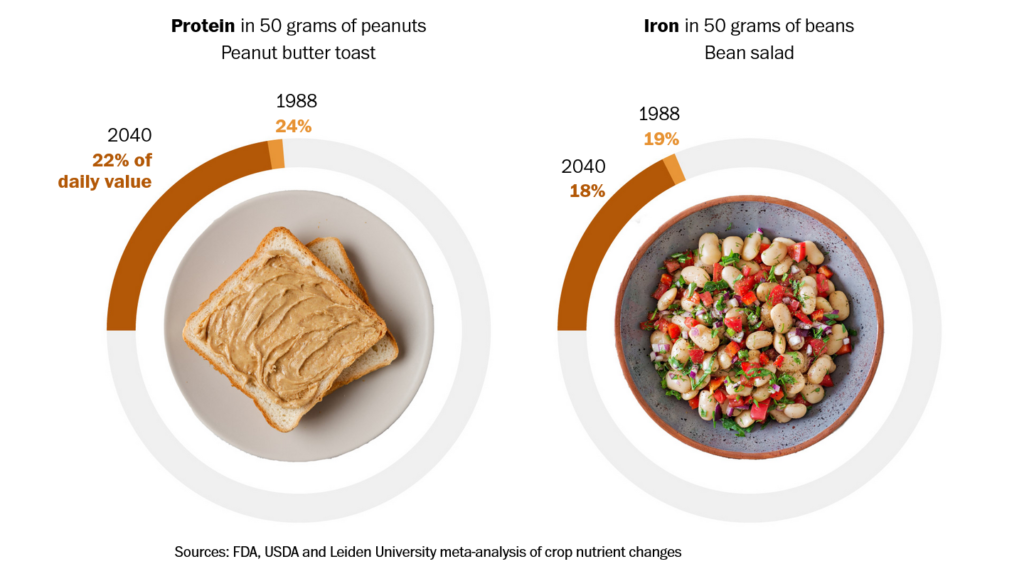
A 2025 ICRISAT review states that climate change now threatens “all dimensions of food and nutritional security” in India, from crop productivity to nutrient availability. Even climate-resilient crops are under stress. Researchers found that elevated CO₂ conditions altered the nutritional traits of pearl millet, one of India’s most promoted nutri-cereals.
Scientists call this the “dilution effect.” Crops grow faster because CO₂ acts like plant fuel. However, mineral absorption does not rise at the same speed. So each grain carries more carbohydrates but fewer essential nutrients.
Vegetables are also being affected. A Frontiers meta-analysis found that elevated CO₂ significantly lowers zinc concentration in edible vegetables.
Public concern is rising online as well. Climate and nutrition communities have described this as “hidden hunger in slow motion,” noting that calorie sufficiency may hide nutrient deficiency.
India’s food challenge is therefore changing shape. The issue is not just producing enough grain. It is producing grain that still nourishes.
Without low-carbon farming, bio-fortified seeds and stronger soil management, climate change may leave India with full plates but weaker people.
Reference- University of Washington, journal Global Change Biology, Futurism, ICRISAT Research Report