



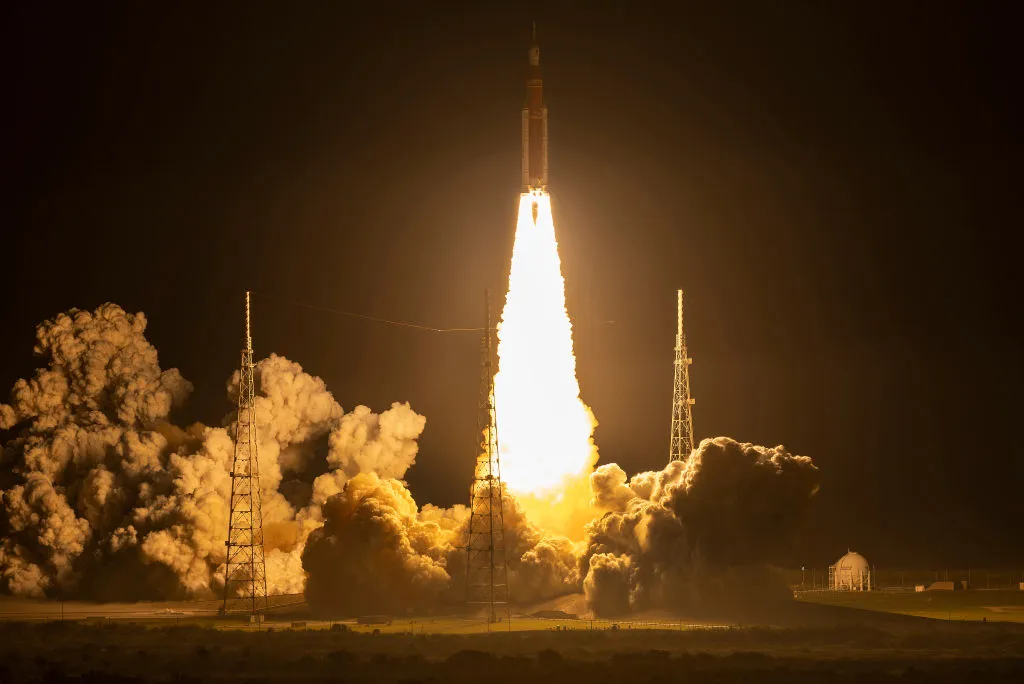
The number of space launches is rising fast. In 2024, there were about 259 orbital missions globally, up from around 233 in 2023. These rockets burned more than 153,000 tonnes of fuel packed with pollutants. Rockets are rare compared with cars and planes. Yet their impact on the upper atmosphere is unusual. Emissions reach the stratosphere and mesosphere, where particles can persist for years.
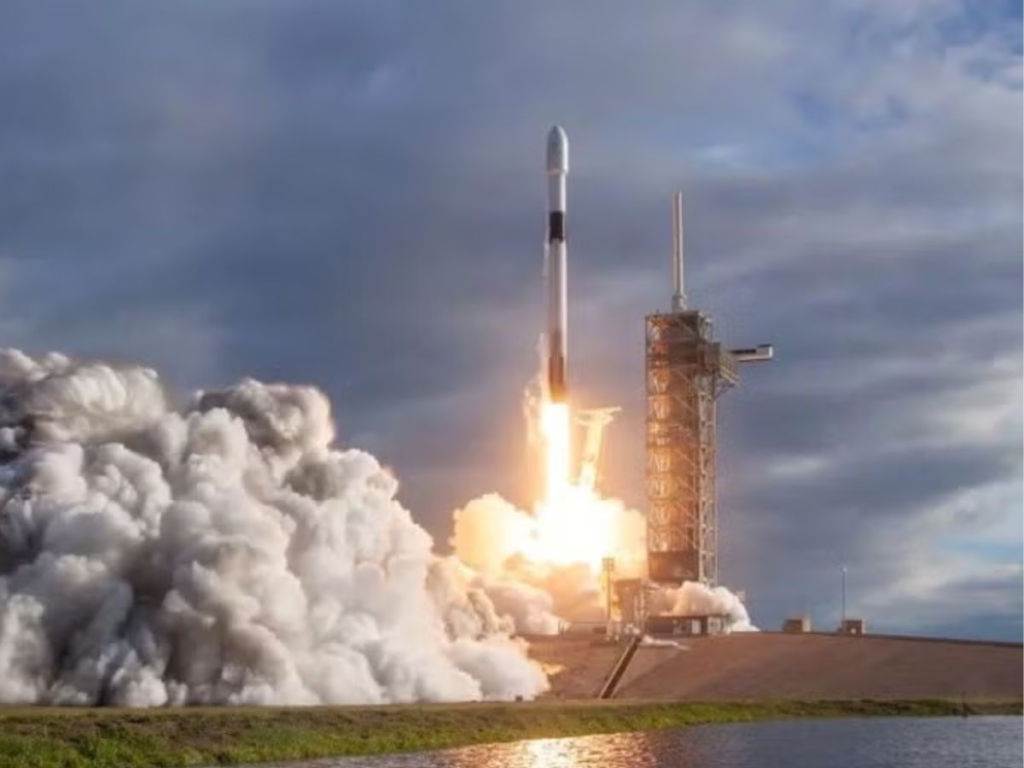
Every launch releases carbon dioxide. A typical rocket emits 300–1,000 metric tons of CO₂ per flight. However, CO₂ from rockets makes up less than 0.1% of global emissions.
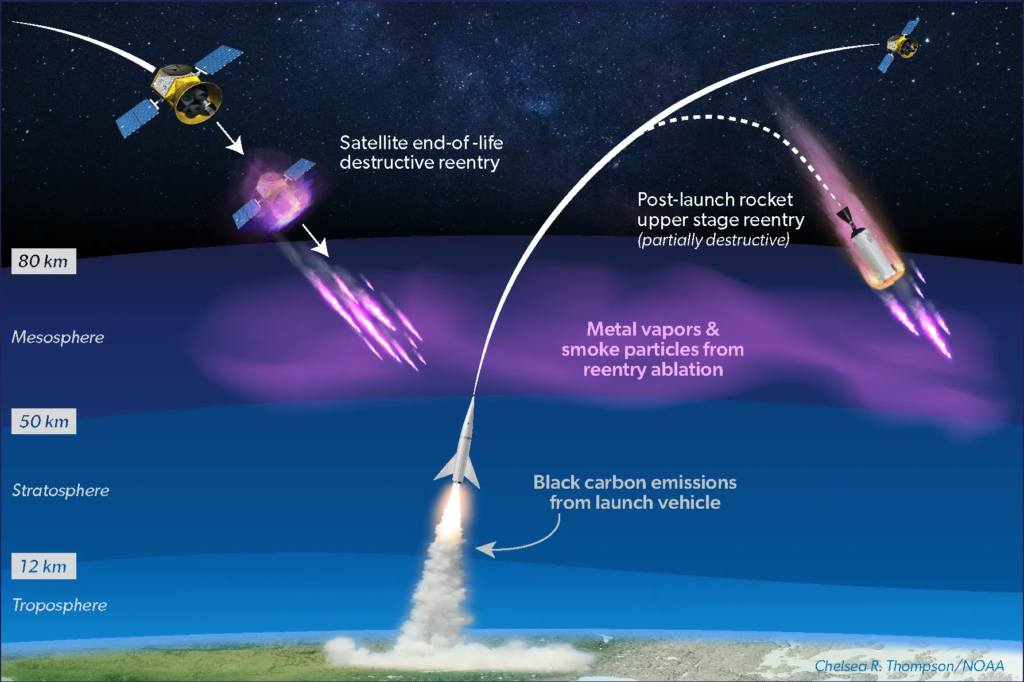
Nevertheless, the real issue is the heat-trapping particles. Black carbon from rocket exhaust rises high into the upper atmosphere. Scientists estimate it can warm the atmosphere up to 500 times more effectively than soot released near the surface.
Certain fuels worsen the problem. Solid rocket motors release aluminum oxide and chlorine, which can affect the ozone layer. Even “clean” hydrogen fuel produces nitrogen oxides during ascent.
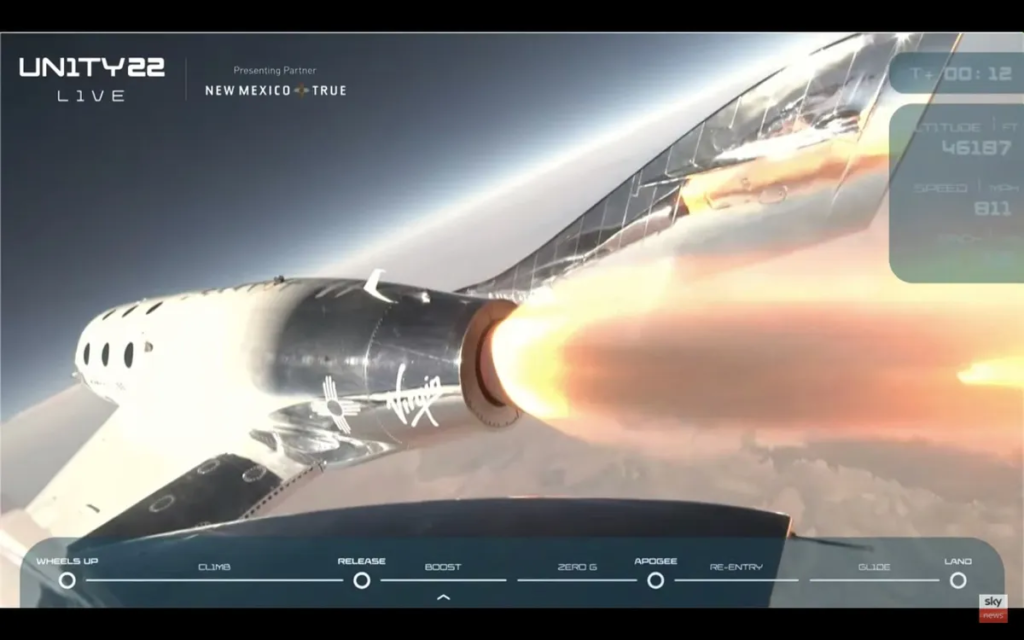
Satellite re-entries also add pollutants to the upper atmosphere. As discarded spacecraft burn up, they release metals such as alumina, copper, and lead into the upper atmosphere. A million satellites could contribute up to one billion kilograms of alumina high above Earth.
Scientists warn these trends could change atmospheric chemistry in ways we do not fully understand. This includes potential warming of the stratosphere and faster ozone depletion.
Even though space launches contribute little to total CO₂, their pollutants act where the climate and ozone layers are most sensitive. Many experts argue that current regulations are out of date. They call for a global framework to assess atmospheric limits.
The world’s push to launch thousands of satellites must be weighed against these risks. If ignored, the upper atmosphere may absorb more heat. The ozone layer may weaken. And long-term climate goals may be harder to reach.
Reference- Futurism, The Daily Guardian, Shun Waste, SPACE.com