



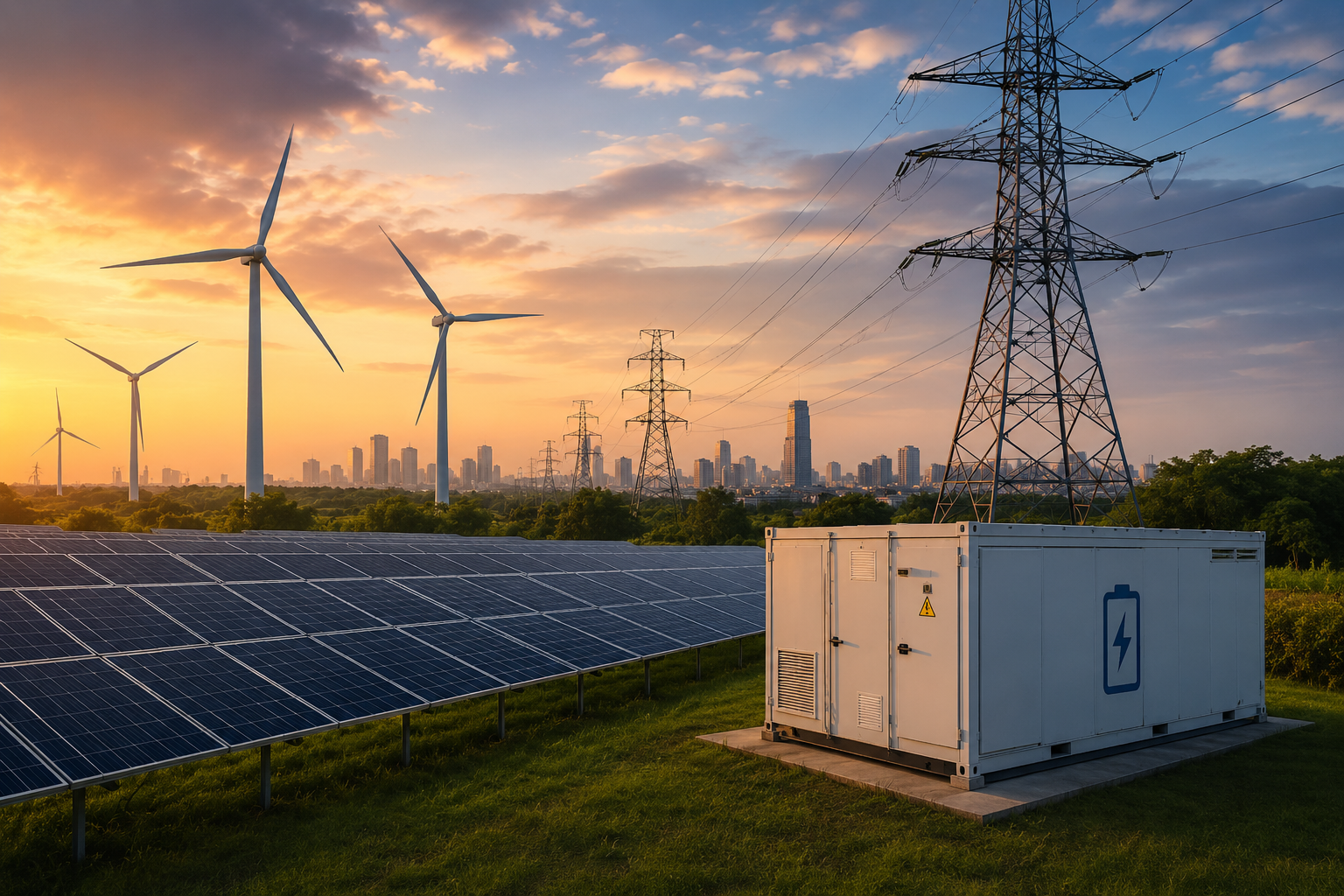
India is building renewable energy at a breathtaking pace. But here’s the thing — the grid holding all that clean power together is struggling to keep up.
Rating agencies Moody’s and ICRA have both sounded the alarm. Transmission bottlenecks, a lack of battery storage, and a heavy reliance on China for key materials could all put the brakes on India’s clean energy ambitions.
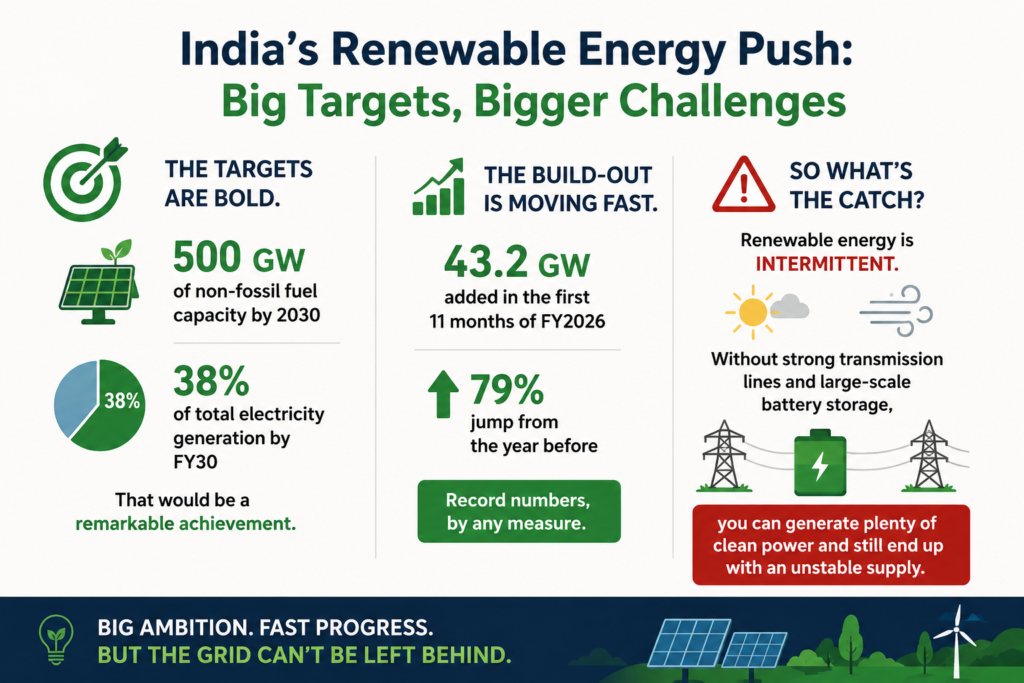
The targets are bold. India wants 500 GW of non-fossil fuel capacity by 2030. Renewables are expected to cover nearly 38% of total electricity generation by FY30. That would be a remarkable achievement. The problem is that the grid infrastructure needed to actually deliver that power isn’t growing at the same speed.
And the renewable build-out itself is moving fast — almost surprisingly fast. The sector added 43.2 GW in just the first 11 months of FY2026. That’s a 79% jump from the year before. Record numbers, by any measure.
So what’s the catch? Renewable energy is intermittent. The sun doesn’t always shine. The wind doesn’t always blow. Without strong transmission lines and large-scale battery storage, you can generate plenty of clean power and still end up with an unstable supply.
India got a vivid reminder of this recently. Extreme heat pushed electricity demand to record highs. Peak demand hit 270.73 GW in May 2026 — higher than government projections. Some regions saw localized outages even when daytime generation was perfectly adequate. Power production continued, but the electricity never reached the areas that needed it most.
ICRA Vice President Ankit Jain put it plainly: sudden demand spikes combined with the unpredictable nature of renewable generation can create short-term power shortages. It’s a gap that can appear quickly and hurt real people.
The transmission problem is already showing up in the numbers. Around 300 GWh of renewable energy was curtailed in just the first quarter of 2026 — essentially wasted — because the grid couldn’t absorb it. Meanwhile, coal plants are still taking up transmission capacity in several regions, leaving clean energy with nowhere to go.
There’s also a supply chain issue worth paying attention to. India currently depends heavily on China for solar modules, battery cells, and critical minerals. If trade tensions rise or supply chains get disrupted, project costs could climb and timelines could slip. That’s a vulnerability that doesn’t get talked about enough.
The government is responding. New policy proposals include electricity distribution reforms and incentives for energy storage systems. That’s a step in the right direction.
Experts still believe India’s 2030 targets are within reach. But they’re clear about what it takes to get there — investment in grid modernization and battery storage needs to accelerate, and fast.
Building more solar and wind farms is the exciting part. But without the infrastructure to move and store that energy reliably, it won’t be enough to power a country of 1.4 billion people and their rapidly growing energy needs.
Reference- Moneycontrol.com, ICRA, Reuters, The Economic Times, Mercom India